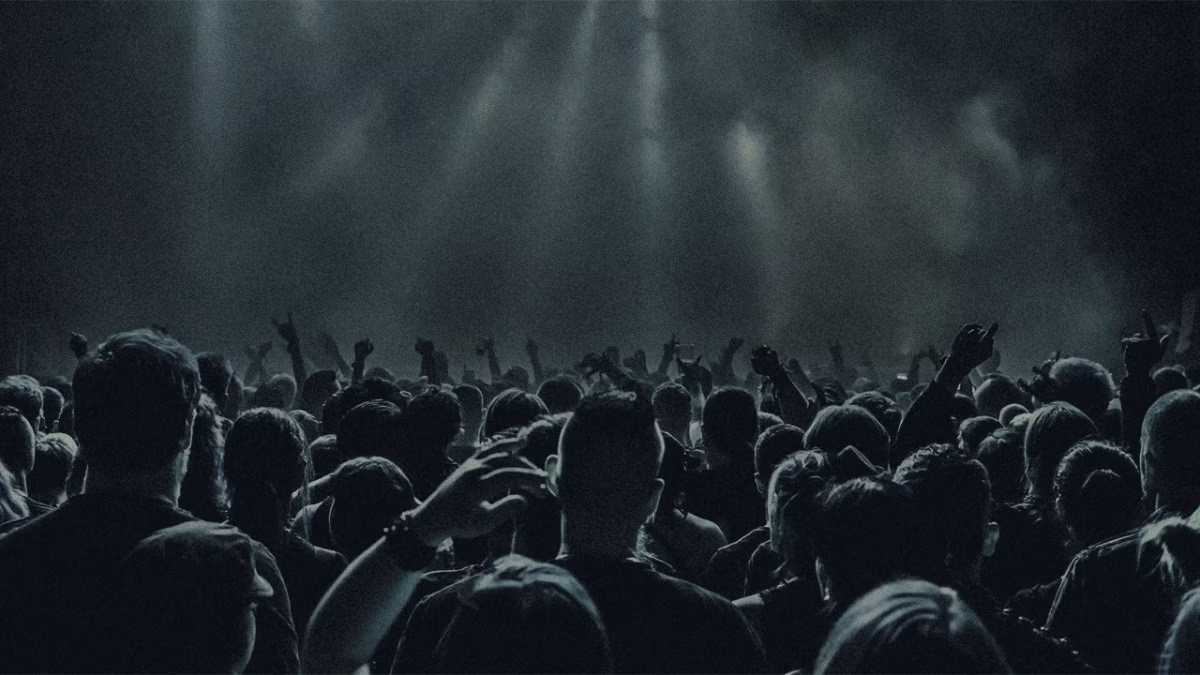
In the past two decades, America’s party scene has gone through a dramatic transformation. Partying isn’t just on the decline—it’s experiencing a freefall, especially among young people. While in 2003 the average American spent three hours a month at parties, today that number is just over 90 minutes. Among those aged 15-24, the fall is even starker—a 70% drop in time spent socializing at gatherings.
This article is based primarily on research, statistics, and cultural trends from the United States. Findings and conclusions may not fully represent experiences in other countries or reflect global perspectives.
What’s Going On With Parties?
Much of the decrease can be traced to changes in habits and culture. Being glued to our screens has become the new norm—whether that’s watching endless TikToks, binging YouTube videos, scrolling through Instagram Reels, or gaming online. Studies show that more than 90% of time spent on major social platforms isn’t about interacting with real friends—it’s mostly about passive video consumption. The result? Screens have replaced face-to-face meetups in daily life.
But this isn’t just about technology. Researchers note several key reasons behind the disappearing party culture:
- Alcohol consumption is down: Gen Z and Millennials drink far less than previous generations. Safety campaigns, health trends, and movements like “sober curious” are taking hold. Even when they do socialize, younger people choose settings and substances viewed as less risky.
- Parents are more protective: There’s been a cultural shift toward “intensive parenting.” Parents today track kids via phones, restrict outings, and worry far more about risks compared to the laissez-faire approach that was common in the ‘70s and ‘80s.
- Social anxiety is rising: As face-to-face experiences decrease, so do social skills. Many young people say they feel awkward or apprehensive about in-person gatherings, which leads to an ongoing cycle—the less they go out, the less confident they feel when they do.

New Study Confirms: The True Saviors of Underground Music Are Over 40
Why This Matters: It Isn’t Just About Throwing Fewer Parties
On the surface, you might think, “So what? Less partying probably means less trouble, right?” Actually, the effects reach far beyond just missing out on fun nights.
Reduced socializing has had a huge impact on mental health. Communities, psychologists, and researchers alike are sounding the alarm:
- Loneliness is at record levels: Gen Z has been dubbed “the loneliest generation,” with more than 60% of young people reporting that loneliness seriously affects their well-being. About a third say it disrupts their daily lives.
- Mental health struggles are up: Since around 2012 (coinciding with the mass adoption of smartphones and social media), there’s been a marked spike in anxiety, depression, and even suicide attempts among teens.
- Social skills are eroding: Ongoing lack of real-world interaction leaves many young people less equipped for jobs, friendships, and relationships—skills honed mostly through practice, not theory.
In fact, new research reinforces what many already sense—meaningful, in-person connections are essential to happiness and long-term health. Psychologist Jean Twenge told NPR that social media acted like a “nuclear bomb” on teen social life, upending generations of habits and reshaping the entire youth experience.
What the Community Is Saying
Feedback from young people, parents, and experts appears consistent across multiple sources:
- Young adults say they crave connection but feel socializing has become harder and riskier. Typical comments on forums and in community surveys include things like, “It feels awkward to meet up in person after messaging for ages,” and “It’s easier to game or chat online—real life is stressful and unpredictable.”
- Parents often celebrate fewer “bad influences,” but worry about isolation. One parent wrote, “I’m glad my son isn’t drinking as much, but he also doesn’t really have friends in the way we did growing up. It’s a different kind of worry now.”
- Health professionals emphasize balance. The American Psychological Association, as well as grassroots organizations, stress that it’s important to encourage safe, regular, in-person interactions—not just to build social courage, but to fortify “social fitness,” just like physical fitness.
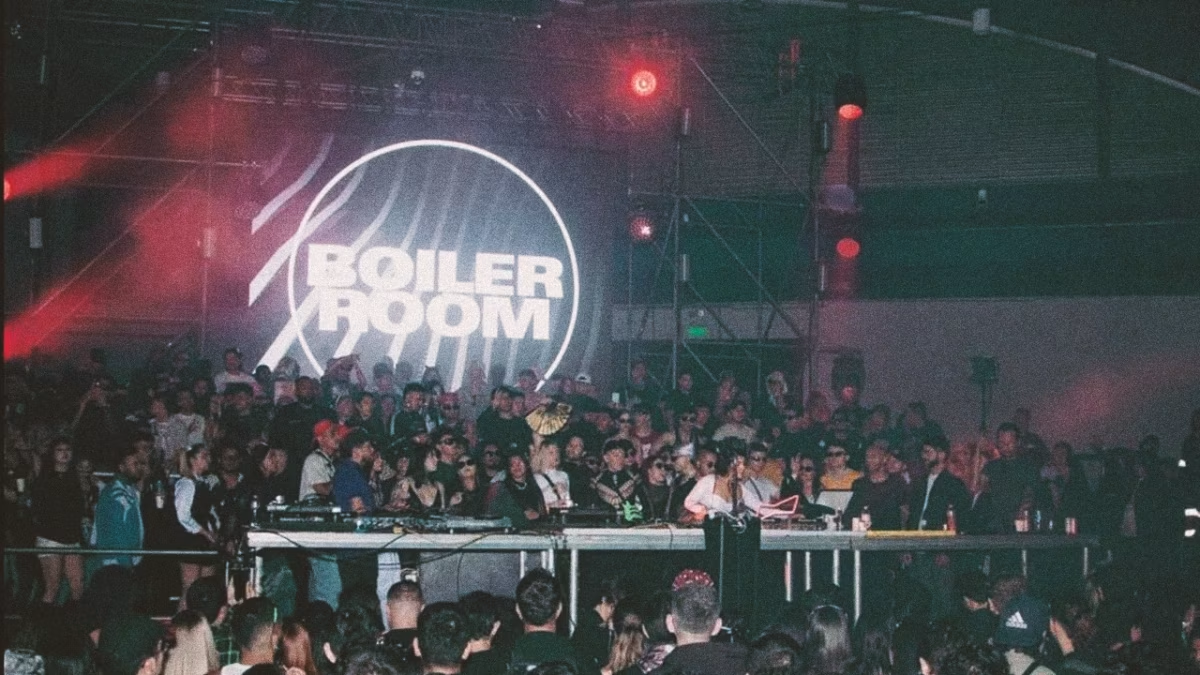


So, Is Anyone Doing Anything About It?
There is a growing push to:
- Rethink parenting styles: Loosening the grip just enough so young people have room to make decisions, learn from mistakes, and build street smarts.
- Encourage social “exercises”: Treating social activities like workouts for your mental well-being—set regular hangout times, join clubs, and occasionally step beyond comfort zones, even if it feels awkward at first.
- Support offline events: From community programs to campus initiatives and local meetups, there’s a widespread recognition that in-person gatherings are worth reviving—for our own mental health and for the collective good.
The Big Picture: Social Fitness Is Real
Social connection isn’t just good for your mind—it protects your body and prolongs your life. Harvard’s famous ‘Bowling Alone’ thesis predicted that if we don’t invest in social capital, we won’t just be lonesome; we’ll be less healthy. New research shows that “superagers,” or people who remain mentally sharp into their eighties, are the ones who stay most socially engaged.
Staying inside doesn’t protect us. In fact, it may hurt us. Cutting back on risk might help your liver, but it’s risky for your heart—in every sense.
Final Thoughts
The drop in partying isn’t just about missing a good time—it’s a signal of deeper shifts in how society connects. While Gen Z and millennials are setting new norms around safety and health, the challenge is to find a way back to real connections, in whatever form feels right. As experts and young people both say: putting yourself out there, while tough at first, might be the healthiest thing you can do.
Sources:
- BBC Global: “People Are Partying Less. Here’s Why That’s Worrying.”
- The Post Athens: “Gen Z redefines party culture”
- Citizen Advocates: “Impact of Decreased Social Interaction Among Teens”
- NPR: “The truth about teens, social media and the mental health crisis”
- Inc.com: “You Need to Go to More Parties”
- APA: “Impact of Social Media on Youth”
- Gallup: “U.S. Drinking Rate at New Low”
- Effective School Solutions: “The Decline of Teenage Social Skills”
* generate randomized username
- COMMENT_FIRST
- #1 Lord_Nikon [12]
- #2 Void_Reaper [10]
- #3 Cereal_Killer [10]
- #4 Dark_Pulse [9]
- #5 Void_Strike [8]
- #6 Phantom_Phreak [7]
- #7 Data_Drifter [7]
- #8 Zero_Cool [7]