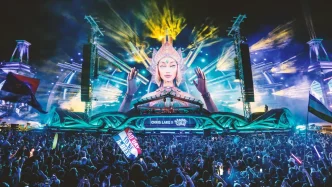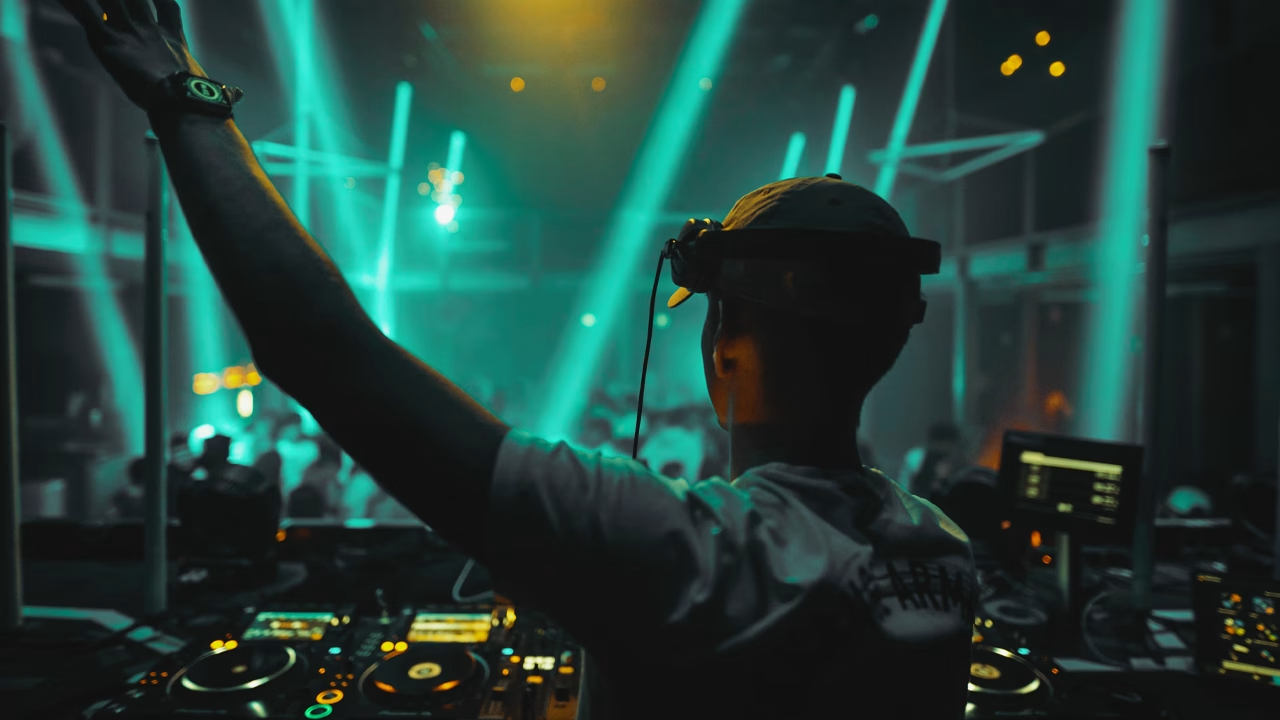

When you watch DJ sets on YouTube from monoliths like Ultra Music Festival or Tomorrowland, the visual language is almost jarringly consistent. Most of the time, you just see headliners smiling and pointing at crowds. It is a messianic gesture that has less to do with musical conducting and more to do with the kinetic management of a biomass. This repeated imagery raises a cynical question that has haunted electronic music since the EDM boom of the early 2010s: Is anyone actually doing anything up there?
For the purist, the “Selector” is the only valid archetype. This is the DJ as a reactive agent who reads the room’s subtle shifts in barometric pressure and pivots from vocal house to acid techno on a dime. But as the underground moved from dark basements to main stages designed by architects, the role of the DJ fundamentally fractured. In the era of the “Visual Singularity” where a drop isn’t a drop unless it is accompanied by synchronized cryo-jets and 4K visuals, does the art of crowd reading still exist? Or has it been suffocated by the safety of the pre-recorded set? 1
The fear of silence
To understand why the modern festival set feels so rigid, you have to look past the decks and at the Front of House. The stage designs at festivals like EDC Las Vegas or Tomorrowland are multi-million dollar feats of engineering. They are not just backdrops. They are time-coded instruments. 2

The 2026 Vibe Shift: Why The Dancefloor Is Getting Faster, Harder, and Weirdly Fictional
In this environment, the music serves as the clock. The industry standard known as SMPTE timecode locks lighting, video, and pyrotechnics to the audio track with frame-perfect precision. If a DJ decides on a whim to loop a breakdown for an extra eight bars because they “feel the vibe,” the pyrotechnics might detonate during the silence. Worse, the pre-rendered video content could de-sync and leave the massive LED walls black. 3
This logistical straitjacket is what led deadmau5 to famously claim that “we all hit play”. It was not an admission of laziness. It was an admission of structural necessity. In the ecosystem of the mega-festival, the “Curated Playlist” is not a sin. It is a safety protocol. The risk of a technical trainwreck outweighs the reward of a spontaneous track selection. 4
Reading the room vs reading the mob
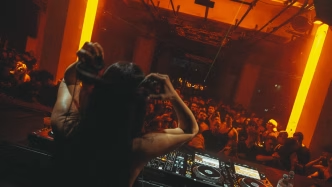
The transition from the club to the festival mainstage is not just a change in scale. It is a change in psychology. In a club of 500 people, a DJ engages in “Micro-Reading.” They can lock eyes with specific dancers, sense the fatigue in the room, and make granular adjustments like pitching a track down or teasing a vocal to rebuild the energy. The feedback loop is immediate and intimate.
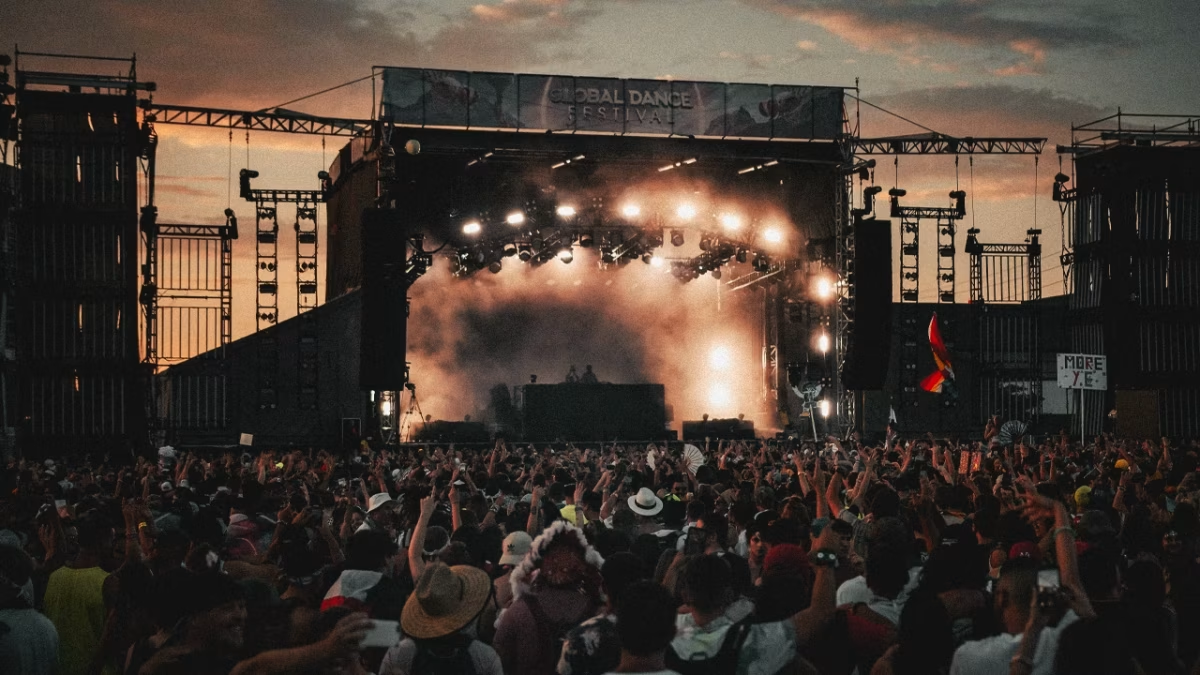
At a festival, the crowd undergoes a process of “deindividuation”. The DJ isn’t playing to people. They are playing to a population. You cannot read the facial expressions of 50,000 people standing 50 yards away behind a security moat. Consequently, “Crowd Reading” shifts from a conversation to a negotiation of energy waves. 5
Mainstage DJs manage “Macro-Energy.” They aren’t looking for the cool kids in the corner. They are looking for mass movement like mosh pits, “sit-downs,” and the sea of smartphone lights. The set becomes a “journey” of pre-calculated peaks and valleys designed to manipulate the collective dopamine levels of a crowd that is often vibing off each other rather than the DJ. The DJ becomes less of a selector and more of a conductor of spectacle.
When the math fails
The danger of this reliance on pre-planned perfection was brutally exposed during Grimes’ set at Coachella 2024. In a moment of high-camp disaster, her tracks began playing at double tempo. This led to a chaotic meltdown where she admitted to the crowd, “I can’t do the math”. 6
The failure was not just technical. It was symbolic. By outsourcing the fundamental skill of beatmatching to Rekordbox’s automated analysis, she lost the ability to mix manually when the software failed. It was a stark reminder that while automation allows for dazzling visuals, it atrophies the manual skills that define “DJing” in the traditional sense. A club DJ would have beatmatched by ear and moved on. The festival avatar, bound by the machine, could only spiral.


The tech that lets DJs go rogue
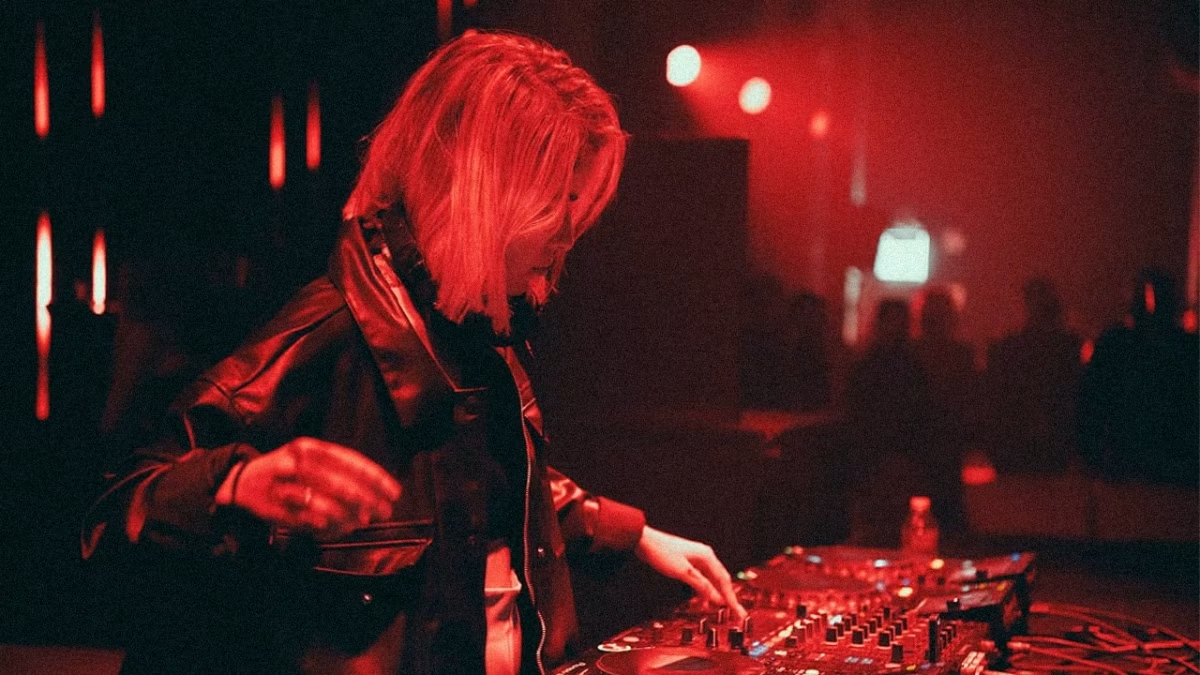
However, the binary of “Live vs. Pre-recorded” is largely a myth perpetuated by internet forums. The reality of the modern top-tier DJ is the “Hybrid Ecosystem.”
Technological bridges like ShowKontrol have revolutionized the game. This software reads live data from the CDJs including track position, fader movements, and BPM. It feeds this data in real-time to the lighting and video consoles. This allows for a “Modular” approach. A DJ like Armin van Buuren or Martin Garrix isn’t locked into a single 60-minute file. They have “modules” of tracks with associated visual assets. They can reorder these modules on the fly, and the visuals will follow automatically. 7

This creates space for the “Real DJing” marketing narrative championed by technical showmen like James Hype. Hype’s entire brand is built on the question “Who does this?” which serves as a rhetorical challenge to the “press play” culture. By utilizing four decks and performing complex manual transitions, he turns the labor of DJing into the visual spectacle itself. When his gear failed at EDC Las Vegas 2024, he didn’t scream about math. He mixed through it and turned a technical glitch into a badge of authenticity. 8
So is the art dead?
Does crowd reading still apply in the era of the curated playlist? Yes, but it has mutated. It is no longer the intimate dialogue of the underground club. It has become a high-stakes game of “Choose Your Own Adventure” played on a stage where a wrong move doesn’t just clear the dancefloor. It de-syncs a million dollars worth of pyrotechnics.
The most compelling artists of the next decade won’t be the ones who reject the technology. They will be the ones who master it. By using hybrid systems to regain the freedom to improvise, they prove that even in the middle of a pre-programmed spectacle, there is still a human heart beating behind the decks.
- https://www.reddit.com/r/Beatmatch/comments/1clfhb4/reading_the_crowd_about_that_how_does_it_exactly/ ↩︎
- https://www.reddit.com/r/aves/comments/1hct39z/what_are_artists_doing_with_their_equipment/ ↩︎
- https://www.reddit.com/r/lightingdesign/comments/14v6ipb/prerecorded_dj_sets_and_timecoded_light_shows_at/ ↩︎
- https://www.musicradar.com/news/dj/deadmau5-we-all-hit-play-550353 ↩︎
- https://blog.pioneerdj.com/djtips/how-to-dj-at-a-festival/ ↩︎
- https://cdm.link/grimes-coachella/ ↩︎
- https://www.reddit.com/r/DJs/comments/1670okr/huge_festivals_with_lights_pyro_and_led_panels/ ↩︎
- https://www.beatportal.com/articles/686704-the-rise-of-pre-recorded-sets-a-look-through-james-hypes-perspective ↩︎
* generate randomized username
- i think the article misses the point slightly. Sure, stage design is important, but isn't the real problem the homogenization of music itself? Everyone's playing the same ghost-produced tracks, so of course crowd reading becomes obsolete. it's all pre-packaged!
- So basically, the DJ is now just a hype man conducting a symphony of pre-programmed lasers and dry ice? I always suspected as much. maybe i should start practicing my pointing skills. seems like a lucrative career
- Interesting points! But is crowd reading really *dead*? i think it's more that the definition has changed. Now it's about reading the *pre-programmed* crowd reaction, not a genuine musical conversation. Maybe that's even more cynical, huh?
- #1 Lord_Nikon [12]
- #2 Void_Reaper [10]
- #3 Cereal_Killer [10]
- #4 Dark_Pulse [9]
- #5 Void_Strike [8]
- #6 Phantom_Phreak [7]
- #7 Data_Drifter [7]
- #8 Zero_Cool [7]