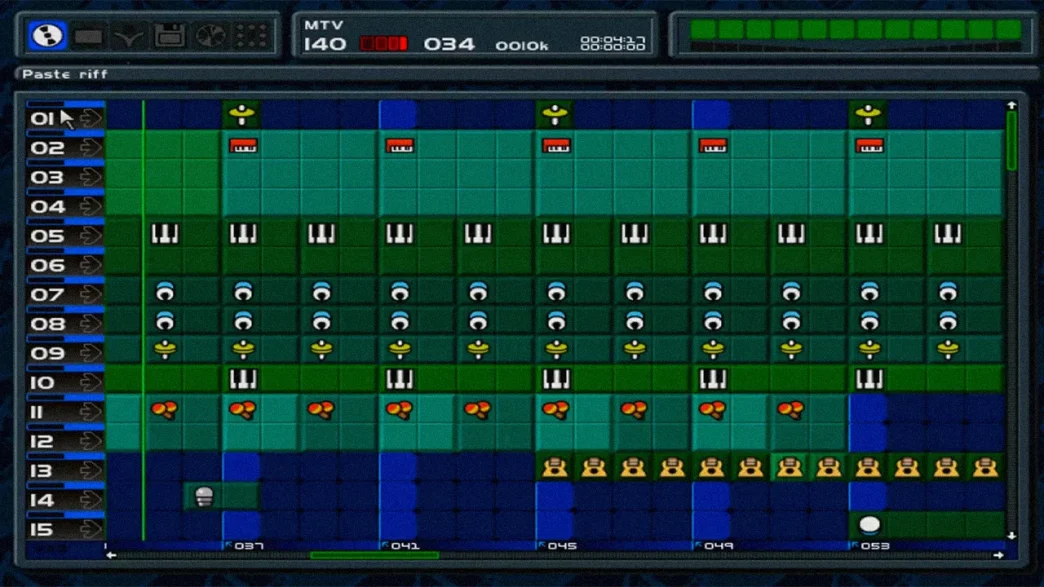


Remember 1999? Before the algorithm started spoon-feeding us endless playlists of “lo-fi beats to study to,” the barrier to entry for electronic music production was staggeringly high. If you wanted to sculpt the zeitgeist, you needed serious capital for a professional studio rig. Then came MTV Music Generator—or Music 2000 if you were across the pond—a wildly ambitious piece of software masquerading as a Sony PlayStation game that completely rewired electronic dance music culture.
How a PlayStation Game Sparked the Y2K Bedroom Producer Revolution and Became the Best DAW for Beginners in EDM
The architect behind this cultural Trojan horse was Tim Wright, the visionary composer who gave the WipEout franchise its blistering techno identity. Wright remembered the agonizing frustration of being a teenager who couldn’t afford expensive 4-track tape recorders, so he built a tracker-style sequencer for the masses. When British publishing giant Codemasters got a look at the prototype, they immediately threw their weight behind it, giving independent label Jester Interactive unprecedented mass-market penetration.
If you’re a teenager today searching for the “best DAWs for beginners in EDM,” you’re likely overwhelmed by polished, cloud-based options. But in the late 90s, this $50 console disc was the undisputed king of democratized audio. It wasn’t just some rudimentary beat maker or a novelty song maker; it was a legitimate, 24-channel digital audio workstation that handed the keys of the kingdom to a generation of kids armed with nothing but a DualShock controller.
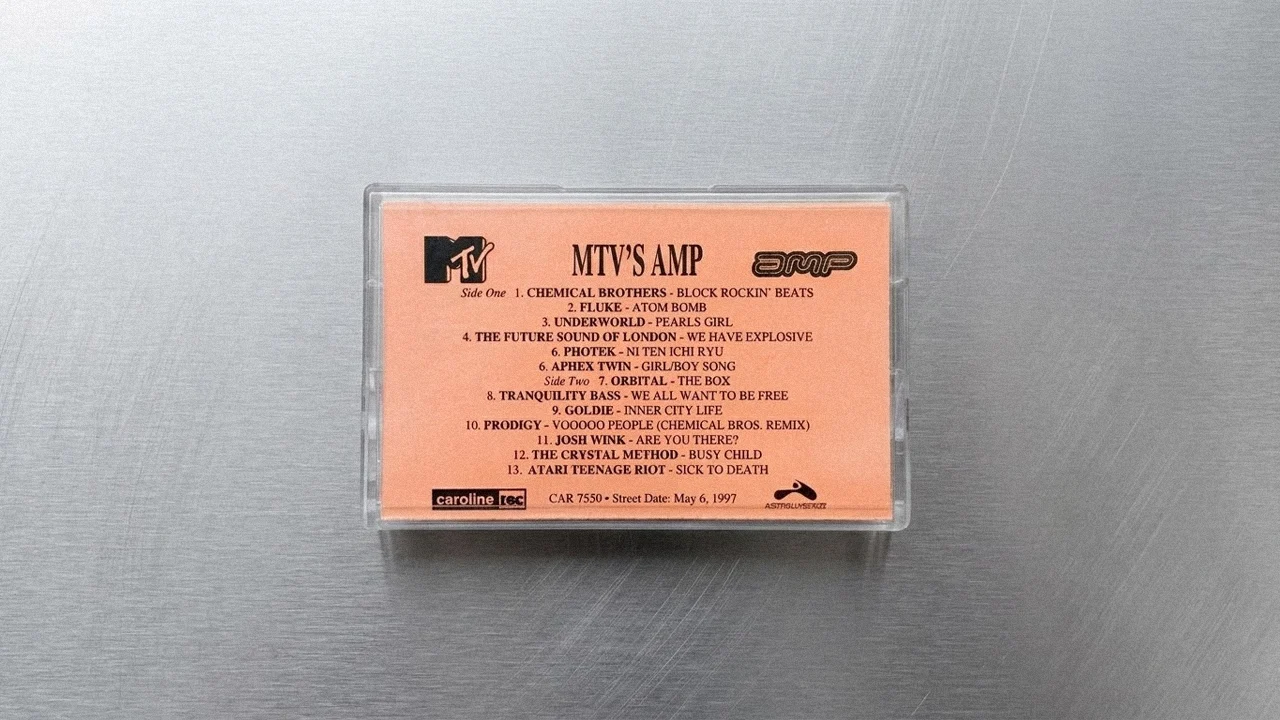
Late-Night Transmissions: How MTV’s AMP Changed Electronic Dance Music
Navigating 512 Kilobytes of Pure Grime and How PS1 Hardware Limitations Shaped the Sound of Jungle and Bass Music
Let’s talk about the hardware limitations, because they are legendary. The original PlayStation possessed a laughable 512 kilobytes of dedicated sound RAM. You couldn’t drag and drop lush, gigabyte-heavy orchestral libraries. You had to be ruthless. You had to rely on jagged, minimalist rhythms, heavy sine-wave sub-basses, and stark quantization.
This technological bottleneck didn’t stifle creativity; it accidentally forged the foundational sound of UK Grime and early Dubstep. Pioneers and future legends like Skepta, Jme, Benga, Kode9, Bob Vylan, and Dizzee Rascal all cut their teeth sequencing tracks on Music 2000 before they ever stepped foot in a professional recording booth. Producers treated the interface like a puzzle, dropping blocks of rhythm onto a rigid grid like a hyper-speed game of Tetris.
And then there was the CD hot-swapping exploit. Because the software loaded entirely into the console’s RAM, you could pop the game disc out, throw in a Red Book audio CD, and sample waveforms directly into the game. Kids were ripping snare drums from heavy metal CDs and ambient textures from Metal Gear Solid to build their beats. It was pure, unfiltered punk rock energy injected into electronic music production.
Unpacking the Neptunes MTV Music Generator Myth in Modern Hip-Hop Production
The software’s stripped-down, punchy aesthetic was so potent that it birthed one of the era’s greatest urban legends—the persistent rumor that Pharrell Williams and The Neptunes were using the PS1 to sketch out their minimalist, chart-topping 2000s mega-hits.
While that remains an unverified myth, the software’s profound impact on modern hip-hop royalty is documented fact. Mark Spears, better known as Sounwave—the production mastermind behind Top Dawg Entertainment and Kendrick Lamar—literally built his early career on this platform. Sounwave was crafting such complex hip-hop instrumentals on his PlayStation that TDE President Punch, upon hearing them in Sounwave’s living room, immediately recruited him. The foundation of Pulitzer-winning, platinum-selling hip-hop was built on a $50 video game.
The Unstoppable Rise of PlayStation Jungle and Why the Retro PS1 Aesthetic Dominates Modern Electronic Music
Fast forward to 2025. We are currently drowning in an ocean of flawless, algorithmically sanitized, AI-generated audio. But the underground is actively rebelling, leaning hard into digital hauntology. Enter “PlayStation Jungle,” a thriving, highly specific micro-genre bubbling up on platforms like Bandcamp and SoundCloud.
Contemporary producers like Disctr4k and Introspekt are voluntarily abandoning their pristine modern plugins to strictly utilize ripped, 32kHz sample libraries from MTV Music Generator. Why? Because the compressed, aliased crunch of the PS1 sound chip invokes a visceral, dreamlike nostalgia—a warm, liminal feeling tied to Frutiger Aero and Y2K aesthetics that modern tech simply cannot replicate. It sounds like the promise of the early internet, trapped inside a cathode-ray tube.
Ultimately, MTV Music Generator was never just a game. It was a vital cultural monolith that proved a crucial point that extreme democratization doesn’t dilute the quality of underground art. Instead of forcing kids to hunt for a sketchy free music download or pirated software, it handed them a cheap, intuitive toolkit and dared them to rewrite the future of dance music.


Sources & Further Reading
The Wipeout Legacy: The Making of ‘Music’ for PS1 (Time Extension) – How Tim Wright (CoLD SToRAGE) built the original console DAW.
Music 2000 / MTV Music Generator:
- History of MTV Music Generator (DJBooth) – From console game to a gateway for hip-hop producers.
- Music 2000 Technical Overview (Wikipedia) – Details on the 48-channel tracker for PlayStation.
- Retro Tech Listing: Music 2000 (Back Market).
Modern Context:
- Sounwave: Beat Construction (The Fader) – Insights from Kendrick Lamar’s producer on evolution in beat-making.
- Mastodon Thread: Retro Music Tech – Community discussion on legacy audio software.
* generate randomized username
- COMMENT_FIRST
- #1 Lord_Nikon [12]
- #2 Void_Reaper [10]
- #3 Cereal_Killer [10]
- #4 Dark_Pulse [9]
- #5 Void_Strike [8]
- #6 Phantom_Phreak [7]
- #7 Data_Drifter [7]
- #8 Zero_Cool [7]