
A cautionary tale of a jokey meme that escaped the internet, conquered America, and permanently fractured the underground.
The term “brostep” started as a joke. Really. A British producer called Kozee literally said “it was a joke” when he first typed it on UK dubstep forums around 2009-2010, meant as a piss-take at American clubgoers screaming for Datsik drops while shirtless and sweating profusely. The name was supposed to die in that forum thread, buried under sarcasm and eye-rolls. Instead, it became one of electronic music’s most divisive genres—a cultural flashpoint that split the dubstep community in half like a bad relationship. 1
Brostep didn’t just emerge from nowhere. UK producers like Rusko and Caspa had already been experimenting with heavier, mid-range-focused sounds in the late 2000s. Rusko’s “Cockney Thug” became the blueprint: thick, wobbling, aggressively British yet undeniably heavy. But when American producers got their hands on dubstep around 2008-2010, they took that template and pumped it full of steroids, metal riffs, and festival energy. Excision and Datsik were the Canadian pioneers. Skrillex became the poster boy. 2
Then came October 2010. Skrillex’s “Scary Monsters and Nice Sprites” EP dropped like a bomb. Two Grammy Awards. Five more nominations. The title track hit 333 million YouTube views. Suddenly, dubstep wasn’t some moody South London club phenomenon anymore—it was the sound of fractured, distorted, aggressively mid-range bass that made your teeth vibrate and your brain scream for mercy. By September 2011, Spin Magazine was calling brostep a “lurching and aggressive” variant that had “proven commercially successful in the United States”. The moment had arrived. 3
But the UK never forgave America for it.
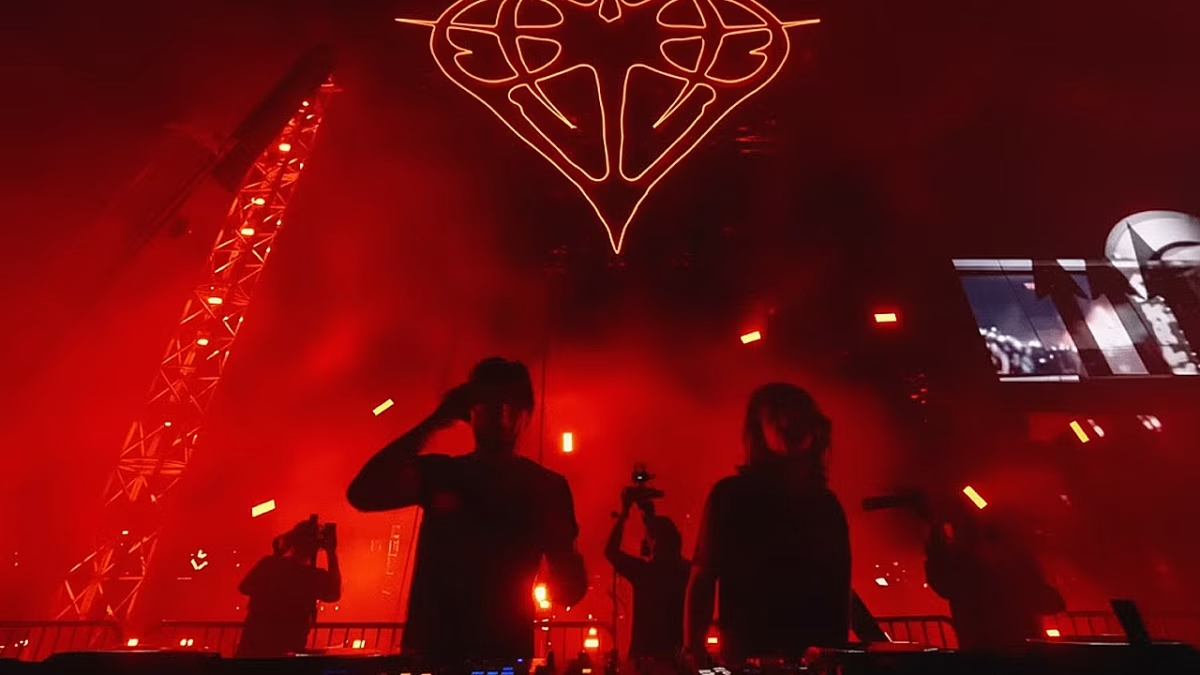
Skrillex and ISOxo Drop “Fuze”: The Brostep Collab That’s Breaking the Internet
The Great Divide
Here’s the thing: UK dubstep and American brostep are sonically different enough that calling them the same genre feels dishonest. Traditional UK dubstep worships at the altar of sub-bass—the frequencies you feel rather than hear, the low-end thump that makes your body move on instinct. It’s minimal, atmospheric, influenced by dub reggae and UK garage. Brostep? Brostep is basically heavy metal for people who want headbanging without the guitars. 4
It emphasizes the mid-range, those frequencies that cut through festival PA systems like a fucking chainsaw. It’s distorted, metallic, covered in wobble and aggression, built for massive outdoor stages where subtlety gets drowned out. The bass drops aren’t just moments—they’re events, full-body experiences designed to make crowds lose their minds. As one analysis put it, brostep represents “a gym-bunny take on dubstep—beefed-up, hyper-macho and most likely on steroids”.
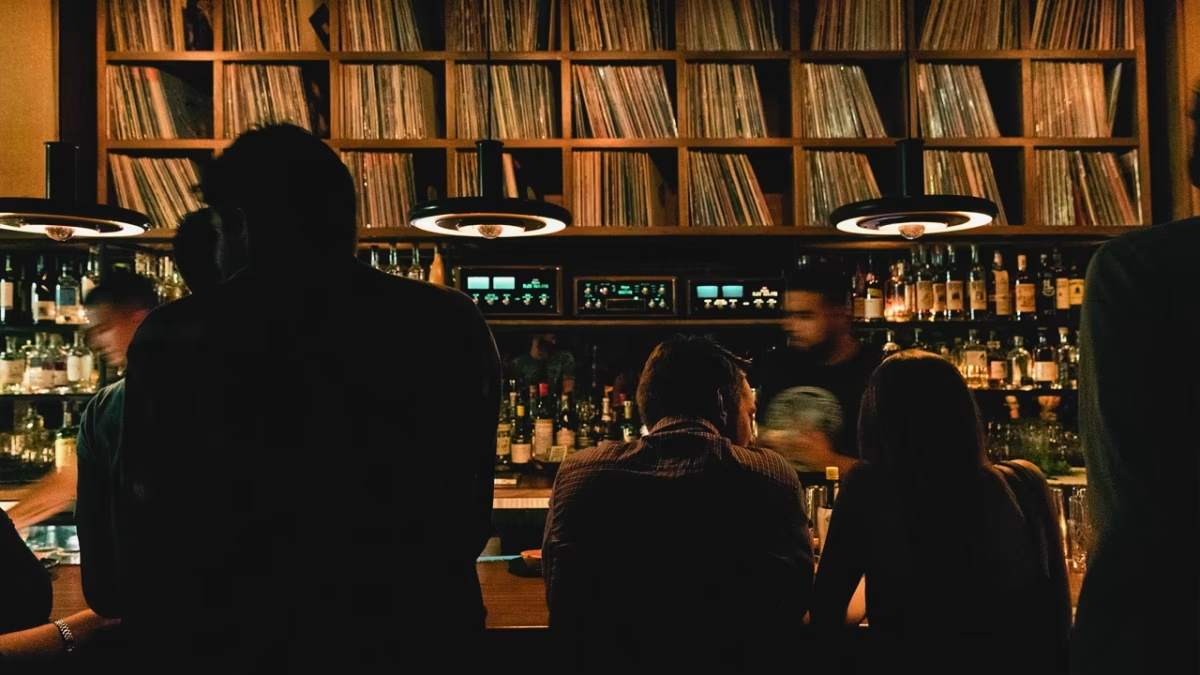
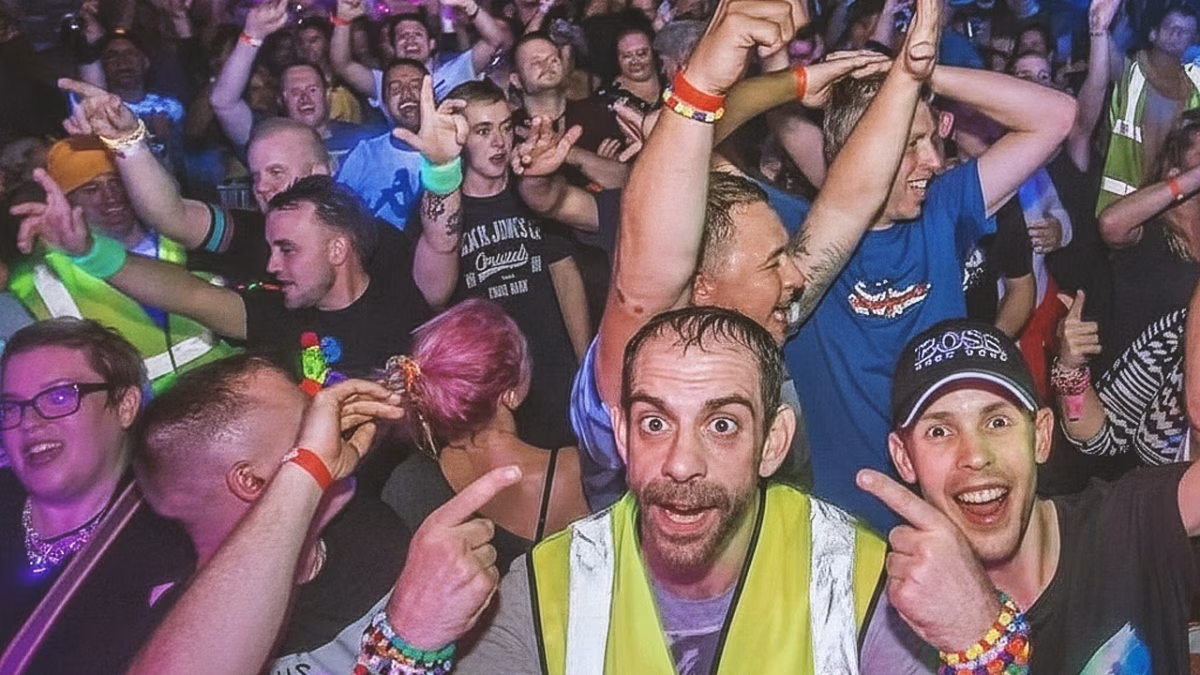
The cultural split was just as brutal. UK dubstep came from underground South London club culture, rooted in introspection and artistic integrity. Brostep came from American festivals, college parties, and the kind of venues where shirtless dudes fist-pump as a lifestyle choice.
The Artists Who Built It
Beyond Skrillex, the brostep ecosystem included Excision, Datsik, Bassnectar, Borgore, Getter, Knife Party, and the Circus Records duo of Doctor P and Flux Pavilion—the latter becoming symbols of the UK-US collision.
Younger generations brought artists like Zomboy, Virtual Riot, Eptic, and labels like Never Say Die Records, which became the spiritual home of hard-hitting bass music throughout the 2010s. 5
The Backlash (And It Was Vicious)
VICE called brostep “the subgenre that should have never existed“. A BBC review noted that Rusko himself—one of the godfathers of this sound—later said: “Brostep is sort of my fault, but now I’ve started to hate it in a way… It’s like someone screaming in your face… you don’t want that”.
The “purism” argument became the soundtrack to forums everywhere. UK dubstep heads insisted that brostep wasn’t even a real genre, just a bastardization of their precious sound by Americans who didn’t understand it. The irony? Rusko and Caspa had literally paved the way. But by 2011, the underground had moved on, and they weren’t interested in sharing credit.
One Reddit user perfectly captured the absurdity: “For every shirtless bro drunkly screaming for Datsik there is a proportional number of stuck up ‘purists’ calling for more subbass at Mala shows“.


Is It Even a Genre?
The semantic debate never really got resolved. Wikipedia calls it a “post-dubstep style.” Beatport had it as dubstep. Artists themselves remained ambivalent. Technically, yes—brostep has distinct sonic characteristics that separate it from UK dubstep. But calling it a “subgenre” versus a “separate genre” became a pissing match that never mattered to the millions of people dancing to it.
What’s undeniable: brostep succeeded on a scale that UK dubstep never did. It reached mainstream audiences. It influenced pop production. It created a culture around heavy, aggressive bass music that didn’t require being British, underground, or philosophically opposed to fun.
The Legacy (And Why It Still Matters)
Brostep’s peak was roughly 2010-2016. By the late 2010s, the scene had matured, evolved, and fractured into a hundred micro-genres—riddim, riddim dubstep, tearout, and countless others. But the name stuck. The controversy stuck. The cultural wound it carved into electronic music? Permanent.
In 2025, Skrillex and ISOxo’s “Fuze” reminded everyone that people still want that aggressive, face-melting bass sound. The debate continues, but the battle lines have softened. Younger producers don’t care about purity anymore—they just make what sounds good.
Kozee threw a joke on a forum and accidentally started a war that lasted a decade. Sometimes that’s how genres die and get reborn. Sometimes that’s how they conquer the world.
- https://www.vice.com/en/article/brostep-spin-5-years-op-ed/ ↩︎
- https://youtu.be/Pp2bv2Ke4BM ↩︎
- https://www.last.fm/music/Skrillex/Scary+Monsters+And+Nice+Sprites+EP/+wiki ↩︎
- https://bassgorilla.com/what-is-dubstep/ ↩︎
- https://www.reddit.com/r/dubstep/comments/13u46om/your_favorite_brostep_artists/ ↩︎
* generate randomized username
- COMMENT_FIRST
- #1 Lord_Nikon [12]
- #2 Void_Reaper [10]
- #3 Cereal_Killer [10]
- #4 Dark_Pulse [9]
- #5 Void_Strike [8]
- #6 Phantom_Phreak [7]
- #7 Data_Drifter [7]
- #8 Zero_Cool [7]