
In 2025, the global electronic music industry is a $12.9 billion behemoth that feels perilously close to a spiritless zombie. On paper, we are living in the golden age of the “post-pandemic bounce back.” Festivals are expanding into India and South Africa , independent labels are clawing back market share , and anyone with a laptop and a Splice subscription can technically be a producer. Yet, wander into the crowd of a mega-festival or scroll through the “Mint” playlist, and the diagnosis is grim: we are suffering from acute “sameness fatigue.” The counter-cultural pulse of the rave has been subsumed by the “industrialization of the vibe,” a process where risk is calculated out of existence and the drop is optimized for 15-second viral retention. 1
This isn’t just old-head nostalgia. It is a structural crisis driven by platform capitalism, risk-averse booking strategies, and a technological feedback loop that privileges the familiar over the new.
The Tyranny of “Spotify-Core” and the Skip Rate
If you feel like every third track on your “Chill House” playlist sounds suspiciously identical, you aren’t imagining things; you are hearing the sound of survival in the streaming economy. The industry has birthed a new, functionalist sub-genre pejoratively dubbed “Spotify-core”—music engineered not for the club, but for passive consumption and algorithmic safety. 2

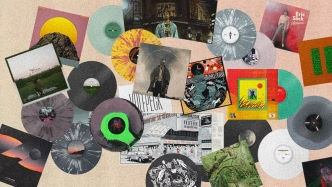
New Study Finds Independent Record Labels Return 77% of Profits Directly to Artists
The mechanics are brutal. Spotify’s recommendation engine penalizes tracks with high skip rates, incentivizing producers to front-load songs with hooks and strip away the “boring” bits—like intros, outros, or dynamic tension. The result is a “genre-defying blend of mellow, mid-tempo, lo-fi” sludge designed to blend seamlessly into the background of your life. It is “wallpaper music” for the digital age, where a jarring key change or a dissonant texture is an economic liability. 3
This feedback loop creates a “Lego-ification” of production. Platforms like Splice have democratized access to professional sounds, but at the cost of creative individualism. When thousands of producers drag-and-drop the same “KSHMR Vol. 3” snare or “Oliver” bass loop, the sonic palette of the entire industry begins to gray. We are left with tracks that are technically flawless yet spiritually void.
Compounding this is the “Loudness War,” which has bizarrely ramped up in the mid-2020s despite streaming normalization standards. Producers are crushing dynamic range to hit -5 or -4 LUFS, creating a “wall of sound” that assaults the ear without offering any breathing room. It turns out that “sameness fatigue” is also literal ear fatigue; when everything is loud, nothing is loud. 4
“Business Techno” and the Afterlife of Authenticity
Nowhere is the tension between commerce and art more visible than in the realm of “Business Techno.” Once a derogatory term for the safe, rolling drum loops of the Drumcode era, it has metastasized into a global aesthetic defined by visual spectacle over musical substance.
The current symptom of this disease is the “Afterlife” effect. The massive, screen-centric visuals popularized by Tale of Us—giant, floating humanoids and high-definition CGI—have spawned an army of copycats. The music in these sets often plays second fiddle to the phone-ready moment. It is “cinema for Instagram,” where the crowd stands still, screens raised, waiting for the visual cue to hit record rather than losing themselves in the rhythm.
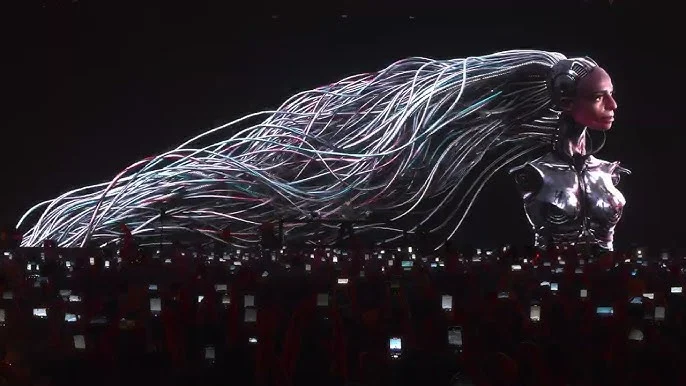
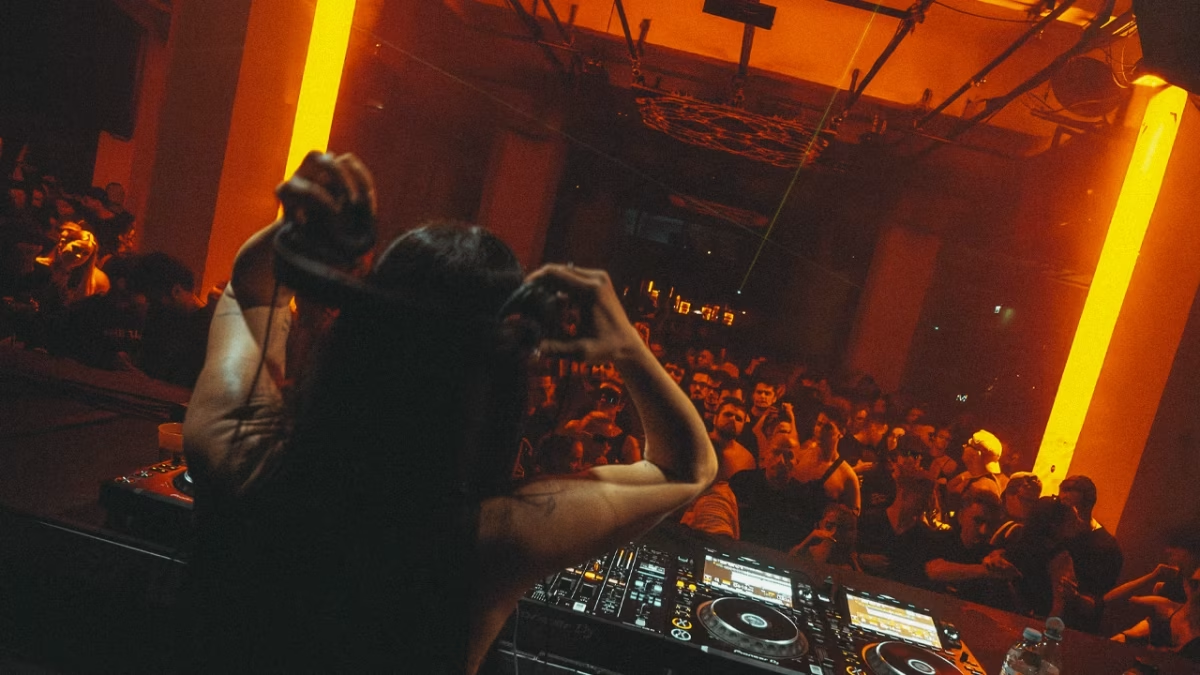
Critics argue that this shift has turned DJs into content creators first and selectors second. Even high-profile artists like James Hype admit that “content creation is now at the core” of their success, a grim reality where editing TikToks is as vital as digging for crates. This “content creep” exhausts artists and alienates the “heads” who remember when the DJ was a silhouette in the fog, not a brand ambassador under a spotlight. 5
The Anxiety of the Crowd: Crushes and Pre-Recorded Sets
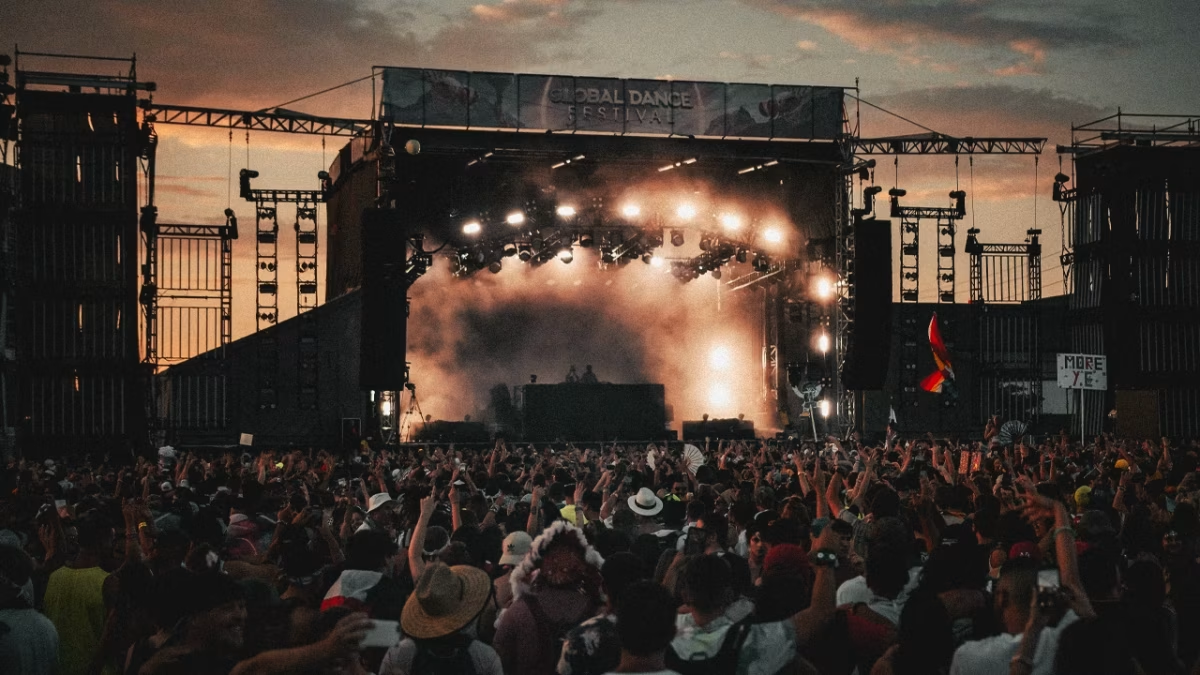
Beneath the commercial sheen, a darker anxiety permeates the scene. The shadow of the Astroworld tragedy lingers, with “crowd crush” becoming a persistent fear at major electronic festivals in 2024 and 2025. The “risk aversion” of promoters has led to overcrowding in “safe” areas, while the sheer density of bodies at events like EDC Orlando has sparked petitions and outcry for better safety standards. 6
Adding to the cynicism is the open secret of the pre-recorded set. As visuals become more complex and time-coded to the millisecond, the room for improvisation vanishes. Controversies involving heavyweights like Eric Prydz and David Guetta highlight a divide: the audience wants a perfect, cinematic show, but they also want to believe the DJ is actually doing something. When the pyrotechnics are synced perfectly to the drop every single time, the “live” performance becomes indistinguishable from a playback session.

The Resistance: Where the Human Heart Still Beats
And yet, the “death of EDM” is a myth. The commercial layer is rotting, yes, but the underground is reacting with violent creativity. The “sameness fatigue” is fueling a reaction that drives fans toward sounds that are raw, messy, and undeniably human.
1. The Hard Techno Rebellion
The youth are angry, and they want it fast. Hard Techno has exploded as the punk-rock antithesis to the polite “plod” of tech-house. While purists scoff at the “TikTok-ification” of the genre (where 160 BPM distortion is reduced to a 15-second clip), the movement represents a visceral rejection of the “chill.” It is ugly, loud, and physically demanding. 7
2. Amapiano: The Soulful Slowdown
From South Africa comes the most vital innovation in dance music in a decade: Amapiano. By slowing the tempo down to 112 BPM and introducing the spiritual weight of the “log drum,” Amapiano offers a sexy, soulful alternative to the frantic energy of the main stage. It is proof that regional, culturally specific sounds can still conquer the globe without compromising their identity. 8
3. The Return of Swing: UK Garage
The grid-locked 4/4 beat is being challenged by the broken rhythms of a massive UK Garage (UKG) revival. Producers are rediscovering “swing”—that human imperfection in the drums that makes your hips move differently. It’s a look back to the ’90s to find a way forward, rejecting the stiffness of modern production. 9
4. The Phone-Free Revolution
Perhaps the most radical trend of 2025 is the simplest: putting the phone away. Clubs like Fabric, Pikes Ibiza, and Nowadays NYC are enforcing strict no-photo policies to reclaim the dancefloor as a space of immediate experience. This “screen fatigue” backlash is creating pockets of intense, undistracted energy—a reminder of what rave culture feels like when you aren’t performing for an audience of followers.
5. The Fred again.. Paradox
Finally, there is Fred again... He is a polarizing figure—a child of privilege who makes music about “real life” using found sounds and grainy voice notes. Yet, his massive success proves that audiences are starving for vulnerability. In an era of polished perfection, his messy, emotional collage-pop feels like a lifeline. He represents the desire for a “human touch” in a digital world. 10
The Verdict
Is conformity killing electronic music? It is certainly killing the commercial spectacle of it. The $13 billion industry of “press-play” DJs and algorithm-baiting tech-house is a creative dead end. But in the shadows of that crumbling monolith, the culture is alive and kicking. It’s just faster, weirder, and harder to find on a playlist. And that’s exactly how it should be.
- https://www.virtualclubbinglife.com/the-electronic-music-industry-generated-12-9-billion-in-2024/ ↩︎
- https://onlydeadfish.co.uk/2025/06/05/how-streaming-has-changed-music/ ↩︎
- https://stagehoppers.com/spotify-algorithm/ ↩︎
- https://www.reddit.com/r/audioengineering/comments/1la23wk/just_got_asked_to_push_a_master_past_5_lufs/ ↩︎
- https://www.reddit.com/r/ambientmusic/comments/1bmircp/opinions_on_possible_future_directions_of_music/ ↩︎
- https://www.salon.com/2024/08/17/music-festival-crowd-panic/ ↩︎
- https://www.feralclo.com/blogs/news/is-hard-techno-becoming-more-popular ↩︎
- https://www.huckmag.com/article/amapiano-global-roots-mamelodi-south-africa ↩︎
- https://breakbeatsamplepacks.com/blog/breakbeat-samples-loops-story-news/uk-garage-2025-the-rise-of-underground-record-labels-like-bassix ↩︎
- https://www.reddit.com/r/EDM/comments/13dr4z1/fred_again_is_a_great_example_of_how_we_could_all/ ↩︎
* generate randomized username
- Theres nothing you can do about it
- #1 Lord_Nikon [12]
- #2 Void_Reaper [10]
- #3 Cereal_Killer [10]
- #4 Dark_Pulse [9]
- #5 Void_Strike [8]
- #6 Phantom_Phreak [7]
- #7 Data_Drifter [7]
- #8 Cipher_Blade [6]