
Berlin’s techno cathedral is officially UNESCO heritage, the queue is longer than ever, and your mom probably knows who Sven Marquardt is. So why does it still feel like the only place on Earth that matters at 8 A.M. on a Monday?

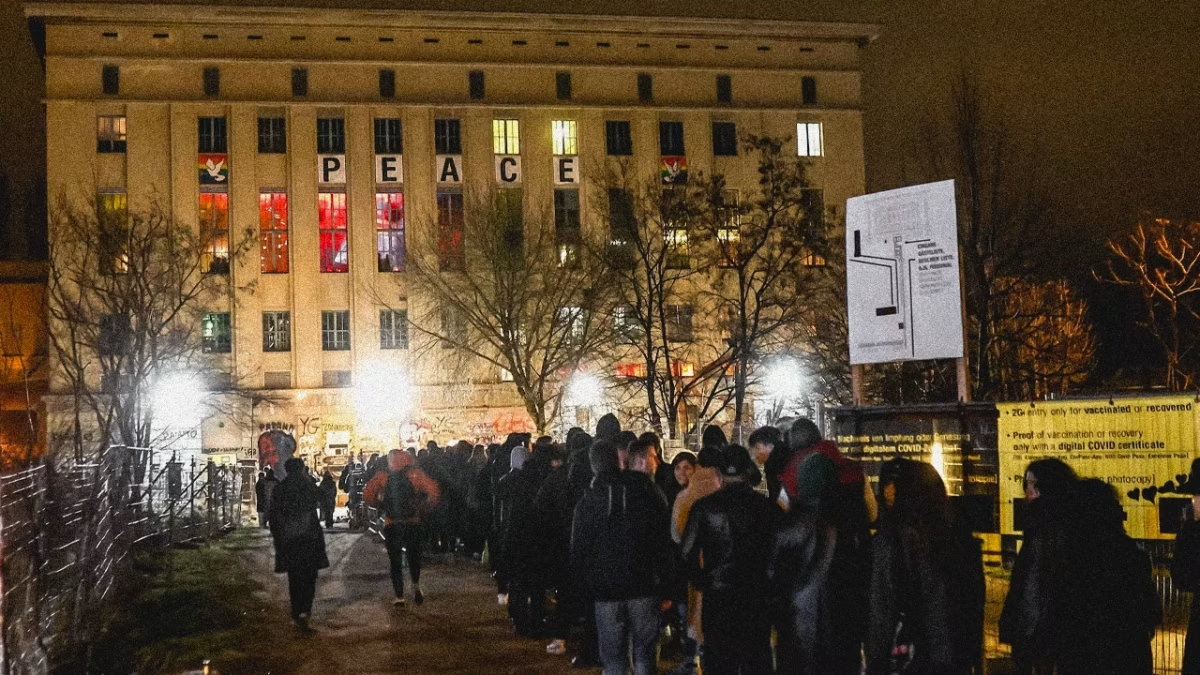
It’s Sunday morning in Friedrichshain, late 2025. The air smells like impending winter and stale cigarette smoke. You are standing in The Queue. It hasn’t gotten shorter in the last decade; it’s just gotten better dressed.
Ahead of you, a phalanx of shivering TikTok techno tourists in pristine, fast-fashion approximations of “Berlin Black” are nervously deleting selfies, praying the demigods at the door don’t smell their desperation. They probably will.
This is the central paradox of Berghain right now. How can the most famous nightclub on the planet—a place that is literally a protected cultural landmark—still claim to be “underground”?
In 2025, the short answer is: It isn’t. The long answer is: It’s complicated, messy, and still the best goddamn simulation of freedom you’ll ever find.

Boiler Room Layoffs 2025: KKR Ownership and the Crisis of Authenticity
The Museum of Rave
Let’s rip the band-aid off. If “underground” means illicit, hidden, or known only to a dedicated few, Berghain failed that test fifteen years ago.
Today, it is an institution. This isn’t hyperbole. As of 2024, Berlin’s techno scene, with Berghain as its pulsating heart, was officially recognized as UNESCO Intangible Cultural Heritage. The German government acknowledges that getting sweaty in a repurposed power plant is as culturally significant as Bavarian pretzel-making.
Berghain is now a bucket-list destination, wedged between the Brandenburg Gate and the TV Tower. It has collaborated with high-fashion luxury brands. It hosts high-brow art installations. The fact that you are reading an article about its “underground status” in 2025 is proof enough that the secret is out.
If you’re looking for a genuinely illegal squat rave powered by a stolen generator, you’re in the wrong queue. You should probably be in Leipzig, or Warsaw, or a part of Berlin that hasn’t been gentrified into a tech-bro campus yet.
The Curated Vibe
So, why haven’t the heads completely abandoned the building? Why do residents like DVS1, Steffi, and Ben Klock—DJs who could easily cash in on the global “business techno” festival circuit—still prioritize their marathon sets in this concrete cavern?
Because once you survive the door theater, Berghain is one of the last places on earth that stubbornly refuses to participate in the 2025 reality.
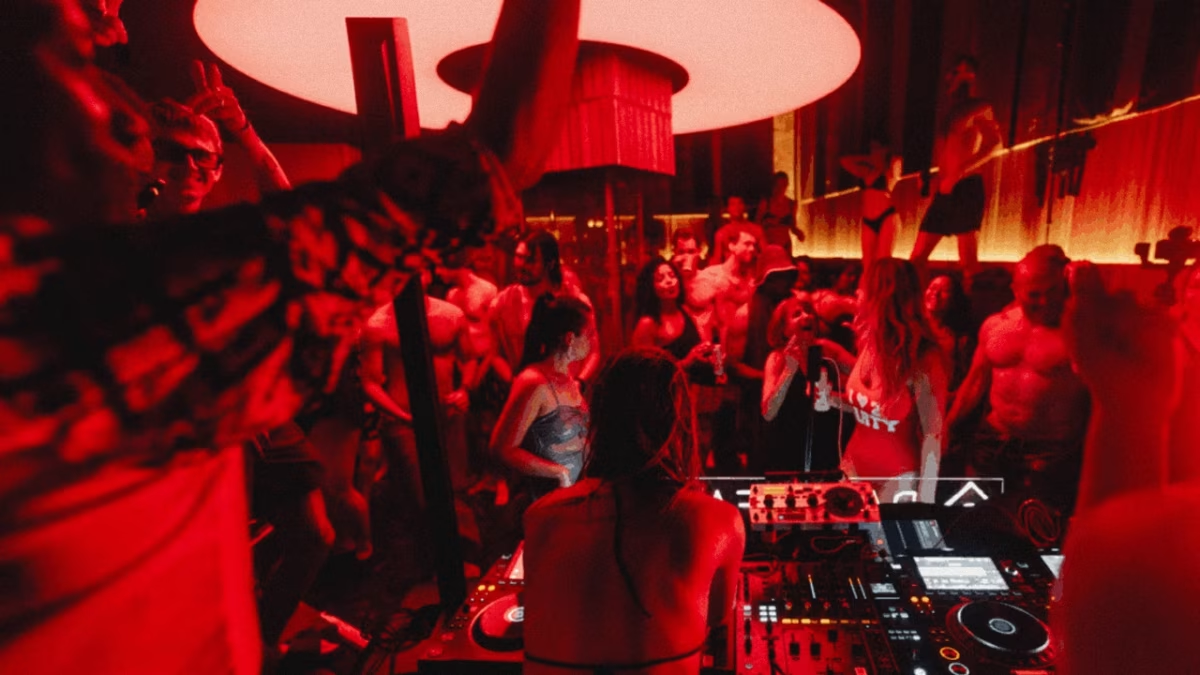
The magic trick of Berghain isn’t that it’s hidden; it’s that it rigidly enforces an analog experience in a hyper-digital world. The strict no-photo policy is more crucial now than ever. In an era of ubiquitous surveillance and content farming, being in a room with 1,500 people where nobody has a phone out feels practically subversive.
It’s a protected space where you can lose your mind, take your shirt off, and dissolve into the dark corners of the main floor without worrying that your jaw-swinging gurn will end up as a viral meme on Monday morning.
The “Techno Temple” Simulation
The programming remains furiously purist. You won’t find cake-throwing celebrity DJs here. The sound systems are still immaculate, tuned for hypnotic, challenging techno on the main floor and deep, queer house in Panorama Bar.
But the crowd has shifted. In 2025, the Sunday afternoon floor can sometimes feel less like a gathering of the tribes and more like a zoo viewing gallery, where the tourists try to spot the “real Berliners” in their natural habitat.
The veterans complain that the legendary, endless closing sets are tightening up, with the plug often pulled around Monday noon rather than letting the chaos bleed into Tuesday. The raw, dangerous energy of the 2010s has been streamlined into a more manageable, albeit still intense, operation.


The Verdict
Is Berghain underground in 2025? No. It’s a massive, world-renowned cultural operation.
But to call it “mainstream” misses the point entirely. It is a massive, world-renowned cultural operation that actively dislikes the mainstream. It uses its fame as bait, then uses its door policy to filter out the assholes, creating a temporary autonomous zone that feels harder, faster, and queerer than the outside world.
It’s a theme park, sure. But it’s a brutalist, sex-positive theme park built of concrete and bass, and as long as they tape up your phone camera at the door, it’s still the best ride in town.
Sources:
Rave The Planet & German UNESCO Commission
Berghain Official Website & Resident Advisor (RA)
Reddit Communities: r/Berghain_Community
Groove Magazin & Electronic Beats
* generate randomized username
- "Simulation of freedom?" sounds a bit pretentious. If it's UNESCO heritage, isnt it kinda by definition...overground? i mean, good for Berlin and all, but let's not pretend this isn't just very lucrative tourism now.
- #1 Lord_Nikon [12]
- #2 Void_Reaper [10]
- #3 Cereal_Killer [10]
- #4 Dark_Pulse [9]
- #5 Void_Strike [8]
- #6 Phantom_Phreak [7]
- #7 Data_Drifter [7]
- #8 Zero_Cool [7]