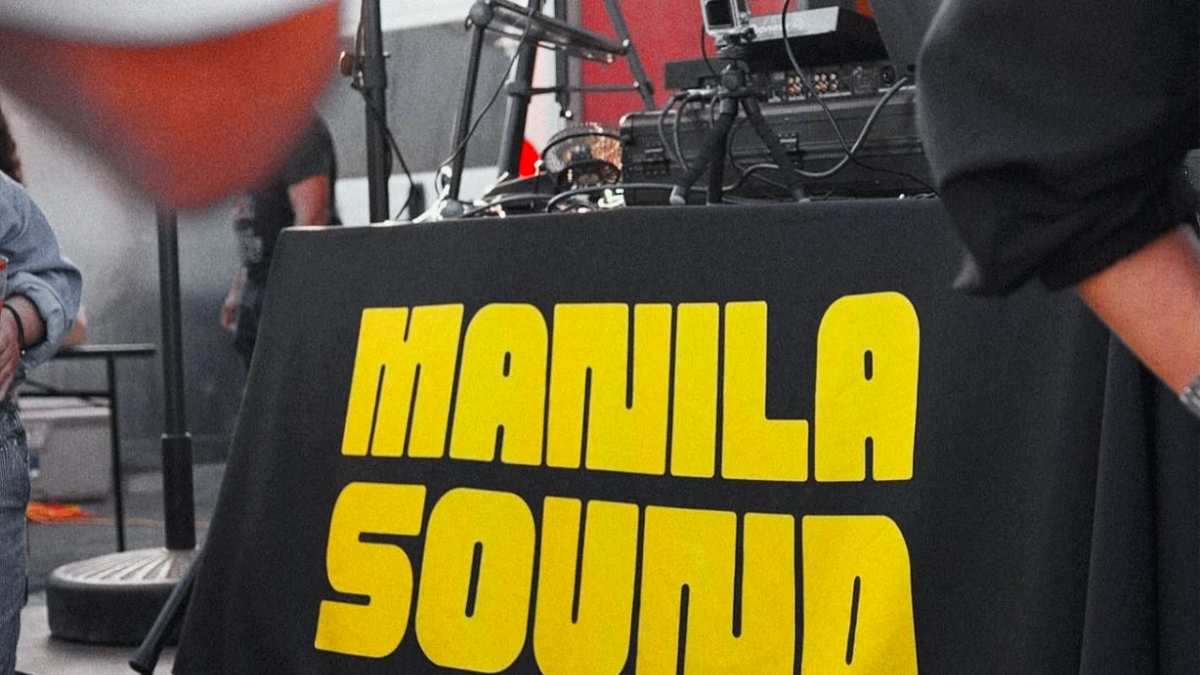
As a DJ who spins techno and house, I’ve been closely observing the electronic music scene, both here in the Philippines and globally. There’s been a significant buzz lately around the rising popularity of hard techno, and it’s sparked quite a debate within the community, especially among those of us who’ve championed its underground roots for years. The big question on everyone’s mind seems to be whether this increased visibility is just a natural evolution of the sound or if it’s actually diluting its core principles.
The Shifting Landscape of Electronic Music
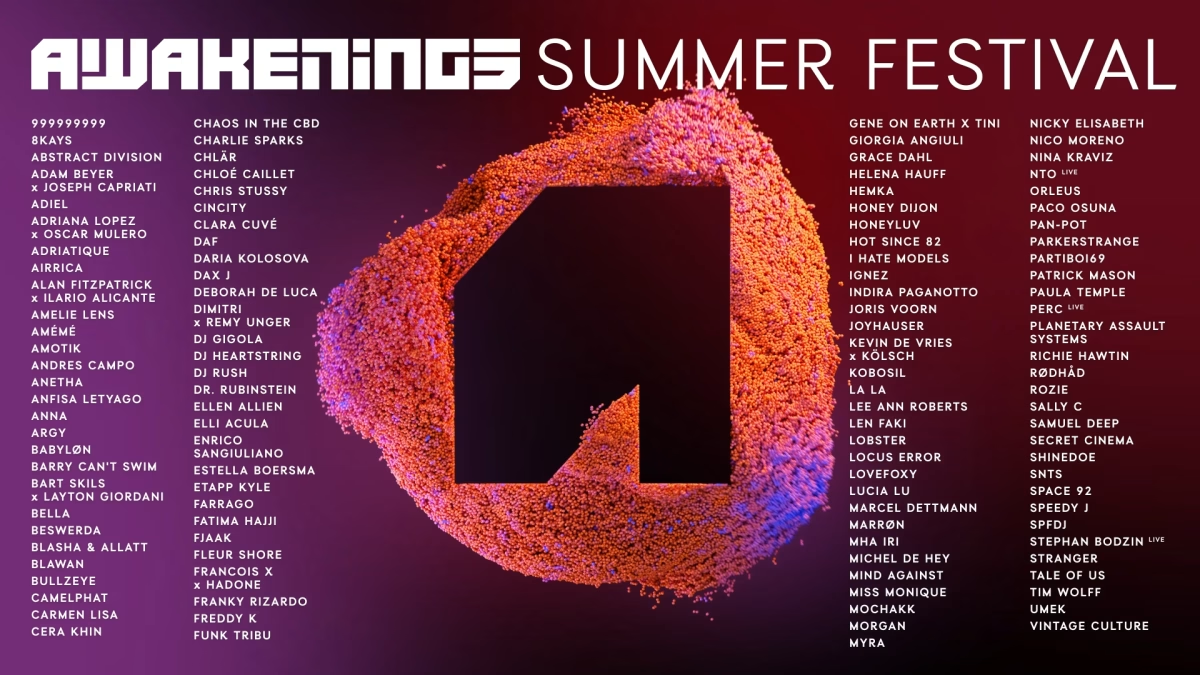
The electronic music landscape is always changing. Genres pop up, mix with others, and often find new listeners, sometimes to the dismay of the artists and fans who were there from the beginning. Hard techno, with its relentless rhythms, often distorted percussion, and driving basslines, has definitely gained a lot of traction recently. You can see this in the growing number of hard techno acts headlining festivals that used to feature more commercially oriented electronic dance music acts. For example, events like Awakenings, which has always been a techno stronghold, have expanded their bookings to include artists pushing harder styles to name a few from the line up 999999999, Kobosil, Indira Paganotto, I Hate Models, Cera Khin, and Nico Moreno. This really reflects a broader shift in what audiences are looking for (Awakenings Festival Lineup, 2024).
The Underground Community’s Perspective
For many in the traditional techno and underground communities, hard techno’s growing mainstream appeal presents a bit of a paradox. On one hand, it’s a validation of a sound that’s existed on the fringes for a long time, cultivated in dimly lit warehouses and intimate club spaces. Artists who once played to dedicated, niche crowds are now reaching a global audience. This increased exposure can open up more opportunities for producers and DJs, potentially leading to more innovation within the genre.
However, a significant number of techno purists are concerned. Their apprehension comes from the fear that commercialization might lead to a homogenization of the sound, stripping away the raw, experimental edge that defined early hard techno. They argue that the pressure to appeal to a broader audience could result in a predictable formula, sacrificing artistic integrity for mass appeal. This feeling echoes similar discussions that happened when trance became mainstream in the late 1990s or when big-room house rose in the 2010s, where genres initially revered for their depth and innovation became simplified for wider consumption [ Haslam, 2015 ].
What’s more, the concept of “real techno” is deeply ingrained in the underground ethos. This often refers to a sound that prioritizes technical skill, nuanced sound design, and a certain rawness over overtly melodic or accessible structures. When a genre gains mainstream appeal, it often simplifies its complexities to be more palatable to new listeners. For some, this dilutes the very essence of what they consider to be “techno.” The intricate polyrhythms or abstract textures found in tracks by early hard techno pioneers like Surgeon or Regis might be seen as too challenging for a mainstream audience, leading to a focus on more straightforward, high-impact productions.
Evolution vs. Dilution
The debate between evolution and dilution isn’t new to electronic music. Since the early days of house and techno, there have always been artists pushing boundaries and others refining established sounds for broader appeal. The current path of hard techno can be viewed through this lens. The emergence of subgenres like industrial techno and schranz in the 1990s and early 2000s showed an inherent drive within the techno community to explore harder and more aggressive sounds.
What we’re witnessing now might simply be a natural progression, amplified by the pervasive reach of social media and streaming platforms. Platforms like Boiler Room have played a pivotal role, democratizing access to the raw energy of underground sets and presenting hard techno in a visually engaging, often “easy to digest” format for a global audience, expanding its reach far beyond traditional club-goers. [ Techno Airlines, 2025 ]. Simultaneously, the meteoric rise of short-form video platforms such as TikTok has seen hard techno tracks and clips go viral, exposing the genre to an entirely new, often younger, demographic and accelerating its presence in mainstream consciousness. A track like “Rave Machine” by Dax J or Amelie Lens’ sets at major festivals demonstrate a refined, yet uncompromising, approach to hard techno that resonates with a wide audience without necessarily abandoning its core intensity [ DJ Mag, 2023 ].
The question of whether hard techno is becoming the “new mainstream EDM” is complex. While its presence on larger stages and in mainstream media is undeniable, it still has a distinct edge that sets it apart from the more pop-oriented sounds often associated with mainstream EDM. However, the commercial pressures that come with this visibility could undeniably shape its future direction. The true test will be whether artists within the genre can navigate this newfound popularity without sacrificing the experimental spirit and raw energy that initially drew both purists and new fans alike.
What are your thoughts on this evolution, or potential dilution, of hard techno?
Frequently Asked Questions About Hard Techno’s Mainstream Appeal
What defines hard techno music?
Hard techno is characterized by its relentless rhythms, often distorted percussion, and driving basslines, offering a raw and intense listening experience.
How has hard techno’s popularity changed in recent years?
Hard techno has seen a significant increase in popularity, leading to its inclusion in major festivals and reaching a global audience, shifting from its traditional underground niche.
Why do some techno purists dislike mainstream hard techno?
Techno purists express concern that hard techno’s commercialization may lead to a homogenization of the sound, diluting its experimental edge and sacrificing artistic integrity for broader appeal, similar to past genre evolutions.
Is hard techno considered mainstream EDM now?
While hard techno is gaining mainstream visibility and appearing on larger stages, it retains a distinct edge that differentiates it from more pop-oriented mainstream EDM, though commercial pressures could influence its future direction.
What is the debate surrounding hard techno’s evolution?
The debate centers on whether hard techno’s increasing visibility represents a natural evolution of the genre, allowing artists greater reach, or a dilution of its core principles due to commercialization and the potential loss of its raw, underground essence.
* generate randomized username
- COMMENT_FIRST
- #1 Lord_Nikon [12]
- #2 Void_Reaper [10]
- #3 Cereal_Killer [10]
- #4 Dark_Pulse [9]
- #5 Void_Strike [8]
- #6 Phantom_Phreak [7]
- #7 Data_Drifter [7]
- #8 Zero_Cool [7]