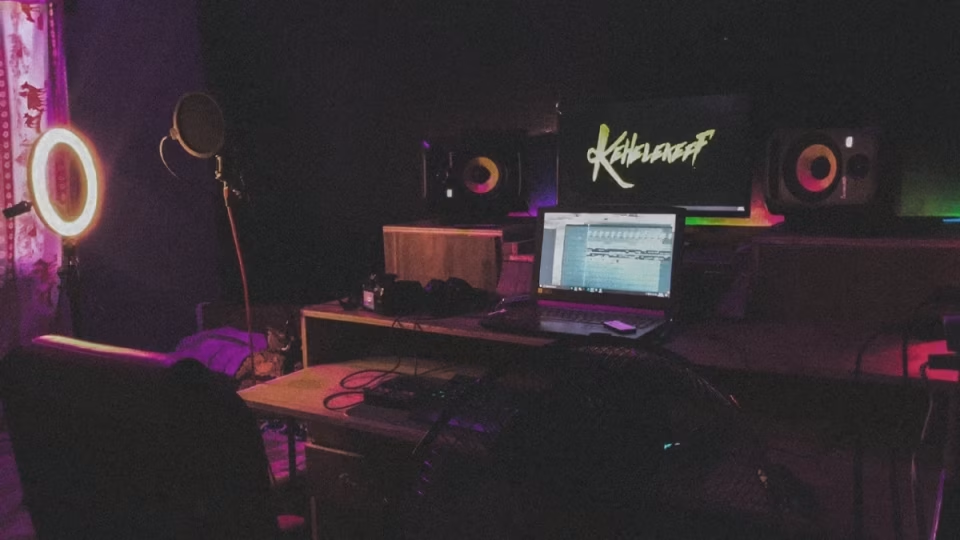
As a music producer myself, I sometimes hit a wall. You’ve been sitting for hours, the ideas just aren’t flowing, and that creative spark feels like it’s taken a vacation. In those moments, the idea of an AI assistant swooping in to help overcome those creative blocks feels truly futuristic. While some might see it as “cheating,” I view it as a powerful tool, an invaluable assistant that can push you past those hurdles.
The landscape of music production is in a state of continuous evolution, with Artificial Intelligence (AI) rapidly emerging as a profoundly transformative force. Far from replacing human ingenuity, AI tools are increasingly becoming indispensable co-pilots within the studio environment, significantly augmenting a producer’s capabilities across the entire workflow. These intelligent assistants are adept at streamlining tedious tasks, sparking novel ideas, and refining audio with unprecedented precision.
AI’s role in music production is primarily one of augmentation. It efficiently handles mundane, repetitive processes, generates fresh concepts to overcome creative impasses, and refines audio with meticulous accuracy. This allows producers to channel their energy and focus into core creative decisions and artistic expression. The emphasis is firmly on AI as a collaborative partner that empowers, rather than supplants, the human artist.
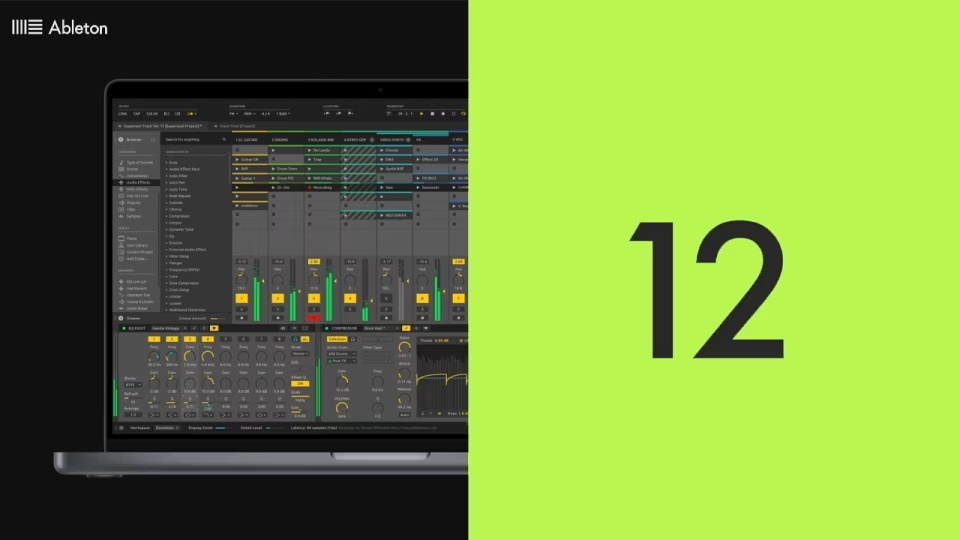
A significant advantage of many contemporary AI music tools lies in their broad compatibility. Regardless of the Digital Audio Workstation (DAW) utilized—be it Ableton Live, Logic Pro, FL Studio, Pro Tools, Cubase, or any other major platform—a burgeoning ecosystem of AI-powered plugins and standalone applications can seamlessly integrate into existing setups. This ensures that these innovations are widely accessible to producers. This report will highlight tools available across common plugin formats, such as VST, AU, and AAX, as well as web-based platforms, demonstrating their versatility.
One major impact of AI is that it makes advanced music production techniques much easier to use. For example, some tools can help you create complex harmonies without needing to know how to play the piano, or automatically master your songs to a professional standard. This “democratization” of techniques means more people can create high-quality music, potentially leading to a more diverse and experimental music scene.
AI tools are often presented as “assistants” or “co-pilots.” They can give you a starting point for a song or mix, handle the tedious setup tasks, and then let you fine-tune everything. This means you can spend less time on technical details and more time on the artistic side of your music.
Here are 10 ways AI is transforming music production:
1. AI for Smart Composition & Idea Generation
AI can help you overcome creative blocks by generating new melodies, chord progressions, basslines, and rhythms. These tools can learn from existing music or create new patterns based on your preferences.
- Examples:
- Orb Producer Suite 3: Generates chords, melodies, basslines, and arpeggios that work together harmonically. (Find out more at Orb Plugins)
- Spark Chords: Creates complex chord progressions from simple text input, useful even if you don’t play piano. (Check out Spark Chords at Plugin Boutique or similar plugin retailers.)
- Melody Sauce 2: Generates endless melodies in various genres. (Learn more at Plug-in Boutique or official developer site.)
- Instachord 2: A MIDI processing plugin for chord creation and sequencing with AI-driven generation. (KVR Audio link)
- AIVA (AI Music Generation Assistant): Generates new songs in over 250 different styles. (AIVA.ai)
- Impact: These tools bridge skill gaps for beginners and speed up the idea phase for experienced producers, allowing for more experimentation and polished compositions.
- Important Note: Copyright and ownership of AI-generated music are still being debated. Always check the licensing terms of any AI tool you use, especially for commercial projects.
2. Revolutionizing Drum & Beat Creation
AI can create unique drum patterns, generate original drum sounds, and organize your sample libraries to make finding sounds easier.
- Examples:
- Playbeat by Audiomodern: An AI drum sequencer that generates patterns from your samples. (Visit Audiomodern for details.)
- Atlas 2 by Algonaut: Organizes drum samples by similarity, making it easy to find new sounds and build kits. (Algonaut’s official website or articles like Composing Gloves)
- Emergent Drums 2: Creates original, royalty-free drum samples from scratch. (Audialab (SoundCloud Help))
- Drumnet: An AI-powered drum machine plugin with “Deep Resampling” technology. (Equipboard)
- Fazertone Neural Drumkit: Generates and edits drum sounds using a neural network. (Fazertone)
- Impact: This shifts drum production from just managing existing samples to dynamically exploring new sounds. AI can also “humanize” programmed drums by adding subtle variations, making them sound more natural.

3. Advanced Vocal Processing & Synthesis
AI is transforming how vocals are handled, from precise tuning to creating entirely new vocal performances.
- Examples:
- Synchro Arts VocAlign 6: Effortlessly aligns layered vocal takes. (Check Synchro Arts for more.)
- SynchroArts RePitch: A powerful vocal tuning plugin that maintains a natural sound. (Learn more at Synchro Arts)
- ACE Studio: Offers AI vocal synthesis, voice changing, and even voice cloning. (ACE Studio)
- Kits AI: A web application for voice-to-voice audio conversion and creating custom AI voice models. (Kits.AI)
- Controlla Voice: Browser-based AI singing voice generation, voice blending, and timbre transfer. (Controlla Voice)
- Synthesizer V Studio 2 Pro + Vocoflex Voice Morphing: Combines a DAW with a built-in AI voice generator. (Find info at Dreamtonics)
- Lalals: Web-based vocal AI production tool focused on vocal mimicry of famous artists. (Visit Lalals.com)
- Musicfy: Similar to Lalals, offering vocal mimicry with less recognizable vocal models. (Find more at Musicfy.ai)
- Sample Logic Vocal AI: A vocal synthesis plugin for generating a variety of vocal sounds. (Check Sample Logic for details.)
- Impact: AI allows for incredibly precise vocal correction and also opens up new creative possibilities for expressive vocal sound design, going beyond simple fixes.
- Important Note: Using AI to mimic or clone voices raises significant legal and ethical questions about intellectual property and artist rights. Proceed with extreme caution for commercial use.
4. Streamlined Mixing with AI Assistants
Mixing, which involves balancing all the elements of a song, can be complex. AI assistants can analyze your audio and suggest or even apply processing automatically, giving you a great starting point.
- Examples:
- iZotope Neutron 5 (Mix Assistant): Analyzes tracks and automatically applies EQ, compression, and more, while still allowing for manual tweaking. (Learn more at iZotope)
- Focusrite Fast Bundle: A set of plugins that automatically adjust based on your audio. (See Focusrite Bundles)
- Sonible Pure Bundle: Features three AI-powered “one-knob” plugins for streamlined workflow. (Find it at Sonible)
- TAIP tape plugin by Baby Audio: Uses AI neural networks to mimic tape processing for authentic warmth. (Check out Baby Audio)
- Fazertone Overdrive Essentials: AI-modeled emulations of classic overdrive guitar pedals. (Fazertone)
- Studioverse by Waves: Offers thousands of plugin preset chains within a single VST with AI-driven recommendations. (Explore Waves Audio)
- Mixea: An AI-powered online mastering solution (from Distrokid creators). (Visit Mixea)
- CryoMix: An online AI mixing and mastering tool focusing on vocal enhancement. (Callin.io AI Tools)
- Impact: AI speeds up the mixing process significantly, allowing producers of all levels to achieve a balanced sound faster and focus on creative decisions.
5. Precision Mastering with AI
Mastering is the final step to make a song sound polished and consistent. AI mastering tools analyze vast amounts of professional music to apply optimal processing.
- Examples:
- iZotope Ozone 11 (Mastering Assistant): Offers automatic mastering with full editing control afterwards. (Learn more at iZotope)
- LANDR Mastering: A popular platform for AI-powered online mastering, used by many artists. (Visit LANDR)
- Slate Digital Virtu Mastering: Web-based assisted mastering with style profiles and reference track matching. (Check out Slate Digital)
- HarmonicAI: An AI-powered mastering tool for professional-grade audio finalization. (While a direct product link is elusive in search results, often these are found via general search for “HarmonicAI mastering” or through audio production forums.)
- Mixea: (Also listed under mixing) An AI-powered online mastering solution. (Visit Mixea)
- Impact: AI democratizes mastering, making professional-grade results accessible and affordable for independent artists and home studios, empowering them to have more control over their final sound.
6. Intelligent Audio Repair & Enhancement
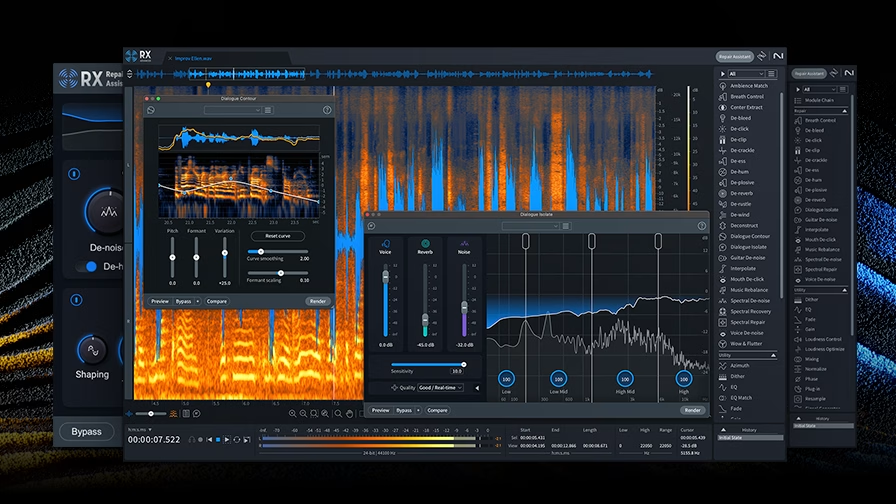
AI can identify and remove flaws like background noise, hums, and clicks, restoring clarity to recordings that might otherwise be unusable.
- Examples:
- iZotope RX 11 Advanced: A comprehensive toolkit for audio repair, an industry standard. (Find out more at iZotope)
- CrumplePop Suite: AI-powered plugins for removing echo, noise, wind, traffic, and more. (CrumplePop)
- AudioSculpt: An intelligent audio restoration and enhancement tool, often referring to a category of tools or specific products (e.g., Adobe Podcast’s Enhance Speech feature: Adobe Podcast).
- Fadr’s Stems Plugin: Uses AI to extract stems from any song within a DAW. (Fadr)
- LALAL.AI: Known for its AI-powered stem separation technology. (LALAL.AI)
- Impact: AI makes audio repair much faster and more precise, salvaging imperfect recordings. Stem separation also opens up new creative possibilities for remixing and sampling.
7. AI for Innovative Sound Design & Effects
AI is enabling entirely new ways to create sounds, from generating unique textures to creating immersive effects.
- Examples:
- Synplant (Genopatch Technology): Crafts new synth patches directly from audio recordings. (Discover more at Propellerhead Software or similar retailers.)
- ElevenLabs Text to Sound Effects: Allows users to generate custom sound effects from text prompts. (ElevenLabs)
- Zynaptiq ADAPTIVERB: A “Reflectionless Harmonic Tracking Synthesis Reverb Plug-in.” (Visit Zynaptiq for details.)
- iZotope Cascadia: An “intelligent delay plugin.” (Likely found within iZotope’s plugin suite, check iZotope for latest product offerings.)
- iZotope Equinox: An “immersive, adaptive reverb plugin.” (Likely found within iZotope’s plugin suite, check iZotope for latest product offerings.)
- Baby Audio Atoms: A synth that uses a virtual mass-spring interaction model to generate sound through vibration. (Baby Audio)
- Impact: AI allows producers to explore a limitless range of sounds, generating unique audio that’s perfectly tailored to their vision without relying on pre-existing libraries.
8. AI for Music Theory & Learning
AI can help you understand and apply music theory, analyzing compositions and suggesting harmonic progressions.
- Examples:
- ChatGPT: While a general-purpose AI, it’s highly useful for generating musical ideas and theoretical guidance from text prompts. (OpenAI ChatGPT)
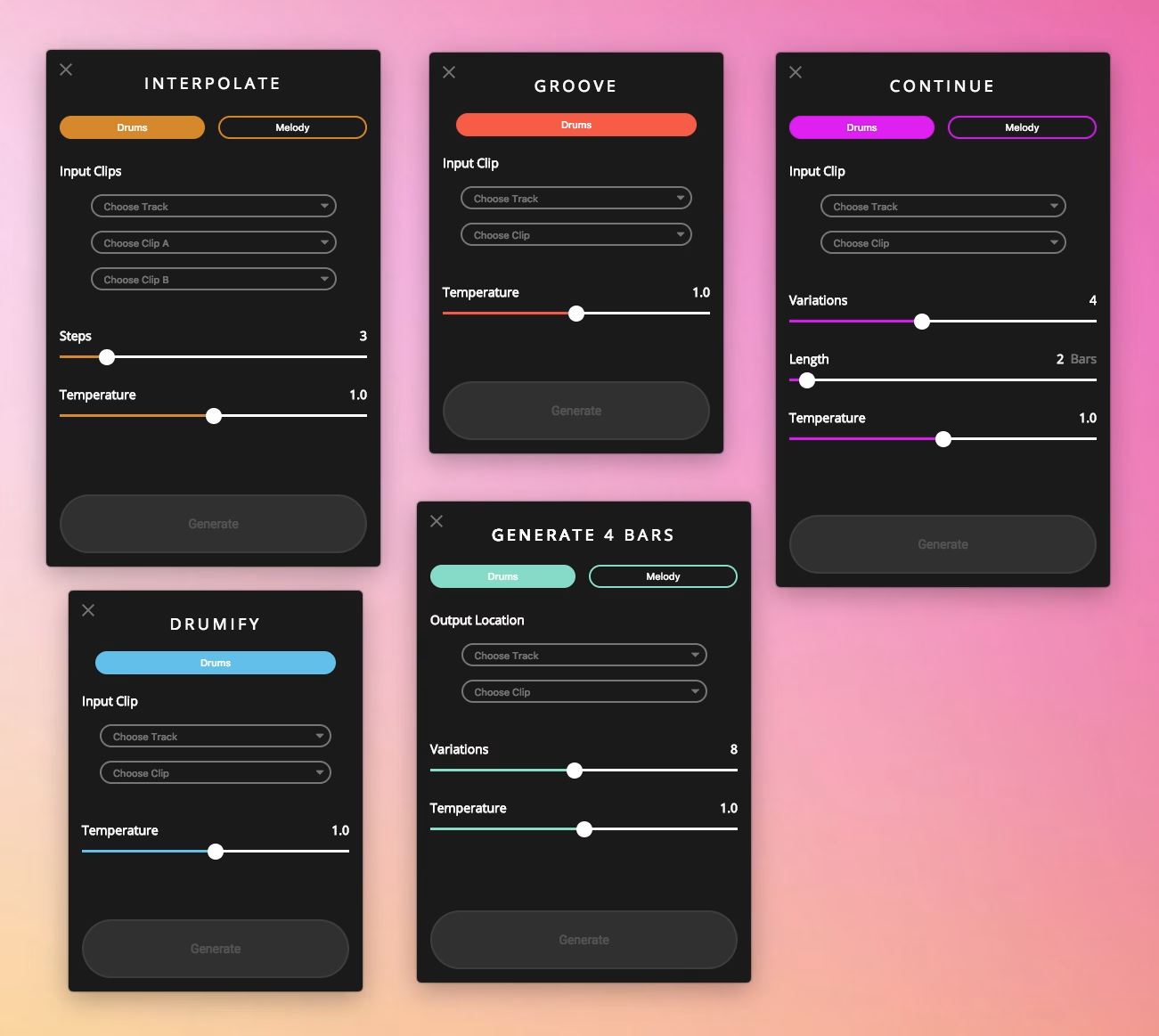
- Google Magenta Studio: A project by Google focused on AI music composition, often integrating as a plugin for DAWs like Ableton Live. (Magenta Studio at Zignuts)
- WavTool: (Currently offline, but demonstrated potential) An AI DAW that operated in a web browser, offering AI-assisted chord progressions and more.
- Impact: AI democratizes complex music theory knowledge, allowing producers without formal training to create sophisticated compositions and experiment with new ideas faster.
9. AI for Sample Management & Discovery
Managing large collections of audio samples can be time-consuming. AI offers smart solutions for organizing and finding samples.
- Examples:
- Atlas 2 by Algonaut: Creates “sample maps” that group similar sounds visually, making it easy to find alternatives. (Algonaut’s official website)
- FL Cloud: Integrates a huge cloud sample library directly into FL Studio, with potential for AI-driven intelligent suggestions. (Part of Image-Line FL Studio)
- Impact: AI transforms sample libraries from static collections into dynamic, intelligently categorized resources, speeding up workflow and sparking new creative ideas.
10. AI for Full Song Generation & Arrangement
The cutting edge of AI in music is generating entire songs, including melodies, arrangements, and even lyrics.
- Examples:
- Suno: Generates songs by typing in lyrics and choosing a music style. (Suno.ai)
- AIVA (AI Music Generation Assistant): Generates new songs in over 250 different styles in seconds. (AIVA.ai)
- Udio: Allows for the creation of 32-second clips that can be extended into full songs. (Udio.com)
- Soundful: Generates royalty-free background music for various content. (Soundful.com)
- Impact: AI allows for rapid prototyping of entire song ideas, shifting the creative process from initial creation to curation and refinement by the human artist.
In conclusion, AI isn’t here to replace human artists. Instead, it’s becoming an essential partner, handling repetitive tasks, offering creative starting points, and making advanced techniques accessible to everyone. This collaboration promises to unlock new levels of efficiency, creativity, and accessibility for music creators across all platforms.
10 FAQs About AI in Music Production
Here are 10 frequently asked questions that people might search for regarding AI in music production:
Is AI going to replace human music producers?
No, AI is not expected to replace human music producers. Instead, it acts as a “co-pilot” or “assistant,” streamlining tasks, generating ideas, and refining audio. Human creativity, artistic vision, and emotional nuance remain essential.
Can I use AI music tools with my existing music software (DAW)?
Yes, most contemporary AI music tools are designed to be broadly compatible with major DAWs like Ableton Live, Logic Pro, FL Studio, Pro Tools, and others. Many come as plugins (VST, AU, AAX) or standalone applications that integrate seamlessly.
Do I need to be a music theory expert to use AI music composition tools?
Not at all. Many AI tools are designed to lower the barrier to entry for complex music theory. For example, some can generate intricate chord progressions or melodies without you needing to know how to play an instrument or understand advanced theory.
How does AI help with mixing and mastering?
AI mixing assistants can analyze your audio and suggest or automatically apply processing like EQ and compression, providing an excellent starting point. AI mastering tools analyze your track and apply optimal processing based on professionally mastered songs, helping you achieve a polished, release-ready sound.
What are the legal implications of using AI to create music, especially for commercial use?
The legal landscape for AI-generated music, especially regarding copyright and ownership, is still evolving and can be “murky.” For commercial projects, it’s crucial to carefully review the licensing agreements and terms of service for any AI tool you use, particularly those involving vocal mimicry or full song generation.
Can AI generate original drum sounds or just patterns?
AI can do both. Tools like Emergent Drums 2 can create entirely original, royalty-free drum samples from scratch, while AI drum sequencers like Playbeat by Audiomodern can generate unique rhythmic patterns using your existing samples or newly generated ones.
What are “stem separation” tools, and how does AI help with them?
Stem separation tools use AI to extract individual components (like vocals, drums, bass, or guitar) from a finished song. This allows producers to remix, sample, or manipulate individual elements that were previously inseparable from a mixed track. Popular examples include LALAL.AI and Fadr’s Stems Plugin.
Can AI help me overcome writer’s block or find new musical ideas?
Absolutely. AI tools excel at generating creative ideas, from melodies and chord progressions to drum patterns and sound design elements. They can provide a powerful springboard for creativity when you’re feeling stuck. Tools like ChatGPT and Melody Sauce 2 are great for this.
How accurate are AI tools for audio repair and enhancement?
AI audio repair tools are highly accurate and have become industry-standard for fixing imperfections like background noise, hum, hiss, and clipping. They can intelligently identify, isolate, and remove flaws, restoring clarity to recordings. iZotope RX 11 Advanced and the CrumplePop Suite are leading examples.
Is it possible for AI to create an entire song from scratch?
Yes, platforms like Suno and AIVA are capable of generating entire songs, including melodies, arrangements, and sometimes even lyrics, from simple text prompts or musical parameters. While still evolving, these tools offer a rapid way to prototype complete musical pieces.
Sources:
The information in this article is based on publicly available descriptions, features, and reports on various AI music production tools and platforms. Specific mentions and links include:
- Manufacturers’ Official Websites:
- ACE Studio
- AIVA
- Audiomodern (Playbeat)
- Algonaut (Atlas 2)
- Baby Audio (TAIP)
- Baby Audio (Atoms)
- CrumplePop Suite
- Dreamtonics (Synthesizer V Studio, Vocoflex)
- ElevenLabs (Text to Sound Effects)
- Emergent Drums
- Fadr (Stems Plugin)
- Fazertone (Neural Drumkit)
- Fazertone (Overdrive Essentials)
- Focusrite (Fast Bundle)
- iZotope (Neutron, Ozone, RX, Cascadia, Equinox)
- Kits AI
- LALAL.AI
- LANDR Mastering
- Orb Producer Suite
- Sample Logic (Vocal AI)
- Slate Digital (Virtu Mastering)
- Sonible (Pure Bundle)
- Soundful
- Synchro Arts (VocAlign, RePitch)
- Udio
- Waves (Studioverse)
- Zynaptiq (ADAPTIVERB)
- Plugin/Software Retailers & Databases:
- KVR Audio (for Instachord 2)
- Plugin Boutique (for Spark Chords, Melody Sauce 2)
- Equipboard (for Drumnet)
- AI Development Projects & General AI Platforms:
- Other Related Services/Platforms:
It’s important to note that the field of AI in music production is rapidly advancing, and new tools and capabilities are emerging constantly. Always refer to the latest information from the developers and official sources for the most up-to-date details.
* generate randomized username
- COMMENT_FIRST
- #1 Lord_Nikon [12]
- #2 Void_Reaper [10]
- #3 Cereal_Killer [10]
- #4 Dark_Pulse [9]
- #5 Void_Strike [8]
- #6 Phantom_Phreak [7]
- #7 Data_Drifter [7]
- #8 Cipher_Blade [6]