
Let’s be real. If you walk into a dark, sweating basement club in Berlin, London, or even the underground pockets of Detroit, and ask the DJ what kind of “EDM” they’re spinning, you’re going to get laughed out of the room.
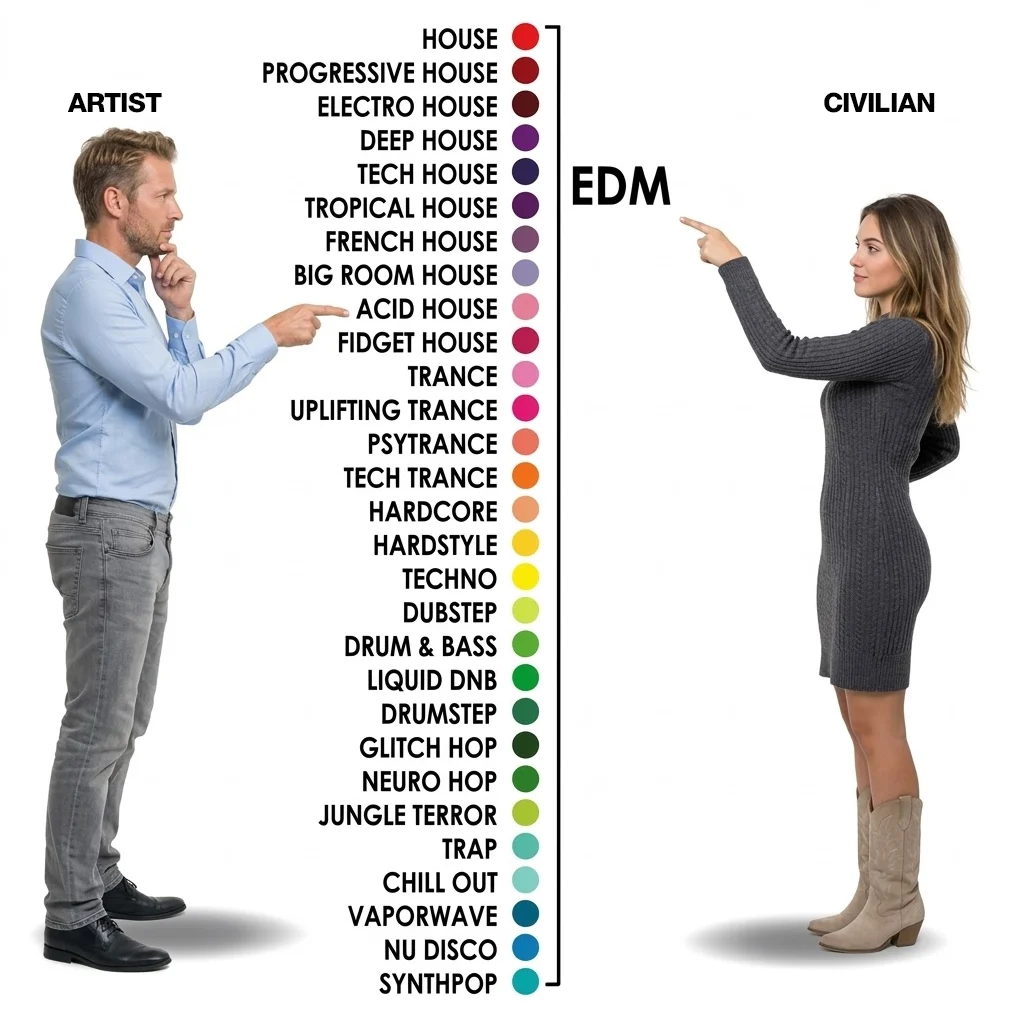
To the uninitiated, the term “EDM” (Electronic Dance Music) seems like a perfectly benign, functional acronym. But to purists, veterans, and underground heads, it sounds more like an aggressive stock portfolio than a musical genre. It’s a loaded, corporate stamped buzzword that acts as a dividing line between authentic club culture and mainstream spectacle. But why exactly do the people making and playing this music hate the term so viscerally? Here are five undeniable reasons why the electronic underground wants the “EDM” moniker dead.
1. Wait, Didn’t Black and Queer Communities Invent This?
Let’s get the history straight. The foundations of modern dance music weren’t built by straight, white millionaire bros standing in VIP bottle service booths. House and techno were birthed in the late 70s and 80s by marginalized Black, Queer, and Latino youth in post industrial cities like Chicago, Detroit, and New York.
Legends like Frankie Knuckles (widely venerated as the “Godfather of House”) and Derrick May, who famously described techno as a beautiful and accidental collision of Kraftwerk and George Clinton’s funk, built this culture as a safe haven and a form of joyful resistance. When corporate America hijacked the sound and slapped the “EDM” label on it, they aggressively whitewashed its origins. It became a shiny product packaged for white suburban festival goers, actively erasing the pioneers who literally programmed the Roland 808s and 303s that make the music pulse.

Is the $599 MacBook Neo the Best Budget DJ Laptop for 2026?
2. Selling Out the Underground for Corporate Cash
Historically, rave culture was aggressively anti corporate. It was about dark warehouses, communal transcendence, and escaping the drudgery of late stage capitalism. Then the 2010s festival boom hit, and Wall Street realized they could monetize the euphoria. Today, when casual listeners search for EDM events near me , they are usually directed to multi million dollar megafestivals sponsored by energy drinks and automotive brands rather than grassroots local venues.
Suddenly, we weren’t raving; we were participating in what some cynical insiders accurately dub “Event Driven Marketing”. Underground icon Seth Troxler didn’t mince words when he asked how modern fans didn’t realize they were getting deep throated by corporations. The term “EDM” represents this brutal shift from a communal, spiritual release to an overpriced, neon soaked circus where the DJ is treated like a pop star brand rather than a musical shaman.
3. Everything Sounds Like the Same Formulaic Pop Song
If you track electronic dance music trends , you’ll quickly notice that the mainstream industry essentially took the nuanced, hypnotic, marathon length journey of club music and compressed it into a three minute sugar rush.
Real house and techno are about the groove, a continuous and rolling tension. Mainstream EDM reduced this complex art form to the lowest common denominator: massive, stadium sized synth hooks, formulaic pop vocals, and the inevitable, aggressive bass drop. Academics and journalists now categorize this commercial offshoot strictly as “EDM Pop”. Old school techno master Richie Hawtin flat out called the mainstream wave “pop music”. It stripped the mystery and the edge out of the club, replacing it with predictable, paint by numbers festival bangers that critics have bluntly likened to sonic ear rape. It’s music designed for maximum commercial retention, not for getting lost on a dark dancefloor.
4. Why Lumping Every Genre Together is Just Lazy
Calling all electronic music “EDM” is profoundly lazy. As one frustrated DJ aptly put it, it’s the equivalent of calling everything from punk and heavy metal to indie rock “Guitar Mosh Music”.
Electronic music is a vast, wildly diverse ecosystem. You have the mechanical 130 BPM thump of techno, the syncopated bass weight of London dubstep, the euphoric sweeps of trance, and the soulful vocals of Chicago house. Throwing an introspective, ambient IDM record into the same bucket as an aggressive, pyrotechnic Skrillex track under the blanket of “EDM” makes zero sense. The umbrella term is so broad and clunky that it completely disrespects the distinct subcultures, tempos, and communities that define each specific genre. If event planners want to hire a DJ locally who spins real deep tech or liquid drum and bass, calling them an “EDM artist” is a quick way to insult their craft.
5. America “Discovered” a Scene Europe Had for Decades
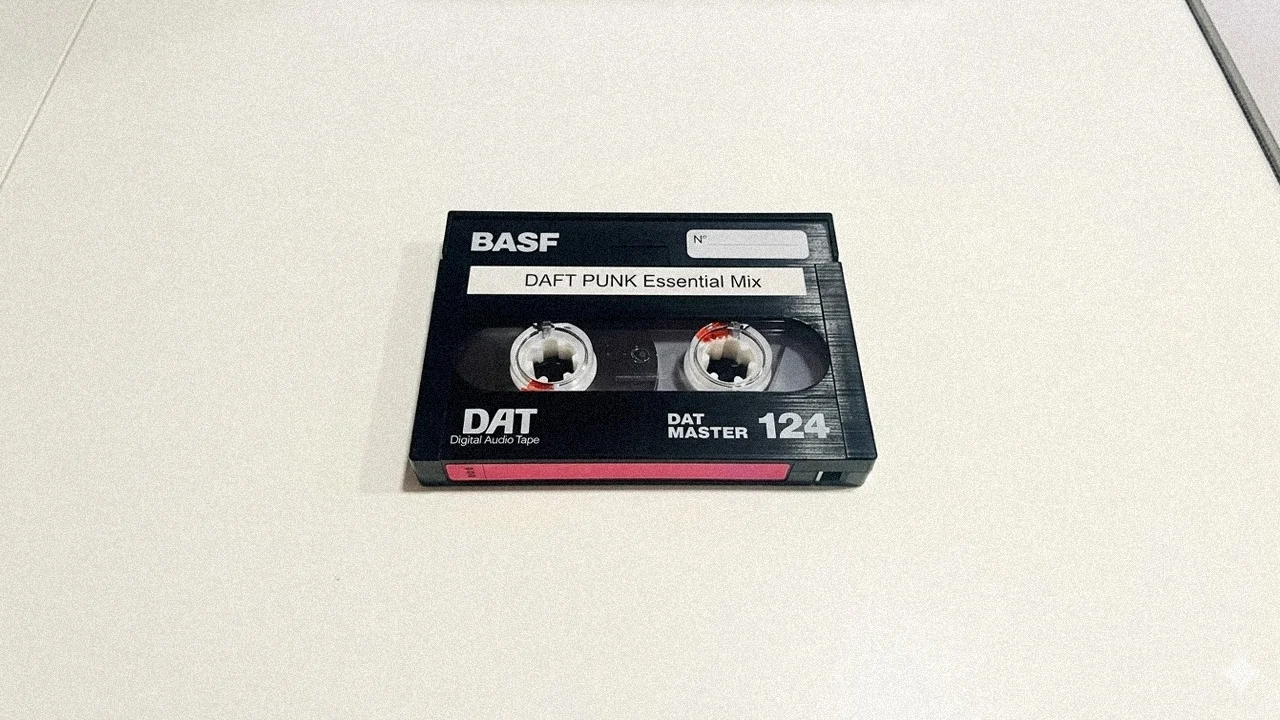
Finally, the rest of the world, especially Europe, views “EDM” as a peak example of American cultural imperialism. While the States largely ignored dance music in the 90s and 00s, Europe was busy embracing acts like Daft Punk, The Chemical Brothers, and Tiësto.
When American executives finally realized the massive financial potential of millennials looking for a party, whether they were searching for massive European events or music festivals Texas , they aggressively imported European sounds, mixed it with explosive bass drops, and rebranded it as “EDM” to scrub away the lingering stigmas of 90s drug culture. House and techno legend Carl Cox nailed it when he noted that EDM is simply a sound America has latched on to. To European clubbers and veteran producers, it was wildly insulting to watch American corporations act like they had just discovered EDM music culture, trademark it with a tacky acronym, and try to sell it back to the global community.
The Bottom Line on the Great Dance Music Debate
Ultimately, the debate over the acronym highlights a natural tension between preserving underground culture and the inevitable mainstream expansion of global music. As electronic dance music trends continue to evolve, the terminology used by fans and critics will likely remain fractured. Whether you are a casual fan looking for EDM events near me , a wedding planner looking to hire a DJ for a large reception , or an underground purist traveling to niche music festivals Texas and beyond , the music itself remains the unifying force. While veterans may forever reject the acronym as a sterilized corporate tag, its sheer utility in connecting millions of listeners to the dancefloor ensures it will remain a permanent fixture in the global entertainment industry.
Sources & Further Reading
Definitions & History:
- Electronic Dance Music (EDM) Overview (Britannica)
- EDM: Origins and Evolution (Wikipedia)
- Is EDM a Genre or an Umbrella Term? (Medium)
The “EDM vs. Underground” Debate:
- Seth Troxler on EDM Fans and Culture (Reddit)
- Why the Hate on “EDM” as a Label? (Reddit)
- Richie Hawtin Speaks Out on “Rock Star” DJs (Digital DJ Tips)
- Richie Hawtin: “EDM is a Gateway Drug” (Reddit)
Inspiration & Academic Study:
- Top 10 Techno Quotes (Techno Airlines)
- Dancecult: Journal of EDM Culture (Dancecult)
- The Evolution of Electronic Music (YouTube)
* generate randomized username
- COMMENT_FIRST
- #1 Lord_Nikon [12]
- #2 Void_Reaper [10]
- #3 Cereal_Killer [10]
- #4 Dark_Pulse [9]
- #5 Void_Strike [8]
- #6 Phantom_Phreak [7]
- #7 Data_Drifter [7]
- #8 Zero_Cool [7]