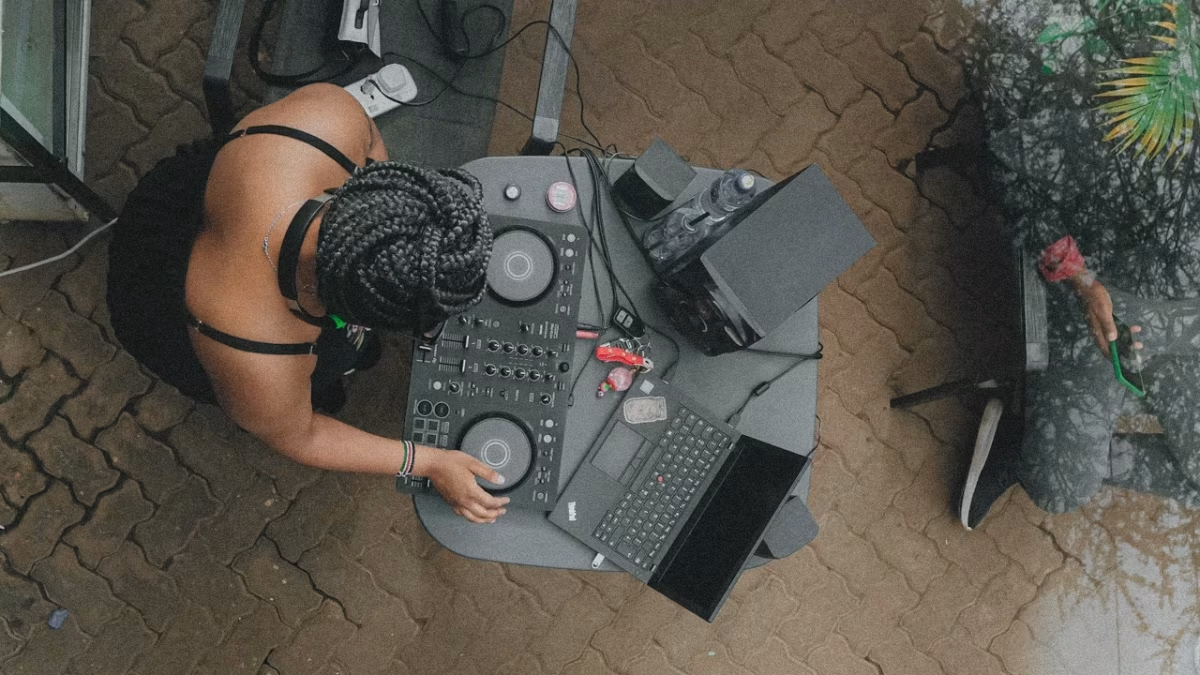

One of Germany’s most respected techno architects just asked a question that’s making the electronic music industry deeply uncomfortable: Has the pursuit of social media success become more important than actually mastering your craft?
Last summer, Steve Bug, the Berlin producer and founder of Poker Flat Recordings who’s been quietly shaping the sound of techno since the mid-90s, posted something on Instagram that didn’t get shared across Noisey and Resident Advisor with the usual fanfare. It wasn’t a hot take designed for controversy. It was almost casual: “When did the world cease to value artists who devote the majority of their time to creating new art rather than producing social media content?”
That question sits at the center of a crisis nobody wants to admit is happening in electronic music right now.
The Numbers Don’t Lie (Unfortunately)
Earlier this year, researchers surveyed 15,000 emerging DJs and producers across 140 countries for the Pete Tong DJ Academy. The results were bleak enough to make even the most optimistic raver question the direction of the scene.
Sixty-one percent of emerging DJs now believe social media followers matter more than actual musical skill when it comes to landing gigs. Let that sink in for a moment. That’s not a minority opinion anymore, that’s the majority reality.
But here’s where it gets worse. Sixty-two percent feel like the scene is a closed club where the barrier to entry isn’t talent, it’s pre-existing clout. More than half reported anxiety or burnout from the pressure to maintain a constant content presence. And 31 percent have seriously considered quitting music entirely within the past year.
One 24-year-old DJ from France summed it up brutally: “Every social media post feels like a test. If it flops I feel like a failure.”
That’s not a person talking about their creative career. That’s someone describing a mental health crisis wrapped in algorithmic validation.
How We Got Here: The Slow Death of the Underground
Nobody woke up in 2025 and decided social media should matter more than musical talent. It happened gradually, then all at once, the way most broken systems do.
The electronic music industry is thriving by every financial metric that matters. It’s generating $12.9 billion annually, growing at 6 percent year-over-year. Festivals are bigger, clubs are packed, production equipment is more accessible than ever. On paper, it’s never been better.
But financial health and cultural health aren’t the same thing.
Throughout the 2010s and 2020s, booking agents and promoters started viewing social media followers like currency. It’s easier to book someone with 50,000 Instagram followers than to risk booking an unknown artist with an incredible track record but zero algorithmic visibility. The math is simple: followers equal potential ticket sales.
Labels adopted the same logic. Instead of A&R scouts digging through SoundCloud, they’re using algorithmic scouting tools to analyze streaming patterns, social engagement, and viral potential. Why take a risk on a kid with raw talent when you can identify someone who’s already proven they can move the needle online?
Record label executive Ryan Maguire recently explained how it works: “We look at the data. If someone’s music is getting streams but they have minimal social presence, there’s a risk there we’re not willing to take anymore.”

Electronic Music Industry Revenue: $12.9 Billion Market and DJ Payment Reality Check
It’s risk mitigation disguised as discovery. And it’s fundamentally broken the pipeline for how underground talent enters the system.
The Influencer Takeover Nobody Talks About
Here’s the uncomfortable truth: Instagram DJs exist now. People who are phenomenal at content creation but mediocre, sometimes brutally bad, at actually mixing or producing music.
They show up, sometimes with minimal technical skill, and secure festival slots that could go to underground talent because they bring guaranteed audience numbers. Their videos get engagement. Their stories hit the algorithm sweet spot. The labels and promoters see the numbers and think “this person is a brand.”
On Reddit’s DJ forums, producers have started calling this out directly. One user described it with obvious frustration: “Most of the influencers have skill in creating online content but can’t do shit live. They drop three-minute pre-recorded sets and call themselves DJs.” 1
The irony is almost cruel: people are traveling to watch live performances from artists who might not actually be capable of reading a room, adapting on the fly, or mixing anything beyond a rehearsed set.
Some bookers still get it. An Idaho-based promoter explained his approach: “I check social media, but I care way more about engagement quality than follower count. I’d book someone with 800 followers and genuine community connection over 3,000 followers with zero interaction.” His test is simple: Can this person draw a crowd? Will they deliver a memorable performance?
But those gatekeepers are increasingly rare.
The Mental Health Crisis Nobody’s Addressing
This is the part that really matters, and it’s barely being discussed in industry journalism.
Research from Frontiers in Psychology and Berklee College of Music identified a pattern among musicians using social media professionally: harmful social comparisons, experience of trolling and abuse, constant uncertainty about algorithmic performance, pressure to produce relentlessly, and complete displacement of actual creative work.
The worst part? Musicians describe feeling like they’re playing an addictive lottery. A post tanks and they spiral. A video goes viral and they get a dopamine hit. This variable reinforcement creates the exact same psychological mechanism as slot machines, and it’s consuming time and mental energy that should be going toward practicing, producing, and developing artistry. 2
When nearly a third of upcoming talent is considering abandoning music entirely because of social media pressure, we’re not talking about an inconvenience anymore. We’re talking about the systematic destruction of a generation’s creative pipeline.


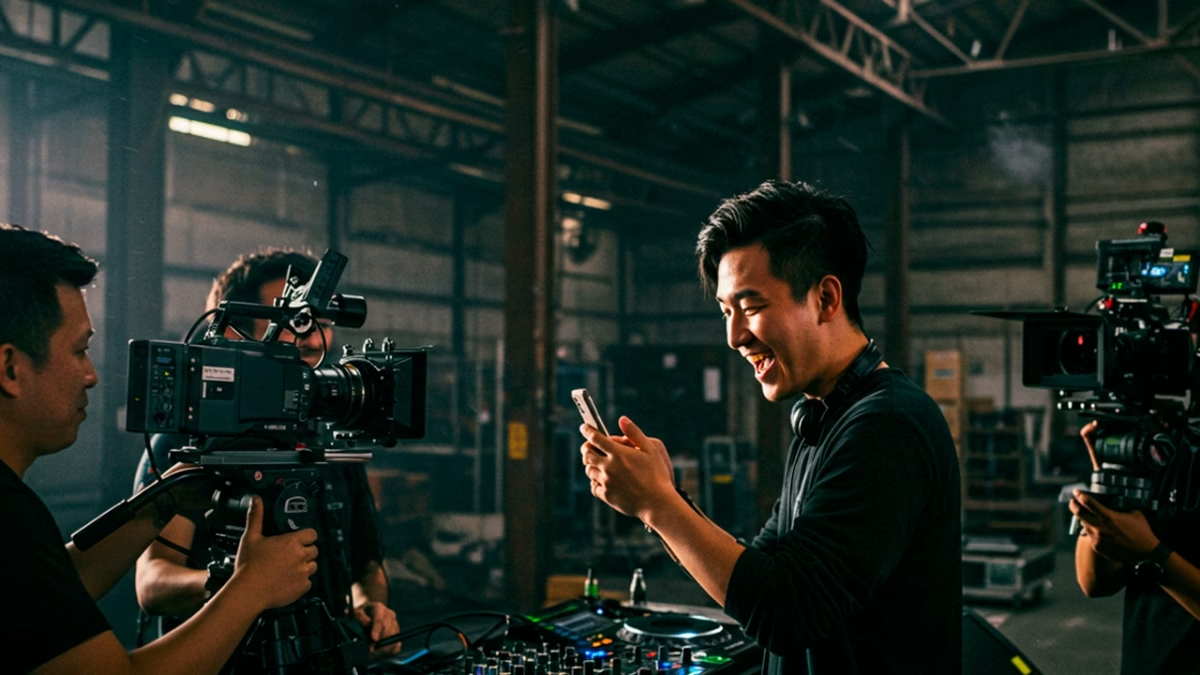
The Uncomfortable Alternative: Some Artists Are Refusing to Play
Not everyone is participating in this race to the bottom.
Some successful electronic musicians have deliberately built careers with minimal social media presence. They focus on music quality, live performance excellence, and community credibility. Tipper, Actress, and a handful of other respected producers have proven that exceptional music can still sustain a career even without massive Instagram engagement. 3
The underground scene, the kind that exists in record stores, local club nights, Discord communities, and word-of-mouth networks, still operates on different criteria. In these spaces, people care about the music first. The social metrics come later, if at all.
It’s slower, harder, and it requires actual musical skill. It also requires patience. Which is why it’s becoming rarer.
What Steve Bug Was Really Asking
When Bug questioned when we stopped valuing artists who prioritize their craft, he wasn’t being nostalgic. He was asking about a real problem: whether the electronic music scene wants to preserve space for artists who make difficult, experimental, challenging music, or whether we’ve collectively decided that viability now means marketability.
“For many, it’s all about growth, fame, and money,” Bug said in a 2024 interview. “Even to the point of trying to keep others from succeeding. I’ve never understood that behaviour. I’m always happy to see other artists grow.” 4
The generational divide is stark. Bug built a three-decade career in an era when music quality genuinely mattered more than personal branding. His label, Poker Flat, discovered and developed talent based on what the music sounded like, not who had the best Instagram strategy.
That world is functionally gone now.
Can We Actually Fix This, Or Are We Just Complaining?
Optimistically, about 35 percent of surveyed DJs still believe that persistence and genuine talent eventually win. They think the system is broken but not unfixable. That craft eventually rises to the top. That dance floors still respond to exceptional music. 5
Maybe they’re right. Maybe the current system is just a transitional phase. Maybe algorithms will eventually figure out that viral doesn’t mean good, and the industry will course-correct.
Or maybe we’re watching the electronic music scene slowly replace musicians with content creators, and calling it the future.
The path forward requires honesty about what we actually value. It means booking agents and promoters reconsidering whether social media followers should be a hiring criterion at all. It means labels investing in artists because their music is genuinely excellent, not because their last post got 50,000 likes. It means venues and festivals protecting space for underground talent even when it’s financially risky.
Most importantly, it means protecting the generation of talented producers and DJs who are actively choosing between developing their craft and developing their brand. Right now, the industry is telling them to choose the brand.
Steve Bug’s question wasn’t rhetorical. And the answer we give, through our booking decisions, our festival lineups, our label rosters, and our actual listening practices, matters far more than another think piece about algorithm problems.
The question isn’t whether the world will ever value artists who prioritize craft over content again. It’s whether anyone in the industry still wants to.
- https://www.reddit.com/r/DJs/comments/1lphh1n/social_media_instagram_influencer_ruining_dj/ ↩︎
- https://www.frontiersin.org/journals/psychology/articles/10.3389/fpsyg.2025.1542407/full ↩︎
- https://www.reddit.com/r/LetsTalkMusic/comments/1iy5tvn/could_an_artist_be_successful_today_without_the/ ↩︎
- https://xceed.me/blog/en/interview-with-steve-bug-not-the-best-decade-for-music/ ↩︎
- https://www.ibiza1radio.com/2025/04/ims-ibiza-2025-61-of-emerging-djs-say-social-media-trumps-talent/ ↩︎
* generate randomized username
- COMMENT_FIRST
- #1 Lord_Nikon [12]
- #2 Void_Reaper [10]
- #3 Cereal_Killer [10]
- #4 Dark_Pulse [9]
- #5 Void_Strike [8]
- #6 Phantom_Phreak [7]
- #7 Data_Drifter [7]
- #8 Zero_Cool [7]


