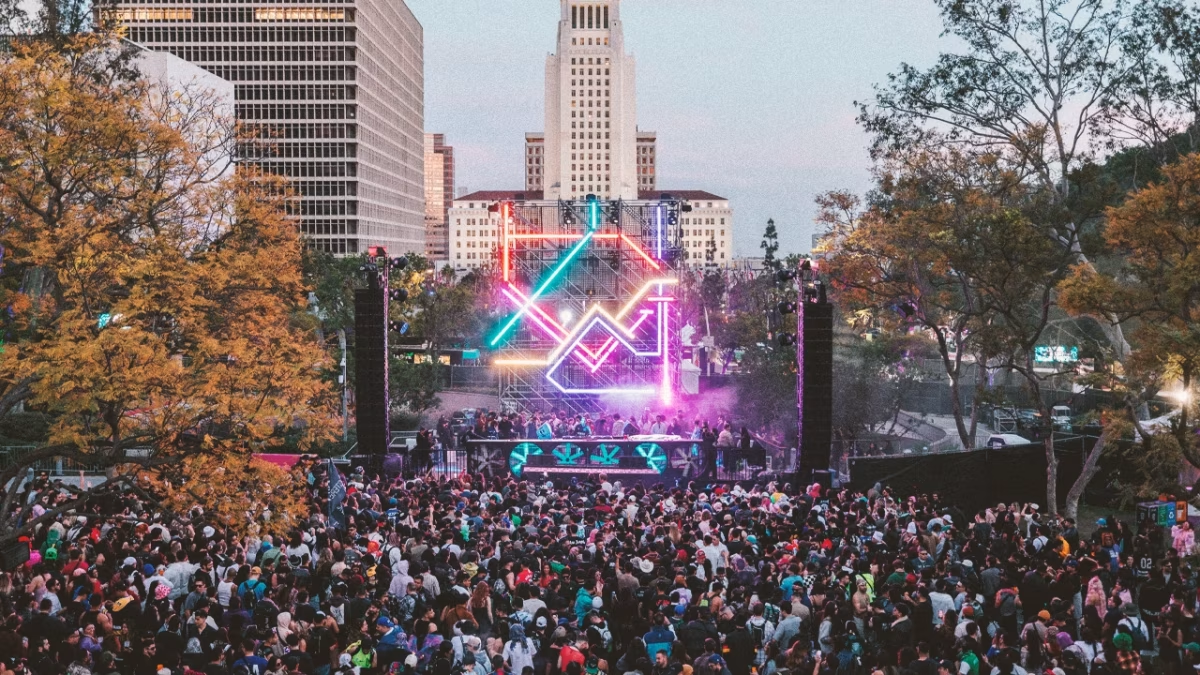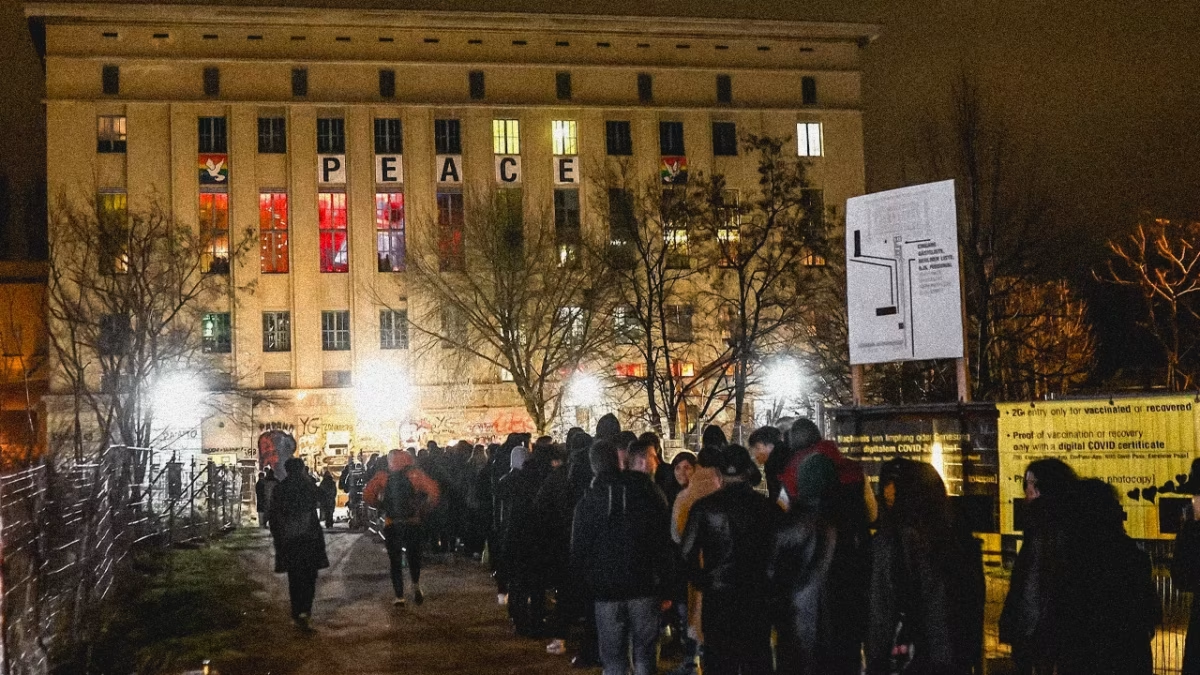


If 2024 was a year of hesitation, 2025 was the year the industry finally exhaled. It was a year defined not by a single sound but by a sprawling and dynamic adaptation. Electronic dance music did not break. It evolved. We saw the mega-festival infrastructure tested by fire and watched it rebuild itself overnight through community solidarity. We saw the “bedroom producer” gain access to tools that were once science fiction. We saw a global audience reject the algorithm in favor of sweaty and phone-free intimacy.
This year wasn’t just about survival. It was about redefinition. Economic headwinds pruned the oversaturated festival market while the roots of the culture grew deeper into new territories and sounds. From the miraculous recovery of Tomorrowland’s mainstage to the relentless output of Skrillex, here is a detailed look at the 20 matters that defined a transformative year in electronic culture.
1. The Miracle at Boom: Resilience Over Ruin
The defining image of the 2025 festival season was not a pyrotechnic explosion. It was a construction crew working through the night. A massive fire destroyed Tomorrowland‘s “Orbyz” mainstage just two days before the gates opened on July 16. The blaze ignited during technical rehearsals and decimated approximately 75% of the structure. In most years this would result in cancellation. However, heavy metal titans Metallica were touring Europe nearby and loaned their massive structural steel rig to the festival to serve as the skeleton for a replacement stage.
The result was a darker and more industrial stage design than Tomorrowland’s usual fairytale aesthetic. The crowd embraced it as a badge of honor. Organizers worked 48-hour shifts to integrate LED walls and pyrotechnics into the new frame and successfully opened the gates on July 18. The incident proved that the “Super Festival” is no longer just an event but a logistical superpower. It is durable enough to withstand actual disaster while smaller events might crumble under lesser pressures.

Metallica Steps In To Save Tomorrowland After Main Stage Fire
2. The Festival Bubble Bursts
While the giants survived, the middle class of the festival circuit collapsed under the weight of inflation and market saturation. The most heartbreaking loss was the Pitchfork Music Festival in Chicago. It was a staple of indie-electronic curation for nearly two decades. Its cancellation for 2025 signaled that even prestigious brands are not immune to the rising costs of talent, insurance, and infrastructure. It was joined by a slew of other cancellations including The BPM Festival: Costa Rica, Kickoff Jam, and Paradise Blue. All cited economic headwinds.
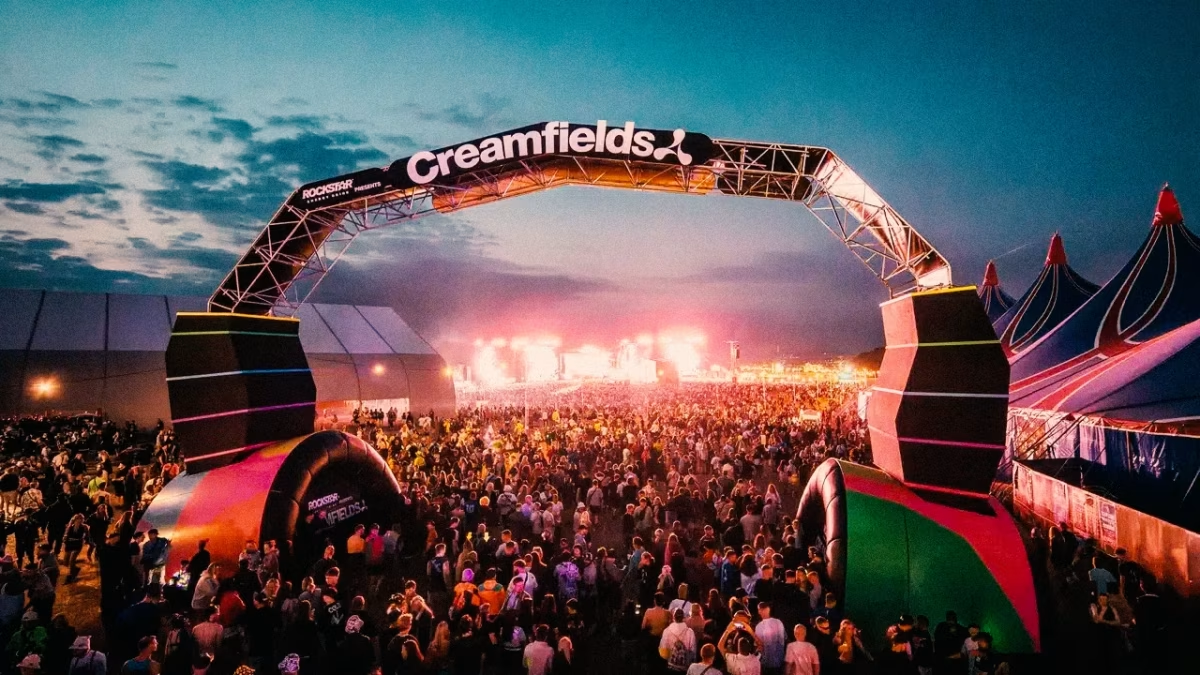
This “culling of the middle” has reshaped the landscape into a binary of haves and have-nots. Fans are increasingly saving their capital for “guaranteed” spectacles like EDC or Tomorrowland. This leaves mid-tier festivals without the ticket volume needed to survive. The cancellation of these events represents a significant loss of biodiversity in the scene. It strips away the critical stepping stones that allowed mid-level artists to grow before hitting the mainstages.
3. Mental Health Infrastructure: Fatboy Slim leads the way
The industry finally began taking care of its own in 2025 by moving from awareness to direct action. Project Healthy Minds partnered with the Music Health Alliance to launch a dedicated digital platform connecting music professionals with services. The most touching development came from a legend of the scene. Fatboy Slim personally funded and facilitated the “Sound Minds” initiative. This series of DJ and rapping workshops for individuals with severe mental illness was organized in partnership with the Sussex Partnership NHS Foundation Trust and charity Heads On.

Inside Fatboy Slim’s Funded DJ Workshops: A New Approach to Severe Mental Illness
This wasn’t just a celebrity endorsement. Norman Cook was on the ground coaching participants and sharing his own journey with mental health. The project culminated on September 24 in a moving showcase at Rockwater Hove where participants performed alongside the DJ legend. It proved that the “healing power of music” isn’t just a platitude. It is a clinical tool capable of building confidence and community for those who need it most.
4. The Trance Renaissance
Trance returned in 2025 as a bridge between generations rather than a nostalgia act. Tiësto pivoted back to his In Search of Sunrise sound at EDC Las Vegas and was treated with the reverence of a religious homecoming. He shed the slap-house hits that defined his last few years and returned to the melodic and emotional soundscapes of the early 2000s. The release of his single “Bring Me To Life” confirmed that this was a dedicated artistic direction. 1
Simultaneously Armin van Buuren expanded the definition of the genre with his massive 51-track project Breathe. The album and his subsequent “face-to-face” sets with techno rebel Maddix blurred the lines between “cool” underground techno and “uncool” mainstage trance. This “Techno-Trance” hybrid has revitalized the genre by giving it a harder and more modern edge that appeals to younger crowds who missed the original 90s wave.
5. Skrillex’s Chaos Method: The Surprise Drop Era
Other artists spent months teasing singles but Skrillex treated 2025 like an unpredictable mixtape. On April 1st he dropped a massive surprise album titled “F*CK U SKRILLEX YOU THINK UR ANDY WARHOL BUT UR NOT!! <3”. The project spanned over 34 tracks and functioned less like a cohesive album and more like a hard drive dump of raw creativity. It featured collaborations with everyone from Boys Noize to 100 gecs’ Dylan Brady.
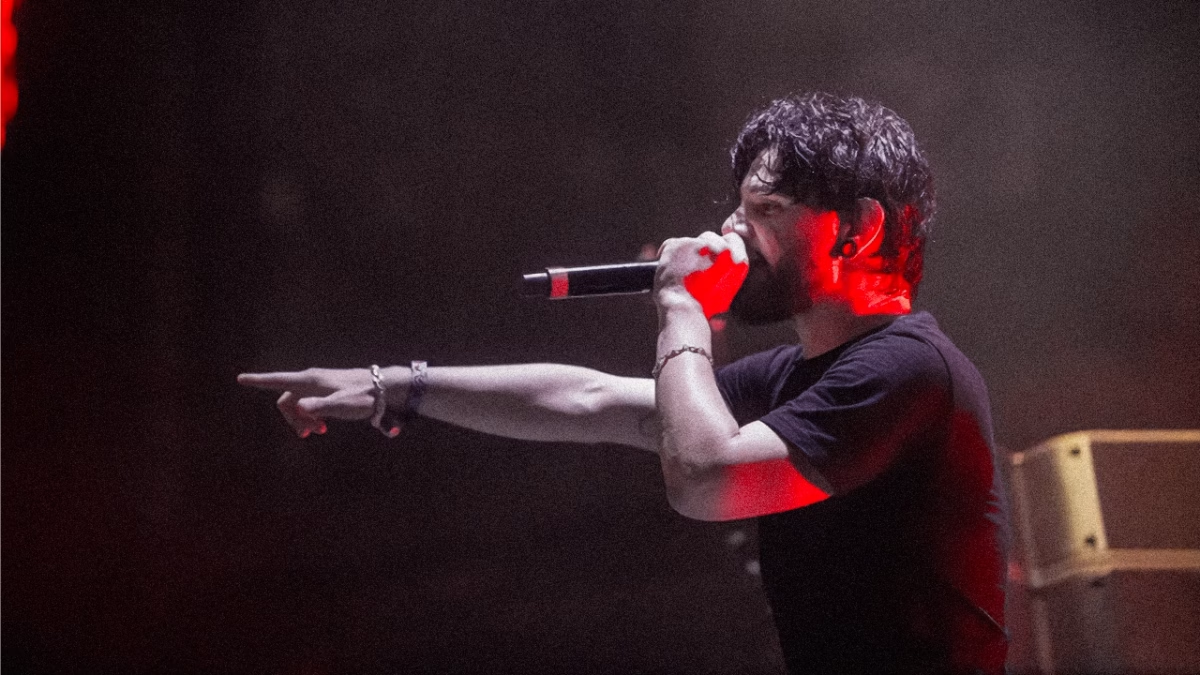
He didn’t stop there. He followed it up with the surprise “Hit Me Where It Hurts X” EP in November and a shock B2B set with Four Tet under the K Bridge in Brooklyn. This erratic and high-volume release strategy reflects a new industry reality. Keeping fans guessing is more effective than a traditional marketing cycle in the streaming era. Skrillex isn’t playing the game. He is flipping the board.
6. Intimacy at Scale: The Pop-Up Revolution
In a world of LED screens artists sought eye contact. The “Pop-Up” rave became the year’s most exciting format and was driven by a desire for intimacy and unique settings. HALŌ took over De Bijenkorf in Amsterdam and transformed a luxury department store into a rave venue. The supergroup consists of Matisse & Sadko, Third Party, and DubVision. The juxtaposition of high fashion and sweating ravers created a surreal and unforgettable vibe that no traditional club could replicate.
This trend is a direct rejection of the sterile “concert” format. Artists like Fred again.. and Chase & Status have popularized the idea that the rave can happen anywhere. It can happen in a pub or a bakery or a tunnel. These events rely on rapid-fire social media announcements and FOMO. They create a sense of urgency and community that feels organic in an increasingly algorithmic world. 2
7. The Human-AI Hybrid: Warner Music x Suno
The fear of AI replacing musicians began to subside and was replaced by a regulated business model. On November 25 Warner Music Group announced a partnership with generative AI platform Suno. This deal ended previous litigation and established a framework for “licensed AI music” where rights holders are compensated. It marked the moment the industry decided to monetize the machine rather than fight it.

Warner Music Just Licensed Its Catalog to an AI Company—Here’s Why That Matters
Under this new pact Suno will continue to operate with mechanisms to ensure that the artists whose data trains the models are paid. Purists decry the industrialization of creativity but industry pragmatists view it as a necessary evolution. The deal creates a pathway for “artist-approved” clones and tools. It signals a future where AI is a collaborator and a revenue stream rather than just a competitor. 3
8. Serum 2: The King Returns
Xfer Records finally released Serum 2 after years of speculation. It is the sequel to the industry-standard wavetable synthesizer. Developer Steve Duda released it as a free update for all existing users in a move that earned massive goodwill. The update introduces powerful new engines including Granular and Spectral oscillators which allow producers to manipulate audio with unprecedented depth.
The update also includes native support for multisamples to bridge the gap between a synthesizer and a sampler. Serum 2 has reaffirmed its place as the workhorse of modern electronic production with new features like “Quadzone” modulation and enhanced aliasing algorithms. It proves that the “buy once own forever” model is still viable and beloved even in a subscription-based world. 4
9. Omnisphere 3: The Sound Design Behemoth
Spectrasonics released Omnisphere 3 on October 21. This massive update to the flagship synth introduced “Quadzone” modulation and deep hardware integration. It allows the software to be controlled natively by a vast array of physical synthesizers. The update focuses on “sonic movement” and gives sound designers new tools to create evolving and cinematic textures.
Omnisphere 3 also leans heavily into organic sound sources with a new library of “deep-sampled” instruments that blur the line between acoustic and electronic. This release was the highlight of the year for film composers and producers looking for “expensive” sounds. The update reinforces Spectrasonics’ reputation for quality over quantity. 5
10. Tactile Resistance: The Hardware Boom
Musicians are reaching for machines they can touch as screens dominate our lives. 2025 saw a booming market for physical gear led by the Sequential Fourm and the Roland TR-1000. The Fourm brought high-end polyphonic aftertouch to a price point under $1,000 and democratized expressive analog control. It represents a rejection of the mouse-click workflow in favor of physical interaction.

Is the Roland TR-1000 Worth $2,699? A Deep Dive Into the Features
The Roland TR-1000 was another headline release. It marks Roland’s return to hybrid analog/digital drum machines. It caters to the fetishization of vintage sound by combining the digital flexibility of the TR-8S with genuine analog circuitry derived from the classic 808 and 909. The unit faced initial criticism for sync issues but its existence proves that the market is desperate for hardware that feels like an instrument and not a computer.
11. Global Rhythms: The Rise of Brazilian Phonk
The most exciting new sounds are no longer coming from London or Berlin but from Brazil. Brazilian Phonk exploded globally in 2025 and morphed from a TikTok niche into a festival mainstage phenomenon. The genre is characterized by distorted bass and aggressive vocal chops. It is a gritty fusion of Memphis rap aesthetics and the syncopated drive of Brazilian funk.
Artists like MXZI, Hysta, and RXDXVIL are racking up millions of streams with tracks that are often “slowed and reverbed” to maximize their psychedelic impact. This movement highlights the democratization of cool. Sounds now migrate globally via social media algorithms and bypass traditional gatekeepers. It is loud and unpolished which is exactly why it is winning.
12. The Asian Festival Boom: Thailand’s Golden Era
The balance of power in the global festival circuit shifted decisively eastward in 2025 as Thailand secured its position as the new capital of electronic music in Asia. This wasn’t just about a single event. It was about structural domination. Insomniac finalized a landmark five-year partnership with Future Vibes to anchor EDC Thailand in Phuket through 2030. The inaugural 2025 edition was a massive success and the deal is projected to generate over THB 12.5 billion for the local economy while attracting nearly half a million visitors over the contract’s lifespan.


Simultaneously the Thai government and Tomorrowland confirmed a five-year agreement to host the festival in Chonburi starting in 2026. This isn’t a satellite stage or a spin-off. It is the first full-scale Tomorrowland edition in Asia. These aggressive moves signal a “Festival Economy” strategy where Thailand is using electronic music as a primary engine for tourism and soft power. The West may have the history but the East now has the growth.
13. Anyma Conquers the Sphere
Anyma became the first electronic act to hold a residency at the Sphere in Las Vegas. His “The End of Genesys” show ran through New Year’s and into 2026 and set a new benchmark for audiovisual performance. The show utilized the venue’s massive 16K LED screen to turn melodic techno into a cinematic blockbuster featuring towering digital avatars and immersive environments.

How Anyma’s Live Shows Use Unreal Engine to Create a Cybernetic Opera
The residency fundamentally changed the expectations for live electronic music. It moved the needle from “lighting rig” to “virtual reality without the headset.” Some critics argued it prioritized spectacle over music but the sold-out run proved that audiences are hungry for immersive experiences that transcend the traditional DJ booth setup.
14. Catharsis at 160 BPM: Hysta & The High-Energy Shift
The dancefloor is no longer a place to chill. It is a place to scream. We witnessed a definitive rejection of “lo-fi” in favor of high-velocity catharsis. The BPM count inflated across the board as Hard Techno and Drum & Bass moved from the warehouse to the mainstage. The apex of this movement occurred on October 16 when Hysta performed a Hardcore set from the Eiffel Tower. By blasting distorted gabber kicks from the symbol of Parisian romance she legitimized the hardest sounds in dance music on a global scale. 6
This need for speed was mirrored elsewhere. Sub Focus debuted on the Creamfields Mainstage and proved that breakbeats can command stadium crowds just as effectively as four-on-the-floor kicks. Acid Asian broke through on the KNTXT label by fusing 90s acid aesthetics with modern techno drive. The message from the 2025 crowds was clear. They don’t want to sway. They want to sweat. 7
15. The Phone-Free Movement
A cultural counter-movement gained serious momentum in 2025. The phone-free rave became a standard at many events. Venues and festivals increasingly adopted policies to ban or bag phones to combat the “content capture” culture that leaves dancefloors stagnant. ARTBAT‘s performance at Cercle Odyssey was a prime example and enforced a strict no-phone rule that forced the audience to be fully present.
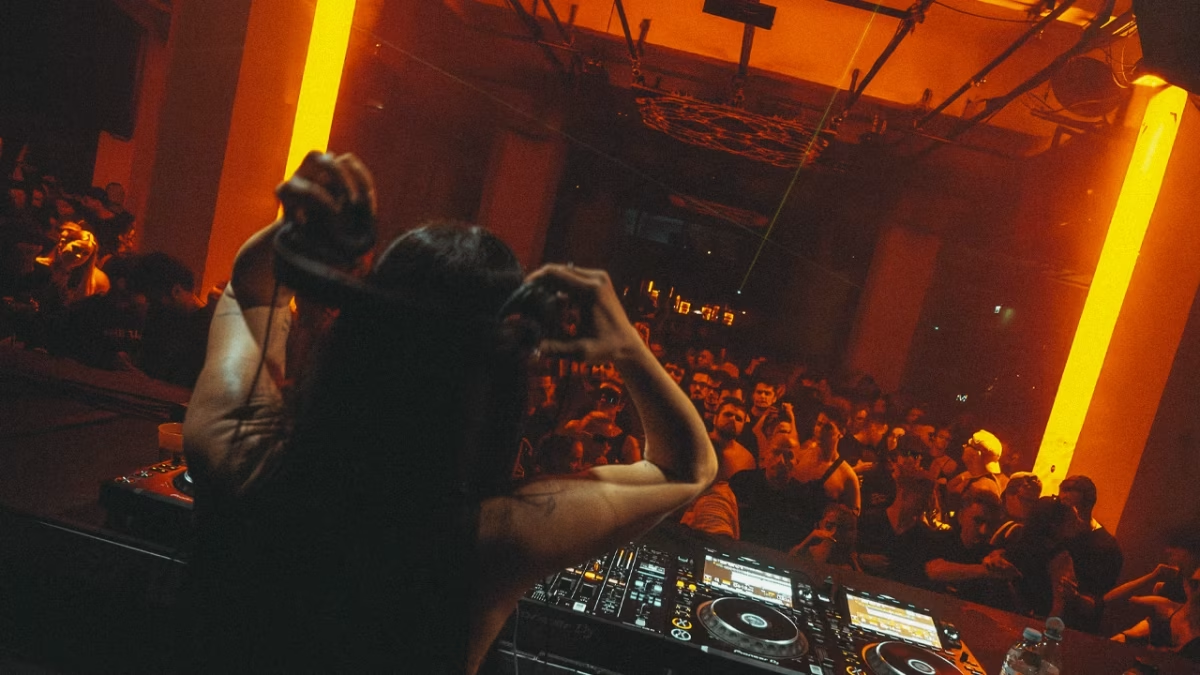

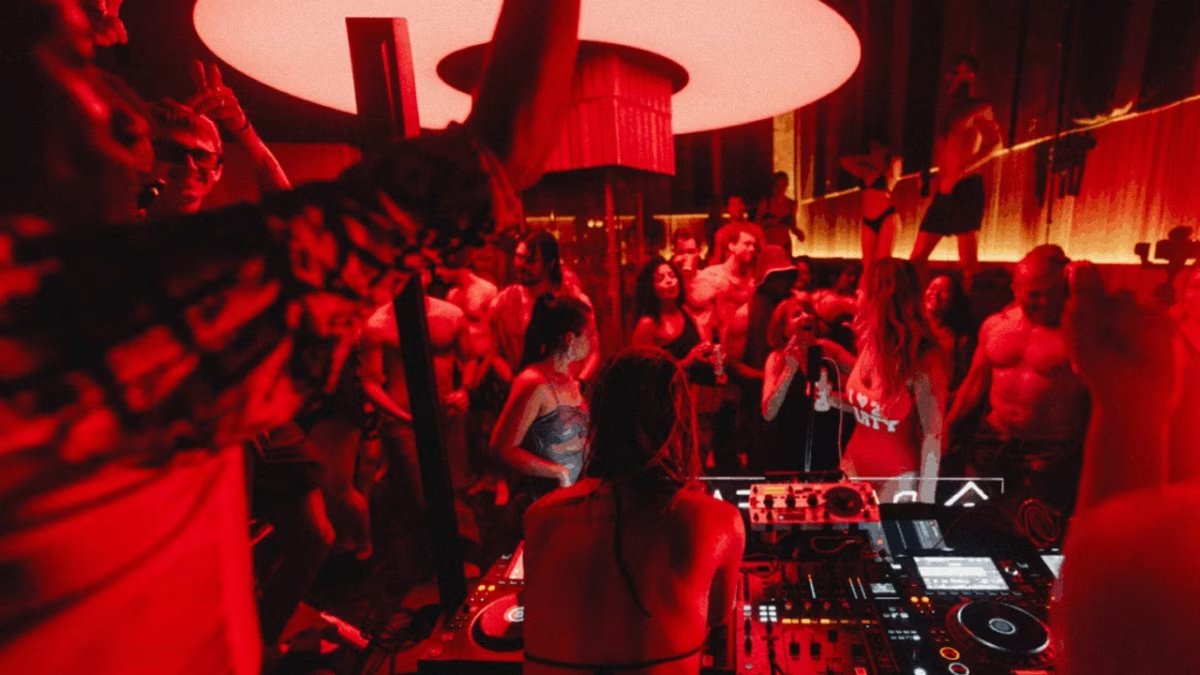
This shift is also influencing stage design. The rise of 360° stages naturally discourages filming the “front” because the DJ is in the center of the room. It encourages the crowd to look at one another. It is an attempt to reclaim the rave as a communal and participatory event.
16. Breakout Star: Sammy Virji
Sammy Virji became the undeniable face of the UK Garage revival in 2025. His infectious energy and technical prowess behind the decks bridged the gap between underground credibility and mainstream success. His track “Talk of the Town” capped off a year of massive touring including sold-out shows at Alexandra Palace. It was a collaboration with Fred again.. and Reggie released in November.
Virji’s success highlights a broader global appetite for “swing” and “bounce.” Audiences are embracing the skippy rhythms and choppy basslines of UKG and moving away from the rigid 4/4 grid of techno.
17. A Tale of Two Cities: Amsterdam Thrives, London Adapts
The geography of club culture offered two distinct lessons this year. Amsterdam continued its reign as the gold standard with ADE breaking records with over 600,000 attendees. The city treats nightlife as a vital economic export and integrates it into the fabric of the city with events ranging from massive arena shows to intimate panels. It remains the global nervous system of the electronic music industry. 8
Contrast this with the UK where the nightlife sector is being dismantled. The closure of Pryzm Kingston and grassroots venues like Cameo & Vinyl signaled the end of the “high street” clubbing era due to rising costs and changing youth habits. London remains resilient however. The brief and triumphant return of legendary club The End for its “1995–2025” retrospective party reminded the world of the city’s legacy. Large commercial clubs are dying but a new underground is forming in their wake.
18. The Industrial Disco: Nine Inch Nails & Boys Noize
The defining live experiment of 2025 was the collision of industrial rock and German techno. Trent Reznor enlisted Boys Noize for the massive “Peel It Back Tour” and the result was far more than a standard support slot. The two entities merged onstage during a collaborative segment that fans dubbed “Nine Inch Noize.” They transformed the brooding angst of tracks like “Closer” and “The Warning” into thumping and club-ready anthems.

Nine Inch Noize: All About the Nine Inch Nails x Boys Noize Collaboration
The visual spectacle redefined the arena rock show. Reznor and Atticus Ross transitioned from their main stage setup to join Boys Noize for a seamless mix of live instrumentation and electronic distortion. This partnership originated from their work on the Challengers score and culminated in the debut of “As Alive As You Need Me to Be” from the upcoming TRON: Ares soundtrack. It proved that the boundary between the mosh pit and the dancefloor has finally dissolved.
19. Crowd Etiquette Wars
A generational divide opened up on the dancefloors of 2025. It centered on etiquette and spatial awareness. Veteran ravers voiced complaints about the “phone-based childhood” generation lacking empathy in crowds. Complaints cited excessive “yapping” during sets and aggressive “trains” pushing to the front. The discourse highlighted the growing pains of a scene that has exploded in mainstream popularity post-pandemic. 9
The tension is palpable. New ravers are excited to document their experiences while purists view the dancefloor as a sacred and disconnected space. This friction is leading to a fragmentation of the scene where older heads are migrating to smaller and underground events to escape the “main character energy” of the festival mainstage.
20. The Legends Return: Underworld at Boiler Room
It took over three decades but Underworld finally made their Boiler Room debut in 2025. The electronic legends performed a sold-out open-air set at Burgess Park in London on August 2. It wasn’t a nostalgia trip. Rick Smith and Karl Hyde proved they are still vital and indomitable forces of nature. They mixed timeless classics like “King of Snake” and “Born Slippy.NUXX” with new edits and a surprising cover of Brutalismus 3000‘s “alleswirdgut.”

Underworld at Boiler Room: Proving Rave Culture Has No Age Limit
This performance bridged the gap between the 90s rave generation and the modern Gen Z techno crowd. Hyde’s presence behind the consoles rather than just front-of-stage was noted as a shift in dynamic but the energy remained unmatched. The set was raw and immediate and cemented their status as the architects of the rave who are still its best engineers.
Bonus: The Unmasking of Thomas Bangalter
It wasn’t on a main stage or a live stream. The most significant moment of 2025 happened in the basement of the Centre Pompidou in Paris on October 25. Thomas Bangalter, the silver-helmeted half of Daft Punk, returned to the decks for his first public DJ set in 16 years. He performed without a mask for the first time in over two decades. He joined Fred again.., Erol Alkan, and Busy P for a surprise B2B set during the Because Beaubourg event.
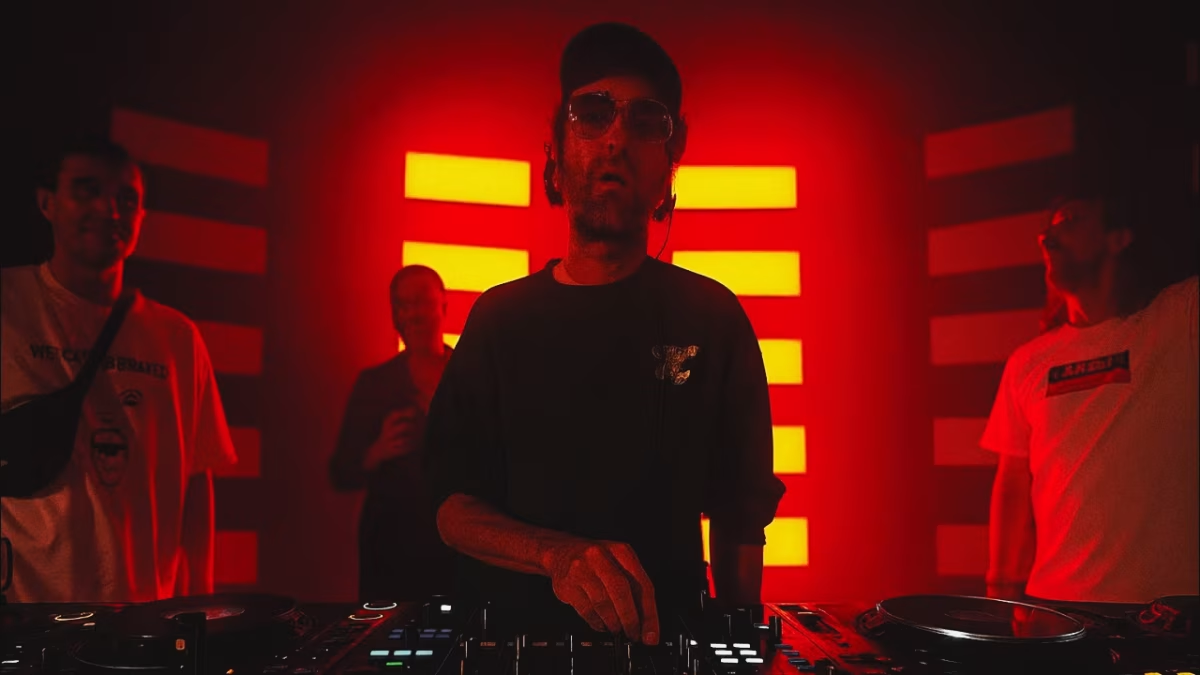
The set was a collision of eras that mixed Daft Punk classics like “Rollin’ & Scratchin'” and “Contact” with modern cuts and disco anthems like Donna Summer’s “I Feel Love.” It was a spiritual closing of the loop as Bangalter later admitted to Fred again.. that he first fell in love with electronic music in that very building in 1992. For a few hours the robots were gone and only the human remained. It was a reminder that the soul of French Touch is still very much alive.
FAQ: The Year in Review
1. What actually happened at Tomorrowland? A fire during pyrotechnics testing destroyed the “Orbyz” mainstage just two days before the festival opened on July 16. The stage was rebuilt in 48 hours using steel structures loaned by the band Metallica who were touring nearby. The festival opened on time with a modified and industrial-looking stage.
2. Is the “Trance Renaissance” real? Yes. It is being driven by both legends returning to the sound and new artists blending it with techno. Tiësto returned to his In Search of Sunrise roots at EDC Las Vegas and Armin van Buuren released the massive Breathe project. This represents a shift toward melody and emotion on the mainstage and away from the dry and minimal sounds of previous years.
3. Did Skrillex release an album in 2025? Yes. Skrillex surprise-released a massive 34-track album titled “F*CK U SKRILLEX YOU THINK UR ANDY WARHOL BUT UR NOT!! <3” on April 1. He also released an EP titled “Hit Me Where It Hurts X” in November.
4. How is AI being used legally now? The partnership between Warner Music Group and Suno is the blueprint. It allows the AI platform to operate while compensating the rights holders. This moves the industry toward a “licensed” model rather than a litigious one and allows artists to potentially monetize AI clones of their voice or style.
5. What are the key hardware releases of 2025? The year was defined by the Sequential Fourm which is an affordable analog poly-synth with aftertouch. Other highlights include the Roland TR-1000 hybrid drum machine and the Akai MPC Live III standalone workstation. These devices emphasize tactile control and “DAW-less” workflows.
- https://www.reddit.com/r/electricdaisycarnival/comments/1kxmoll/tiesto_in_search_of_sunrise_isos_honest_review/ ↩︎
- https://www.beatportal.com/articles/1187804-the-year-in-dance-electronic-music-moments-and-trends-that-defined-2025 ↩︎
- https://www.prnewswire.com/news-releases/warner-music-group-and-suno-forge-groundbreaking-partnership-302626017.html ↩︎
- https://www.musicradar.com/music-tech/music-technology-gear-of-the-year-2025-our-favourite-new-synths-drum-machines-plugins-and-more ↩︎
- https://www.sweetwater.com/store/detail/Omnisphere3–spectrasonics-omnisphere-3-synthesizer-software ↩︎
- https://edmidentity.com/2025/10/16/hysta-eiffel-tower-dj-set/ ↩︎
- https://www.tomorrowland.com/article/one-world-radio-20-of-2025/ ↩︎
- https://exronmusic.com/2025/12/24/most-influential-cities-for-dance-music-in-2025/ ↩︎
- https://www.reddit.com/r/aves/comments/1j6tuhl/summer_2025_may_have_the_worst_dancefloors_weve/ ↩︎
* generate randomized username
- You guys forgot about the Spotify CEO and KKR\'s Boiler Room
- #1 Lord_Nikon [12]
- #2 Void_Reaper [10]
- #3 Cereal_Killer [10]
- #4 Dark_Pulse [9]
- #5 Void_Strike [8]
- #6 Phantom_Phreak [7]
- #7 Data_Drifter [7]
- #8 Zero_Cool [7]