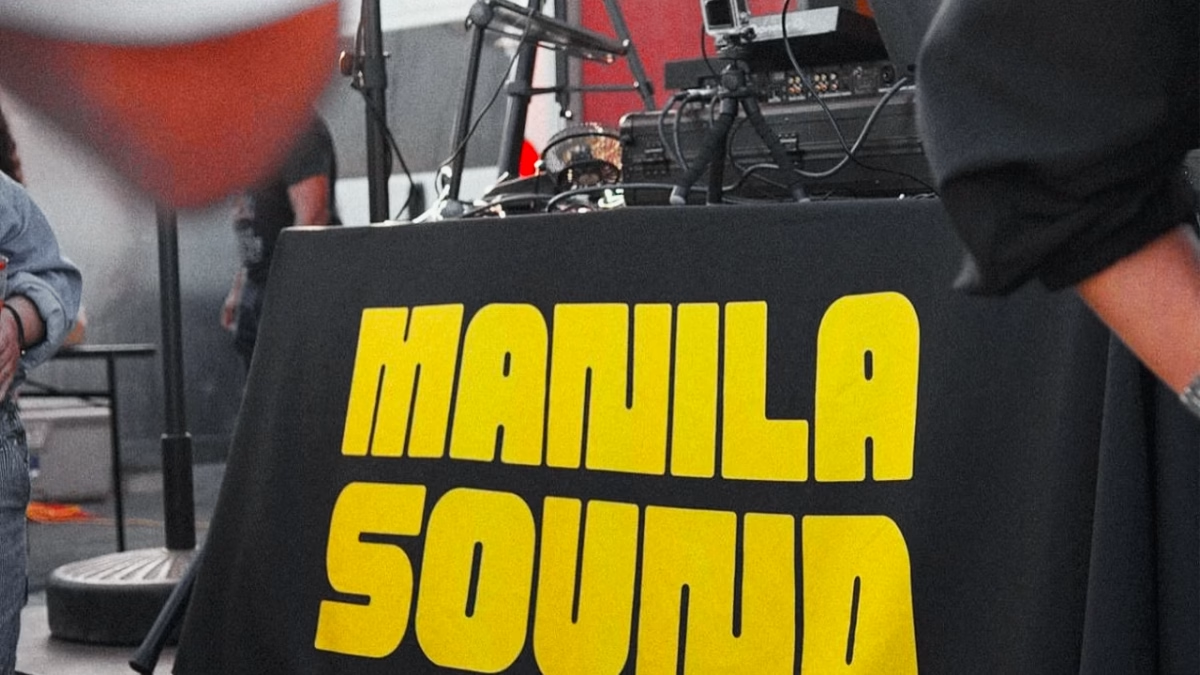
Let’s be real. When you picture a booming, sweaty, underground dance club, you probably imagine a sea of 20-somethings. But what if the real heart of the scene…is actually kept alive by people who’ve been dancing for decades?
A fascinating new PhD project from the University of Liverpool is diving deep into this exact idea. The study suggests that the veterans of the dance floor—the DJs, promoters, and dancers in their 40s and beyond—are not just relics of a bygone era. They are the active architects shaping the future of underground nightlife.
A New Study Dives Deep
In cities like Liverpool, where shiny new developments are constantly squeezing out independent venues, a new wave of non-mainstream parties is thriving in the shadows. These aren’t your flashy, VIP-rope, EDM-branded festivals. We’re talking about parties in warehouses, intimate back rooms, and pop-up spaces that operate far from the commercial city center.
The study, titled “The Persistence of the Underground in Dance Music Scenes,” is exploring how these communities form, what makes them tick, and how they resist being swallowed by the mainstream. The research isn’t just about counting heads; it’s a deep dive using interviews and on-the-ground fieldwork to map the culture.


The Generation X-Factor: Age is More Than a Number
One of the most exciting takeaways from the research so far is the crucial role of older participants. The study challenges the age-old (pun intended) idea that club culture belongs exclusively to the young.
Instead, it finds that longtime members of the scene are the ones who often carry the torch. They are the ones who:
- Preserve the Culture: They remember the roots of the music and the ethos of the community before it was commercialized.
- Mentor the Youth: They pass down knowledge, from DJing techniques to the unwritten rules of creating an inclusive dance floor.
- Maintain Authenticity: Their involvement ensures the scene isn’t just about nostalgia; it’s about the continuous evolution of an identity built around music and community.
This isn’t about 40-year-olds trying to relive their glory days. It’s about a lifelong passion that has evolved. They aren’t just in the scene; in many ways, they are the scene. They navigate what it means to still be “underground” while influencing new generations.
When Nightlife Clashes with Gentrification
A major theme of the study is the constant pressure these scenes face. As cities gentrify, old warehouses become luxury apartments and independent bars are replaced by chain restaurants. Noise complaints and rising rents push authentic nightlife to the absolute margins.
Liverpool serves as a perfect case study, but the findings will ring true for anyone who has seen their favorite local spot disappear in cities like Berlin, New York, or London. The research highlights the resilience of these communities, which are forced to be creative, mobile, and fiercely protective of their spaces.
The Beat Goes On
So, what keeps the underground alive? It’s more than just a BPM. It’s the powerful sense of community, shared identity, and a dedication to the music over the hype.
The next time you find yourself at a party that feels truly special—where the music is incredible and the vibe is just right—take a look around. You might just notice that the people who have been dancing the longest are the ones keeping the beat alive for everyone else. The future of underground nightlife, it seems, is in very experienced hands.
Source: https://livrepository.liverpool.ac.uk/3182344/
* generate randomized username
- COMMENT_FIRST
- #1 Lord_Nikon [12]
- #2 Void_Reaper [10]
- #3 Cereal_Killer [10]
- #4 Dark_Pulse [9]
- #5 Void_Strike [8]
- #6 Phantom_Phreak [7]
- #7 Data_Drifter [7]
- #8 Cipher_Blade [6]