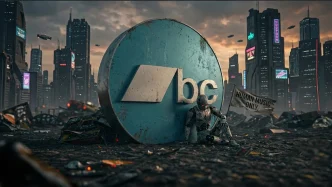
In the early aughts, the Napster logo was a shorthand for a digital revolution that smelled like ozone and burning CD-Rs. Fast forward to January 2026, and the brand synonymous with the death of the record store has staged its most radical—and perhaps final—disruption: an abrupt termination of its music streaming catalog in favor of an AI-first “co-creation” ecosystem. 1
On January 3, 2026, the music officially stopped for the platform’s remaining subscribers, who were met with a stark declaration: Napster is no longer a music streaming service. Having exited the “Red Ocean” of Digital Service Providers (DSPs) like Spotify and Apple Music, the company has pivoted toward a “Blue Ocean” strategy defined by generative audio and agentic AI. Under the stewardship of Infinite Reality, which acquired the brand for $207 million in 2025, Napster is betting that the age of passive consumption is dead. 2
The Big Switch: Why Napster Is Swapping Your Playlists for an AI-Powered Future
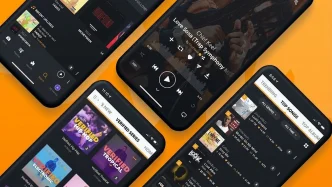
The redesigned mobile application, launched on January 28, 2026, for iOS and Android, signals a departure from the static playlist era. In place of licensed major-label catalogs, users find a suite of real-time creation tools and “AI Companions”—conversational video agents designed to act as embodied collaborators. 3
According to CEO John Acunto, the goal is to bridge the gap between listener and creator, allowing fans to “fuse their identity with AI artists in real time.” CTO Edo Segal reinforces this vision, noting that the platform’s engine ensures content is “as dynamic as the listener,” turning every interaction into a unique performance. 4
Inside the New Napster App: Where Every Fan Becomes a Creator
The new mobile experience focuses on active participation rather than passive discovery. The app now features:
- AI Artist Collaboration: A first-of-its-kind feature where users co-write and co-perform music with synthetic personalities, producing mixed and mastered tracks instantly.
- Social Radio & Adaptive Content: Audiobooks and podcasts that evolve based on user feedback, pausing to answer questions or remixing themes on the fly. 5
- Wellness Soundscapes: Generative ambient music and meditation tracks that adjust to the listener’s context.
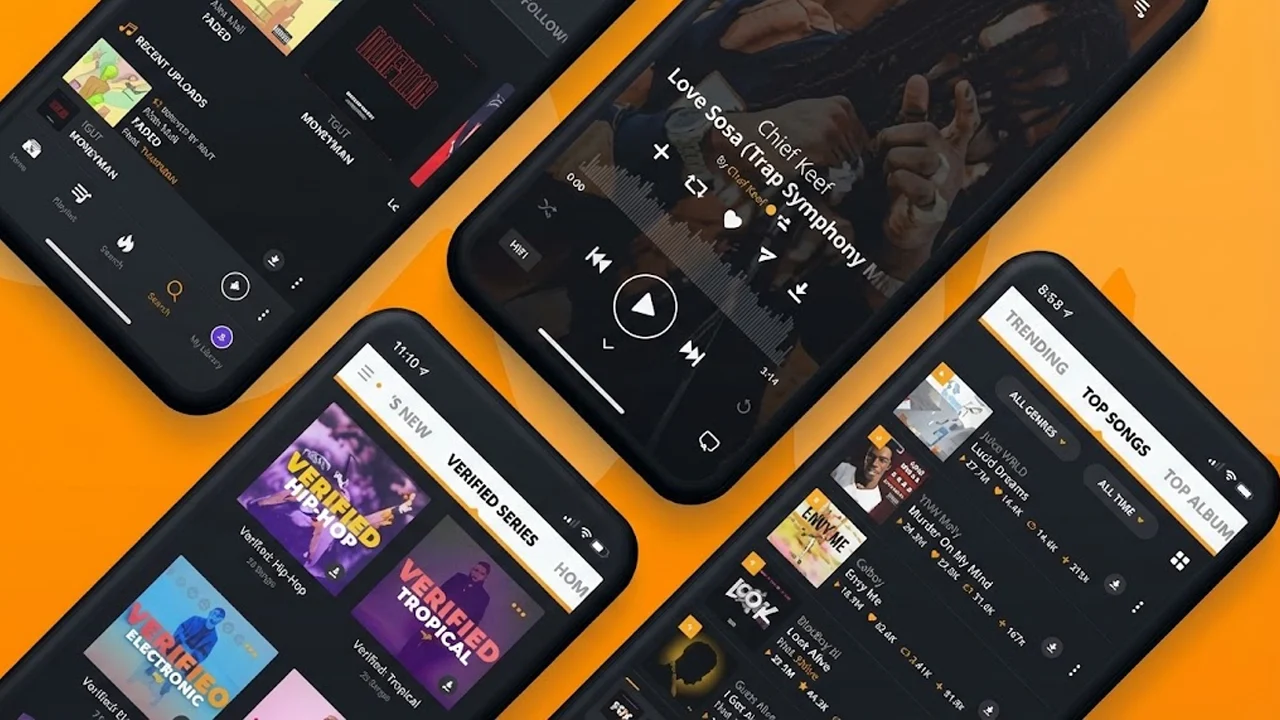
Audiomack Hits 50 Million Users: What It Means for Indie Artists
Not Just a Chatbot: How Napster View Puts 15,000 Experts on Your Desk
The hardware centerpiece of this rebrand is the Napster View, a $99 glasses-free holographic display for Mac users. It clips onto the laptop to project “embodied 3D collaborators” who can see the user’s screen and offer real-time guidance on everything from coding to business strategy. 6

Napster’s marketplace now hosts over 15,000 specialized AI Companions, aiming to “democratize expertise” in a way that recalls its 1999 democratization of access. The roster includes:
- Takumi Ishida: An executive chef specializing in sustainable culinary arts.
- Hana Nakamura: A mental health expert facilitating meaningful dialogue.
- Imani Andrews: A software engineer building scalable solutions with modern languages.
- Victoria Steele: A business strategist sharpening corporate decision-making.
Users can even create “Digital Twins”—AI versions of themselves trained on their own knowledge bases to attend virtual meetings or collaborate on tasks around the clock.
The New Rules: How Ownership and Money Work in the AI Creator Economy
Napster’s exit from the licensing rat race follows a period of significant friction, including a 2025 lawsuit from Sony Music over unpaid royalties. By abandoning the traditional DSP model, the company has freed itself from the razor-thin margins and 70% revenue payouts required by major labels.
The new monetization framework is a multi-tiered subscription model designed for the creator economy: 7
- Pro ($19/mo): Includes persistent memory across sessions and 20 hours or 120 songs per month.
- Studio ($45/mo): Grants commercial use rights for AI-generated music, aimed at professional creators.
- Enterprise ($3,000/mo): Allows Shopify retailers to build immersive 3D storefronts with AI personal shoppers.
Crucially, Napster asserts that users own what they create, providing the infrastructure to download, publish, or sell their synthetic tracks.
Disruption 2.0: Is the Future of Music Really Synthetic?
As search intent in 2026 shifts toward conversational queries and “micro-intent,” Napster is optimizing for a world where users ask for “AI that helps me write songs” rather than simple genre searches. However, the pivot is haunted by familiar ethical specters. While the original Napster was defined by “Have Everything. Own Nothing,” the 2026 era is criticized for a “Scrape Everything. Credit Nothing” ethos regarding generative training data.
Industry observers note that while the shift is pragmatic, the abrupt service shutdown left users “scrambling” to export years of playlists via third-party tools like TuneMyMusic. Whether the brand’s “holographic sidekick” can replace the soul of its licensed past remains an open question.
Ultimately, Napster Corp. is betting that the future isn’t about listening—it’s about participation. By turning fans into producers and listeners into collaborators, the blue cat is attempting its most audacious reinvention yet, trading the music industry’s established “Red Ocean” for a digital landscape that is entirely, sonically synthetic.
Frequently Asked Questions (FAQs)
What happened to Napster’s traditional music streaming service?
As of January 3, 2026, Napster officially ceased its traditional music streaming operations and removed its licensed catalog.[2, 3, 4] The company transitioned into an AI-first platform focused on “co-creation,” allowing users to generate original music rather than stream existing labels’ content.
What is the Napster View and how does it work?
The Napster View is a $99 glasses-free holographic display that clips onto a laptop.[20, 18] It projects embodied 3D AI companions who can see your screen (with permission) and collaborate in real-time on tasks like coding, business strategy, or music production.
Do I own the songs I create on the new Napster app?
Yes. Napster’s new model emphasizes fan empowerment, stating that users own the tracks they co-create with AI music companions.[11, 17] Depending on the subscription tier, users can download, share, or commercially sell their original AI-generated works.
- https://www.vice.com/en/article/napster-abruptly-pivots-to-ai-as-its-streaming-service-goes-down/ ↩︎
- https://www.napster.ai/news/napster-lights-up-a-new-era-with-napster-26-platform-and-view-holographic-ai-device ↩︎
- https://www.globenewswire.com/news-release/2026/01/28/3227953/0/en/Napster-Unveils-New-App-Experience-to-Bring-AI-Creations-and-Video-Companions-to-Mobile-Devices.html ↩︎
- https://www.tomsguide.com/ai/napster-is-back-and-its-new-ai-app-replaces-playlists-with-ai-artists ↩︎
- https://blockworks.co/news/napster-begins-planned-acquisition-spree-amid-shift-to-web3 ↩︎
- https://hypebeast.com/2025/10/napster-view-brings-3d-ai-companions-to-mac-99-now-available ↩︎
- https://vizologi.com/business-strategy-canvas/napster-business-model-canvas/ ↩︎
* generate randomized username
- COMMENT_FIRST
- #1 Lord_Nikon [12]
- #2 Void_Reaper [10]
- #3 Cereal_Killer [10]
- #4 Dark_Pulse [9]
- #5 Void_Strike [8]
- #6 Phantom_Phreak [7]
- #7 Data_Drifter [7]
- #8 Cipher_Blade [6]