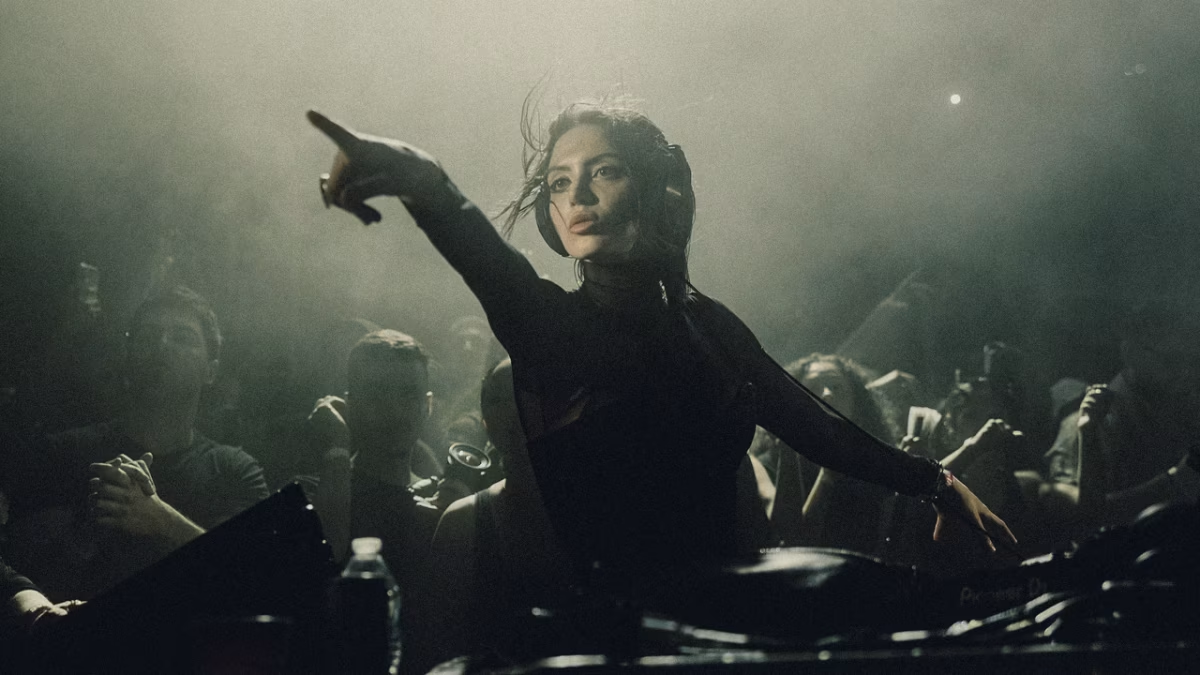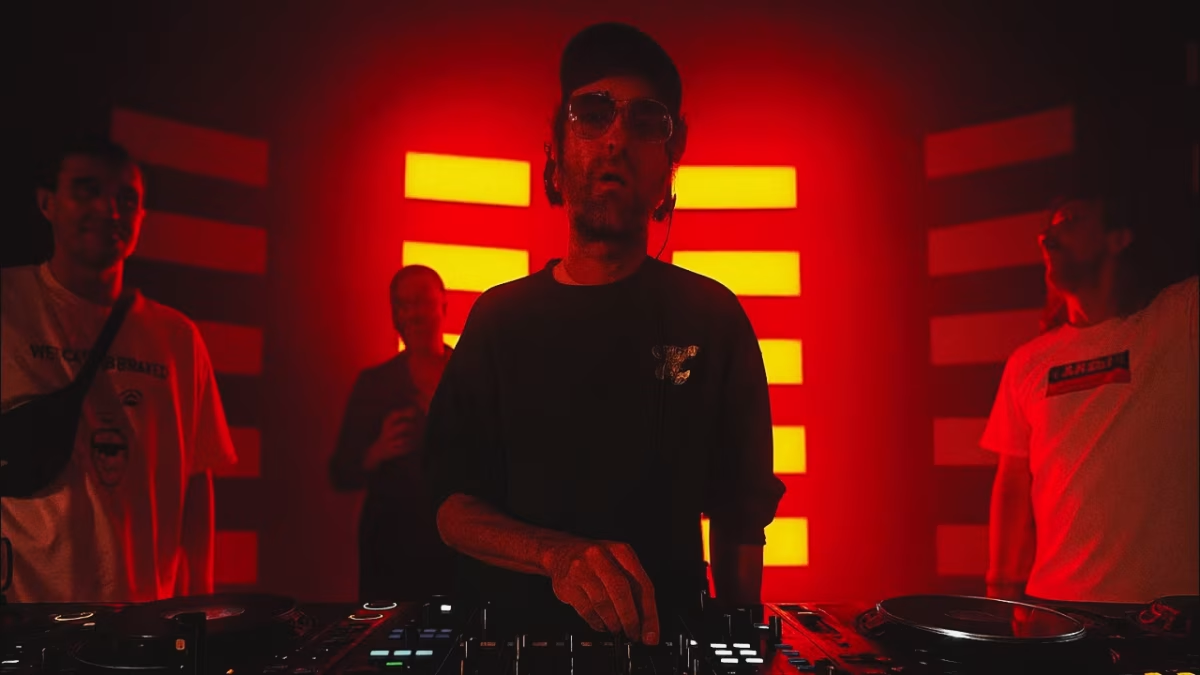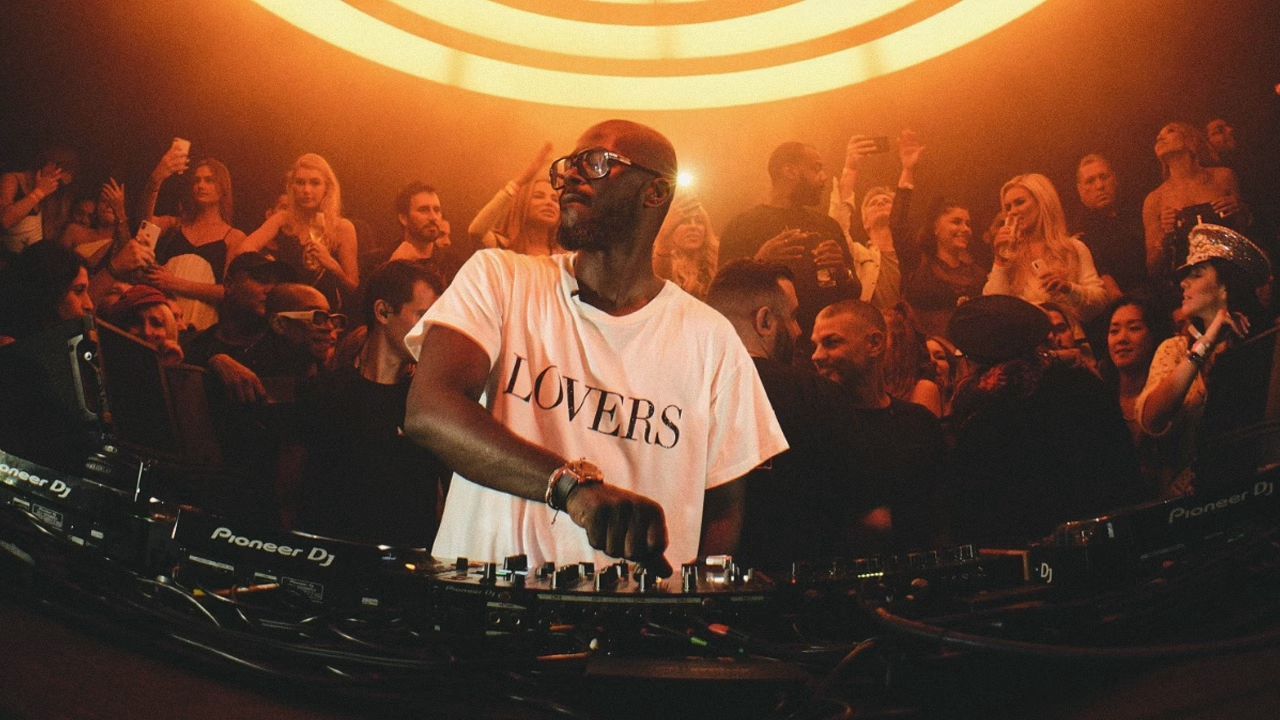

If the early 2020s were defined by a sterile, grid-locked obsession with “Business Techno,” 2025 was the year the blood returned to the machine. We are now standing firmly in 2026, and the data confirms what the dancefloor has felt for months: the auditory center of the world has migrated south. The “momentum” of 2025 has calcified into dominance. According to the 2025 IMS Business Report, we aren’t witnessing a fleeting viral moment, but a structural reordering of taste, where the “organic” and the “kinetic” have finally displaced the synthetic loop.
The Afro House Takeover: Spirituality as a Metric
To understand the scale of this shift, you have to look at the producers—the bedroom auteurs who dictate the sonic palette of tomorrow. In a staggering leap that would make a growth hacker blush, Afro House vaulted from the 23rd most searched genre on Loopcloud in 2022 to the 4th by 2025. This isn’t just a stat; it’s a migration pattern.
The sound of 2026 is defined by a specific kind of spiritual maximalism. Take Shimza’s “Fire Fire,” a track that spent the better part of late 2025 burning holes in festival speaker stacks. It rejects the cold, metallic sheen of European production for a “wall of sound” built from layered percussion and emotive synthesis—a sonic architecture described as having genuine “chemistry on the dancefloor”. 1
Then there is the crossover phenomenon. Vanco’s “Ma Tnsani (Yalla Habibi)” bridged the gap between the purist underground and the EDM mainstage, a feat cemented when Tiësto—ever the bellwether for commercial viability—dropped a remix that turned the track’s “soulful vocals” and “organic instrumentation” into a peak-time weapon. This track exemplifies the genre’s current power: it feels human in an era where AI generation is threatening to turn pop music into algorithmic sludge.
The industry has pivoted accordingly. Labels like Defected and Spinnin’ Deep have aggressively reshuffled their rosters to capture this “Big Gainer” status. But the soul of the movement remains with the originators—artists like Black Coffee and labels like MoBlack, who have spent a decade tending to the roots that the majors are now so eager to harvest. 2
How Algorithms and “Sameness Fatigue” Are Hollowing Out Electronic Music
Brazilian Funk: The Delayed Vindication
If Afro House provides the spiritual release of 2026, Brazilian Funk (Funk Carioca) provides the adrenaline. For decades, this genre was sidelined by the global industry—treated as a “World Music” curio rather than a legitimate dance powerhouse. That changed in April 2025, when Beatport finally launched Brazilian Funk as a standalone genre category.
It was a delayed vindication for a sound built in the favelas of Rio, shaped by the “Tamborzão” rhythm and the aggressive, DIY ethos of the “Proibidão.” The launch wasn’t just administrative; it was an admission of defeat by the gatekeepers. They could no longer ignore a genre that had hijacked TikTok’s algorithm, driving billions of views with its raw, distorted basslines—the “submundo” sound.
The cultural translation of this movement has been spearheaded by Mochakk, whose docuseries Funk do Brasil, produced with ONErpm, served as a critical primer for the uninitiated. The series peeled back the layers of regional variance that outsiders often miss: the frenetic 150 BPM of Rio, the high-gloss “Ostentação” of São Paulo, and the darker, cut-heavy stylings of Belo Horizonte. As DJ VHOOR noted, the architecture of the cities themselves bleeds into the music—Belo Horizonte’s valley acoustics creating a sound that is “full of echoes” and sonic jaggedness.
The Politics of the Dancefloor
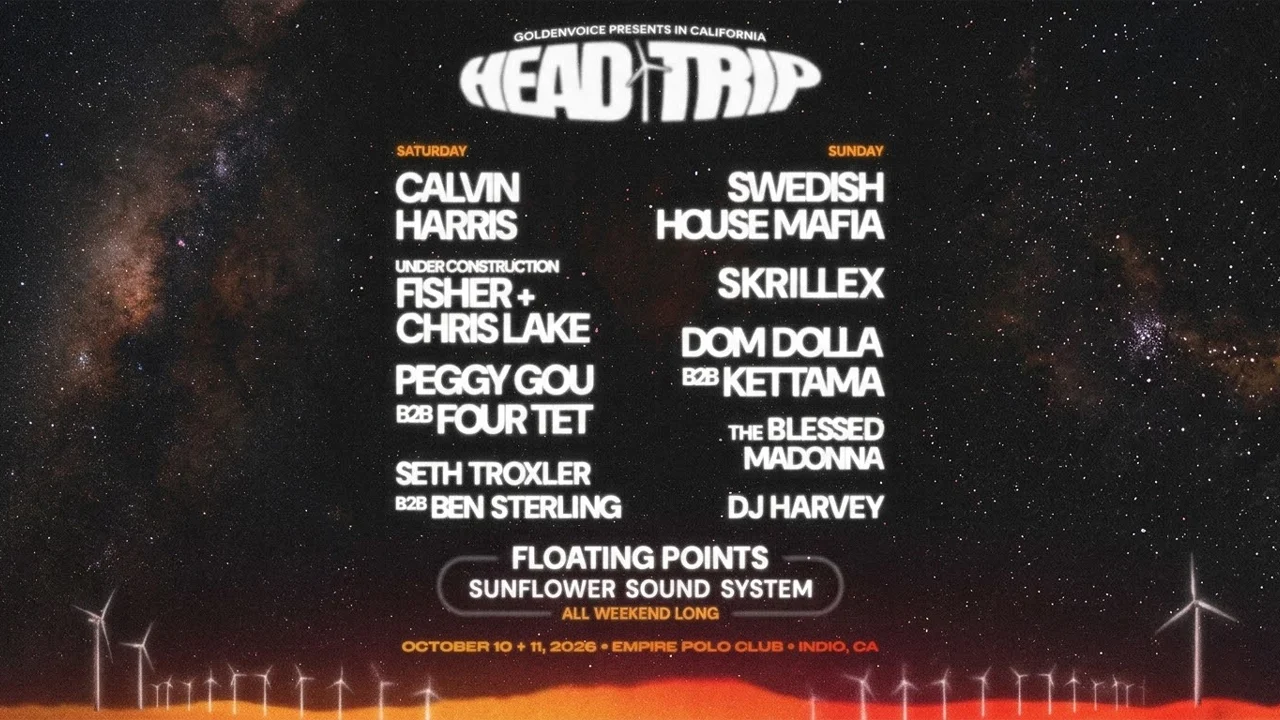
However, the mainstreaming of these genres in 2026 arrives with a bitter aftertaste. The global consumption of “Black” rhythm often outpaces the respect afforded to Black lives. While international festivals like Coachella are predicted to stuff the Yuma tent with Afro House acts in 2026 , the genre’s originators in Brazil still face what sociologists call “institutional racism”. 3
Global superstar Anitta has been vocal about this dichotomy, noting that the “prejudice against funk” is rooted in its geography—it comes from the periphery, and thus is treated with disdain by Brazil’s elite until a white audience validates it. It’s the classic “gentrification of cool”: Funk bailes are criminalized and raided by police in the favelas, even as the same beats are blasted at VIP bottle-service tables in Miami and Ibiza. 4
There is also the looming specter of appropriation. As the sound travels, we see European producers topping the Afro House charts. The anxiety—echoed by analysts—is that “funk will only gain respect when white artists adopt it,” a cycle we’ve seen replay from Jazz to Rock n’ Roll. The challenge for 2026 is whether the “economic velocity” of the Brazilian market—now growing at 18.7% annually—can create enough domestic power to resist this erasure.
The 2026 Live Experience: No Phones, Just Sweat
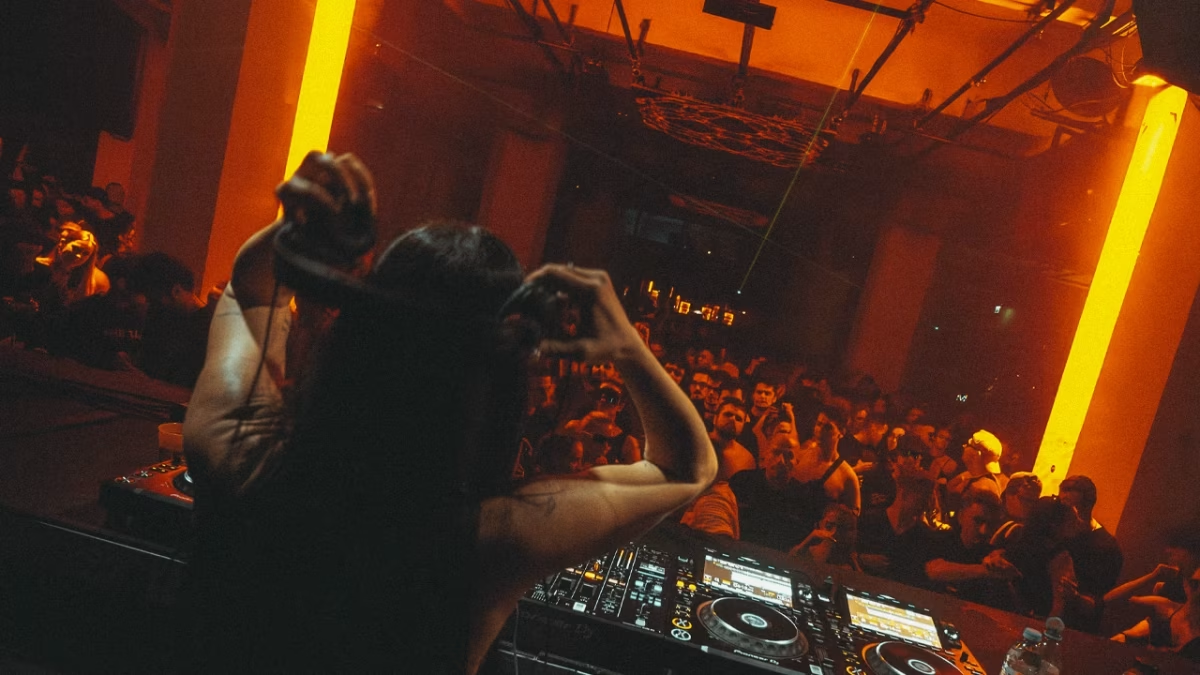
The aesthetic shift has even altered the physical reality of the festival. In reaction to the screen-mediated detachment of the previous decade, 2026 has seen the rise of “No Phone” policies at major events. This aligns perfectly with the ethos of Afro House and Funk, genres that demand physical presence over digital performativity. You cannot capture the polyrhythmic complexity of a Shimza set or the chaotic energy of a baile funk drop through an iPhone microphone. You have to be there, in the sweat and the smoke.

The New Mainstream
As we look toward the rest of 2026, the trajectory is clear. The “Big Room” sound is dead, replaced by the intricate, syncopated rhythms of the Global South. The “momentum” identified in the 2025 reports has become the new baseline reality.
But as we dance to these “culturally grounded” sounds, we must remain vigilant. The industry is efficient at stripping the context from the content, at loving the rhythm while ignoring the people who created it. The “sonic pivot” is undeniable, but the work of ensuring the value—both cultural and financial—returns to the favelas and the townships has only just begun.
- https://www.youtube.com/watch?v=-Wl1Qekt3SA ↩︎
- https://www.beatportal.com/articles/1187804-the-year-in-dance-electronic-music-moments-and-trends-that-defined-2025 ↩︎
- https://www.reddit.com/r/Coachella/comments/1njdjrf/coachella_2026_electronic_lineup/ ↩︎
- https://www.researchgate.net/publication/384478379_The_criminalization_of_funk_dance_and_rap_and_the_black_genocide_in_the_cities_of_Rio_de_Janeiro_and_Lisbon ↩︎
* generate randomized username
- COMMENT_FIRST
- #1 Lord_Nikon [12]
- #2 Void_Reaper [10]
- #3 Cereal_Killer [10]
- #4 Dark_Pulse [9]
- #5 Void_Strike [8]
- #6 Phantom_Phreak [7]
- #7 Data_Drifter [7]
- #8 Zero_Cool [7]