You’ve seen it on your feed: a DJ playing to a massive, ecstatic crowd, hands in the air, lights flashing. Their follower count is huge, their schedule is packed with international gigs, and they look like they’re on top of the world. But what if it’s not all real?
In today’s music scene, the pressure for DJs to look successful is intense. So intense, in fact, that a whole culture of “faking it” has emerged. It’s a world of digital smoke and mirrors, where online clout can feel more important than actual skill behind the decks. Let’s break down why this happens and what it really costs.
The Toolkit of “Faking It”
So, how does a DJ manufacture a successful image out of thin air? It’s easier than you might think.
- Buying Popularity: The quickest shortcut is to simply buy followers, likes, and even Spotify plays. For a small fee, services promise to boost your numbers, making you look more credible to fans and, more importantly, to promoters who often book talent based on social media stats. The problem? Industry pros can spot fakes a mile away. A million views with no comments is a huge red flag, and platforms like Spotify are cracking down, removing fake streams and even banning artists.
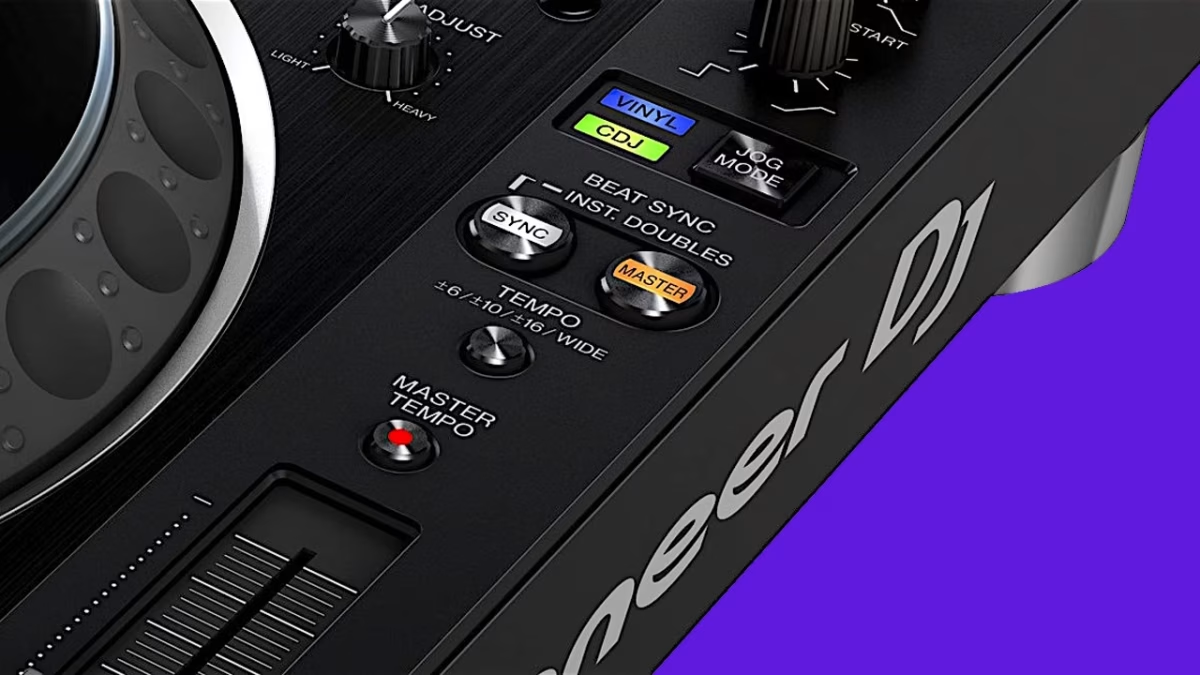
- The Pre-Recorded Set: You might go to a club and feel like the headliner is absolutely killing it, only to realize they’re not touching the decks much. Pre-recorded sets are a controversial topic. While sometimes used for massive shows with synchronized effects, they kill the DJ’s ability to read the room—the very essence of the craft. It’s a performance, not a live mix.
- Photo and Video Magic: That packed dance floor in your favorite DJ’s promo shot might be a clever illusion. Photographers use tricks like telephoto lenses to compress a small group of people, making them look like a dense crowd. Shooting from low angles or focusing on a tight cluster of dancers can also hide an empty room.
The Real Cost: Imposter Syndrome and Burnout
This constant pressure to perform—both on and off stage—takes a serious mental toll. At the heart of it is imposter syndrome: the nagging feeling that you’re a fraud and don’t deserve your success, even when you’re genuinely talented.
Social media is the number one fuel for this fire. Seeing the polished “highlight reels” of other DJs can create an unrealistic standard of comparison, making you feel inadequate. This feeling can push artists to fake it, which only makes the imposter syndrome worse. Now, the internal feeling of being a fake is matched by your external actions.
This is part of a wider mental health crisis in the music industry. The DJ lifestyle, often glamorized, is filled with isolation, anxiety, chaotic sleep schedules, and the fear of becoming irrelevant. It’s no wonder musicians are three times more likely to suffer from anxiety and depression.


How to Succeed Authentically (and Stay Sane)
While the pressure is real, there’s a better, more sustainable path. Building an authentic career is a long game, but it’s far more rewarding.
- Define Your Real Brand: Instead of creating a fake persona, figure out what makes you unique. What’s your niche? What’s your vibe? Authenticity connects with people on a deeper level. Your brand should be an extension of who you really are, not who you think you should be.
- Create Content That Matters: Forget buying fake plays and focus on creating amazing content. Film your live sets and post them on YouTube—it’s a hugely underrated marketing tool that shows promoters and fans what you can actually do. Show your passion, share your journey, and be consistent.
- Network in the Real World: Social media isn’t everything. Some of the most respected DJs have a minimal online presence. Success can be built offline by actively participating in your local scene. Go to events, meet other artists and promoters, and build genuine relationships. A small group of true fans is more valuable than thousands of fake followers.
Ultimately, the chase for fake success is a dead end. It damages your reputation, hurts your mental health, and disrespects the art of DJing. The real path to a lasting career is built on skill, passion, and authenticity. In a world full of filters and fakes, keeping it real is your greatest asset.
Sources:
- https://artistpush.me/products/5k-instagram-followers
- https://artists.spotify.com/artificial-streaming
- https://blog.pioneerdj.com/dj-culture/managing-your-mental-health-as-a-dj/
- https://blog.pioneerdj.com/dj-culture/the-unstoppable-rise-of-social-media-djing/
- https://blog.symphonic.com/2024/05/24/how-to-overcome-imposter-syndrome-as-a-musician-2/
- https://blog.symphonic.com/2025/02/20/effects-of-artificial-streaming-on-independent-artists-and-labels-2/
* generate randomized username
- COMMENT_FIRST
- #1 Lord_Nikon [12]
- #2 Void_Reaper [10]
- #3 Cereal_Killer [10]
- #4 Dark_Pulse [9]
- #5 Void_Strike [8]
- #6 Phantom_Phreak [7]
- #7 Data_Drifter [7]
- #8 Cipher_Blade [6]