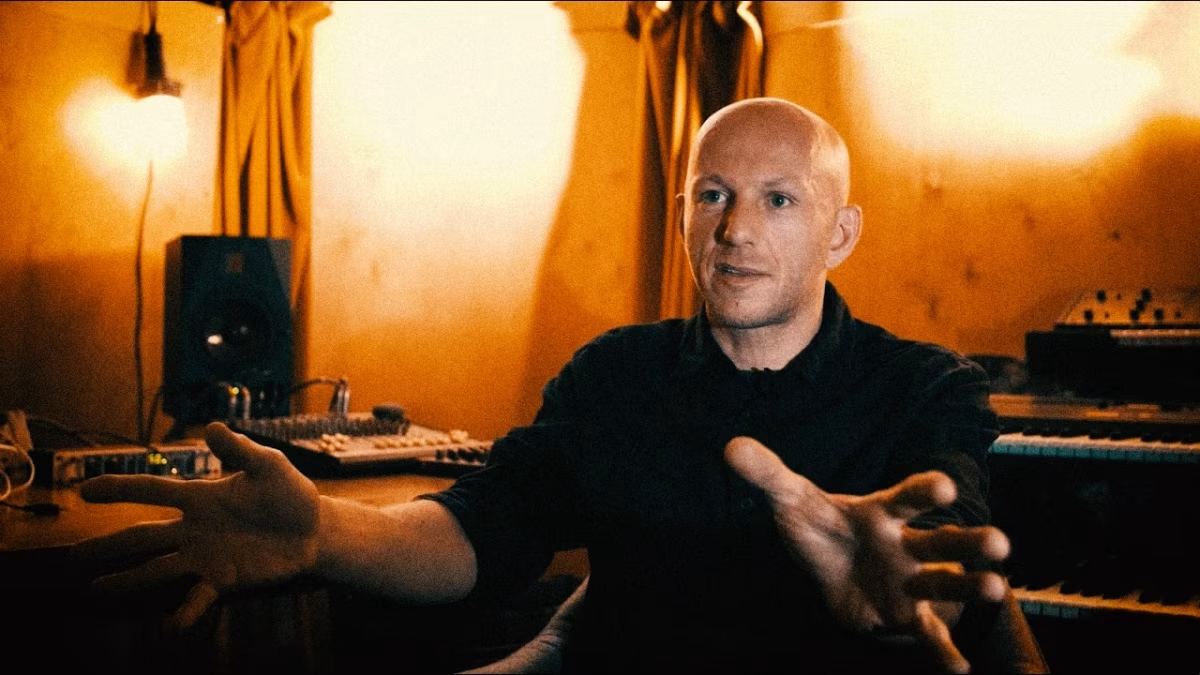

In the world of techno, few voices carry the weight of DVS1. The Minneapolis producer and Berghain resident’s recent statements about hard techno have sparked intense debate across Reddit, Instagram, and TikTok. In a candid interview with xceed during Amsterdam Dance Event 2023, DVS1 offered a nuanced perspective on hard techno’s explosive growth, its relationship to underground culture, and what it means for the future of techno.
Editor’s Note (11/10/2025): We have significantly updated and re-edited this article following valuable feedback from Zak (DVS1). We sincerely apologize that the initial presentation was misleading and failed to provide sufficient context for his statements. The piece now includes the full source interview and expanded commentary to ensure his message is represented with the honesty and respect it deserves.
The Full Context: What DVS1 Actually Said
In the xceed interview, DVS1 addressed hard techno’s rise with careful consideration, not outright condemnation. Here’s his complete statement:
“For a lot of kids, let’s say in the US, EDM when it was super popular, all this really terrible EDM music that was popular 10, 15 years ago, that was the gateway to find better music for some of these people. But that was their introduction to the music. Right now, this hard, fast techno is that. It’s the EDM of this generation, but they’re dressed in an underground way, so everyone thinks that it’s underground music. But it’s not. It’s EDM. It’s actually pop techno. And it’s the gateway.”
He continued with an important clarification:
“I always said to people, I don’t care that it exists. I just wish people would stop comparing it to techno. I think what I do and the music I come from, that’s pure underground, true techno. This stuff is the door to open to find this. And I tell people, just grow. Wait a few more years. Go to a few more club nights where it’s 15 hours of boom boom boom from the moment the doors open. You get tired and you start looking for something else. So it’s okay that it exists. Maybe 5-10% of those people will start looking for something different, maybe something deeper, something more soulful, something more real, and they’ll find their way.” 1
Why 31% of Emerging DJs Are Quitting Music Due to Social Media Pressure
DVS1’s Position: Gateway, Not Enemy
What’s crucial to understand is that DVS1 isn’t dismissing hard techno fans or calling for the genre’s elimination. Instead, he’s making two specific points:
1. Hard Techno Functions as a Gateway Genre
Just as commercial EDM introduced a generation to electronic music in the 2000s and 2010s, hard techno serves the same purpose today. It’s an entry point, a first exposure that may lead listeners deeper into underground culture.
2. Aesthetic Versus Substance
His “underground clothing” metaphor refers to how hard techno borrows the visual aesthetics of underground culture (black leather, combat boots, warehouse imagery) while operating through mainstream commercial logic (festival optimization, TikTok virality, algorithm-driven distribution).
Why the Distinction Matters to DVS1
DVS1’s concern isn’t elitism for its own sake. He’s articulating a genuine tension: when a genre that operates through commercial mechanisms gets conflated with underground techno, it blurs important cultural distinctions.
Underground techno, in DVS1’s view, is defined by specific values: community over commercialization, artistic integrity over algorithm optimization, and immersive club experiences over festival spectacle. Hard techno may share sonic characteristics with techno, but it’s built on fundamentally different distribution and cultural models.
As DVS1 explained in the same interview, he considers himself “too successful to be underground anymore,” but he brings “the underground aesthetic, culture, and energy” to his work. The distinction he’s drawing is about preserving those values, not about gatekeeping who can enjoy techno.
The Community Response: A Spectrum of Views
The reaction to DVS1’s statements has been predictably diverse.
Supporters of DVS1’s Perspective
Many in the techno community agree with his assessment. On Instagram, one commenter wrote, “Hard techno is NOT underground!! Real techno is about feeling, not viral jumpsuits and blockbuster kicks”. Reddit discussions echoed similar sentiments, with users arguing that hard techno represents “festival formula music” that prioritizes spectacle over substance.
Critics Accuse Gatekeeping
Others view DVS1’s distinction as unnecessary elitism. “Techno isn’t a sacred club membership,” one Redditor argued. “It’s a genre that’s always evolved. Calling hard techno ‘EDM in underground clothing’ ignores how scenes grow and change”.
A YouTube reaction video to the interview raised the point that DVS1’s insistence on distinguishing “real techno” from hard techno reflects personal investment in maintaining his position as curator of authentic techno culture.
The Generational Divide
Much of the debate reflects different generational approaches to authenticity. Veteran techno heads value credentials, history, and adherence to subcultural values. Younger ravers, raised in digital-native environments, judge authenticity through emotional resonance and community connection rather than scene hierarchies.



Hard Techno’s Undeniable Growth
Whatever DVS1’s assessment, hard techno’s expansion is factual and dramatic. The genre has evolved from underground warehouse phenomenon to global visibility, driven primarily by TikTok’s algorithmic amplification. 2
Artists like Sara Landry, Novah, and Nicolas Julian have accumulated millions of streams, and festivals have created dedicated “hard techno zones” explicitly designed for social media shareability. The genre’s aesthetic (black clothing, industrial imagery, warehouse settings) has itself become commodified, available through multiple brands targeting hard techno audiences.
DVS1’s observation that this looks underground but operates through commercial logic is demonstrably accurate. Whether that disqualifies it from being considered authentic is the contested question.
Understanding DVS1’s Broader Philosophy
To fully understand DVS1’s perspective, it’s important to consider his broader views on club culture versus festival culture, which he’s articulated extensively in interviews. 3
In the RA Exchange 689 interview, DVS1 discussed how he built his career on slower tempos (133-135 BPM) that create space for groove and swing, emphasizing feel over formula. He’s also been outspoken about how festivals prioritize entertainment over art, creating “short attention spans, short DJ sets” that undermine the immersive, community-building potential of club nights. 4

His Wall of Sound concept, which positions the DJ behind the sound system rather than on an elevated stage, directly challenges the “DJ as rock star” model that dominates contemporary electronic music culture. These positions reveal someone deeply invested in preserving specific cultural values, not simply policing genre boundaries.
The Uncomfortable Questions
DVS1’s critique raises uncomfortable questions the scene must grapple with:
Can a genre be underground if it’s algorithmically amplified?
Underground culture has historically been defined partly by exclusivity and difficulty of access. When TikTok can turn any track into a global phenomenon in days, what does “underground” even mean? 5
Is aesthetic authenticity enough?
Hard techno fans genuinely embrace the culture’s aesthetic and energy. Does adopting those markers constitute authentic participation, or does authenticity require deeper historical and subcultural engagement? 6
Who gets to define techno’s boundaries?
Veterans like DVS1 have earned credibility through decades of dedication. But does that give them authority to police what counts as “real” techno, or should genres evolve democratically through participant consensus? 7
Moving Forward: Coexistence, Not Conflict
DVS1’s actual position, when examined in full context, suggests coexistence rather than conflict. He explicitly states, “I don’t care that it exists” and views hard techno as a gateway that will bring some percentage of listeners to deeper underground sounds.
The debate isn’t really about whether hard techno should exist. It’s about whether the two sounds should be conflated, and whether hard techno’s commercial success threatens to redefine what “techno” means in the broader cultural consciousness.
For hard techno fans, the genre provides genuine energy, community, and connection. For purists like DVS1, preserving distinctions protects the cultural and artistic values that give underground techno its meaning. Both perspectives have validity.
The future likely involves continued fragmentation, with techno splintering into increasingly specific subcategories, each with distinct aesthetics, communities, and commercial positioning. Hard techno will continue evolving, perhaps moving past its current viral formula into new territories.
And underground techno will persist in clubs and warehouses, sustained by those for whom the culture represents something beyond entertainment, a way of life built on community, resistance, and artistic integrity.
- https://youtu.be/2ba7LvvK14U ↩︎
- https://www.tiktok.com/@xceed.me/video/7306084337630432544 ↩︎
- https://www.reddit.com/r/Techno/comments/azy4x2/interview_dvs1_on_the_devastating_effect_of_big/ ↩︎
- https://mixmag.net/read/dvs1-festivals-do-not-bring-out-the-best-in-artists-news ↩︎
- https://midnightrebels.com/hard-technos-viral-explosion-proves-gatekeeping-cant-stop-the-algorithm/ ↩︎
- https://hardtechnolivesets.com/hard-techno-still-going-strong-in-2024/ ↩︎
- https://www.reddit.com/r/Techno/comments/18mggih/the_elitism_and_pretentiousness_in_this_sub_is/ ↩︎
* generate randomized username
- COMMENT_FIRST
- #1 Lord_Nikon [12]
- #2 Void_Reaper [10]
- #3 Cereal_Killer [10]
- #4 Dark_Pulse [9]
- #5 Void_Strike [8]
- #6 Phantom_Phreak [7]
- #7 Data_Drifter [7]
- #8 Zero_Cool [7]


It’s not even hard – it’s just extreme. Tempo doesn’t = hardness. It’s just a mix of gabber and trance, it’ll be gone one day and proper techno will maintain.